ARKEN — A study in linen

ARKEN is a small atelier in New Delhi making linen pieces — shirts, overshirts, trousers, shorts — from European long-staple flax. Each piece is cut, sewn, and finished by hand. Garment-washed twice for structural softness on day one. Currently on pre-order.

Products

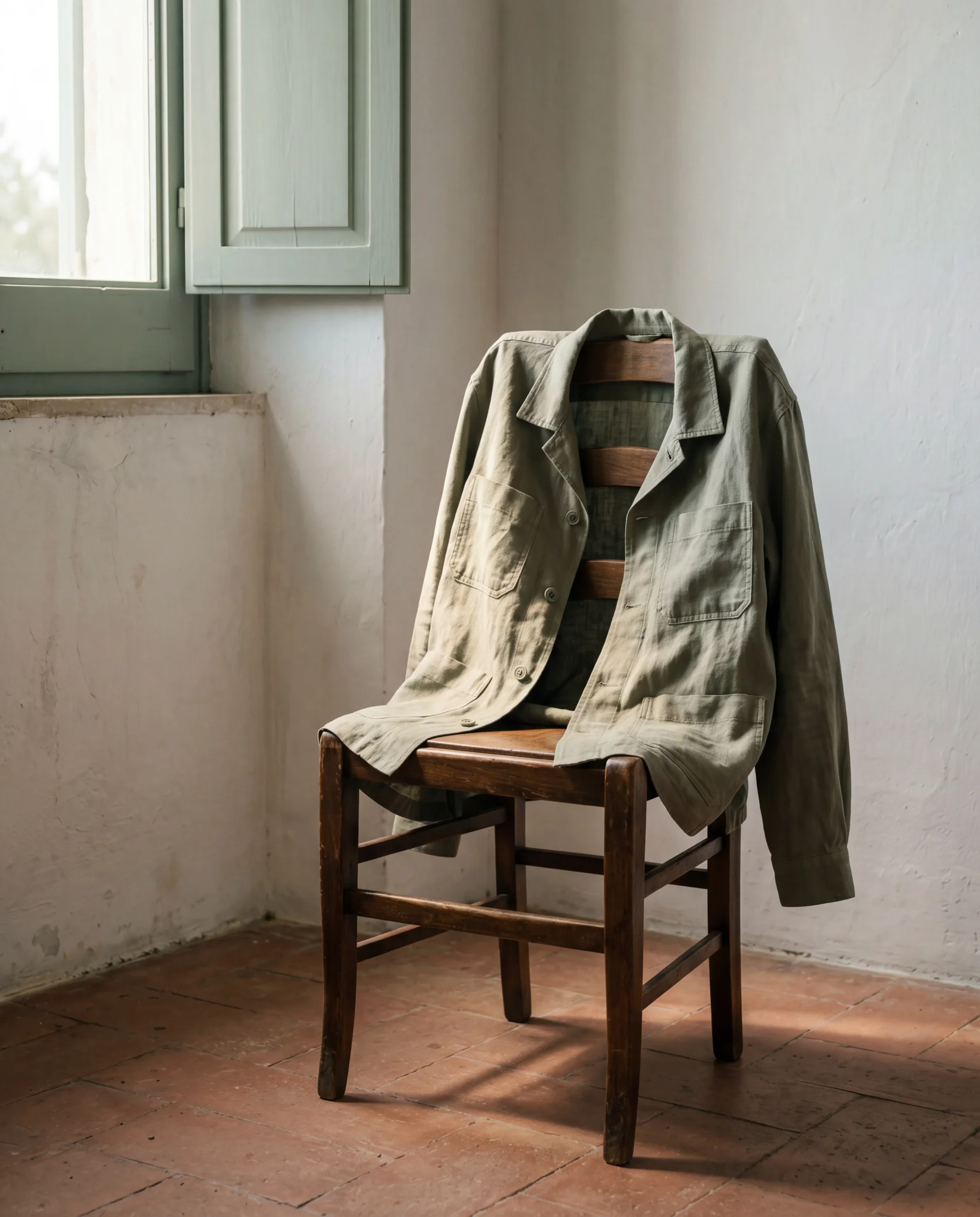
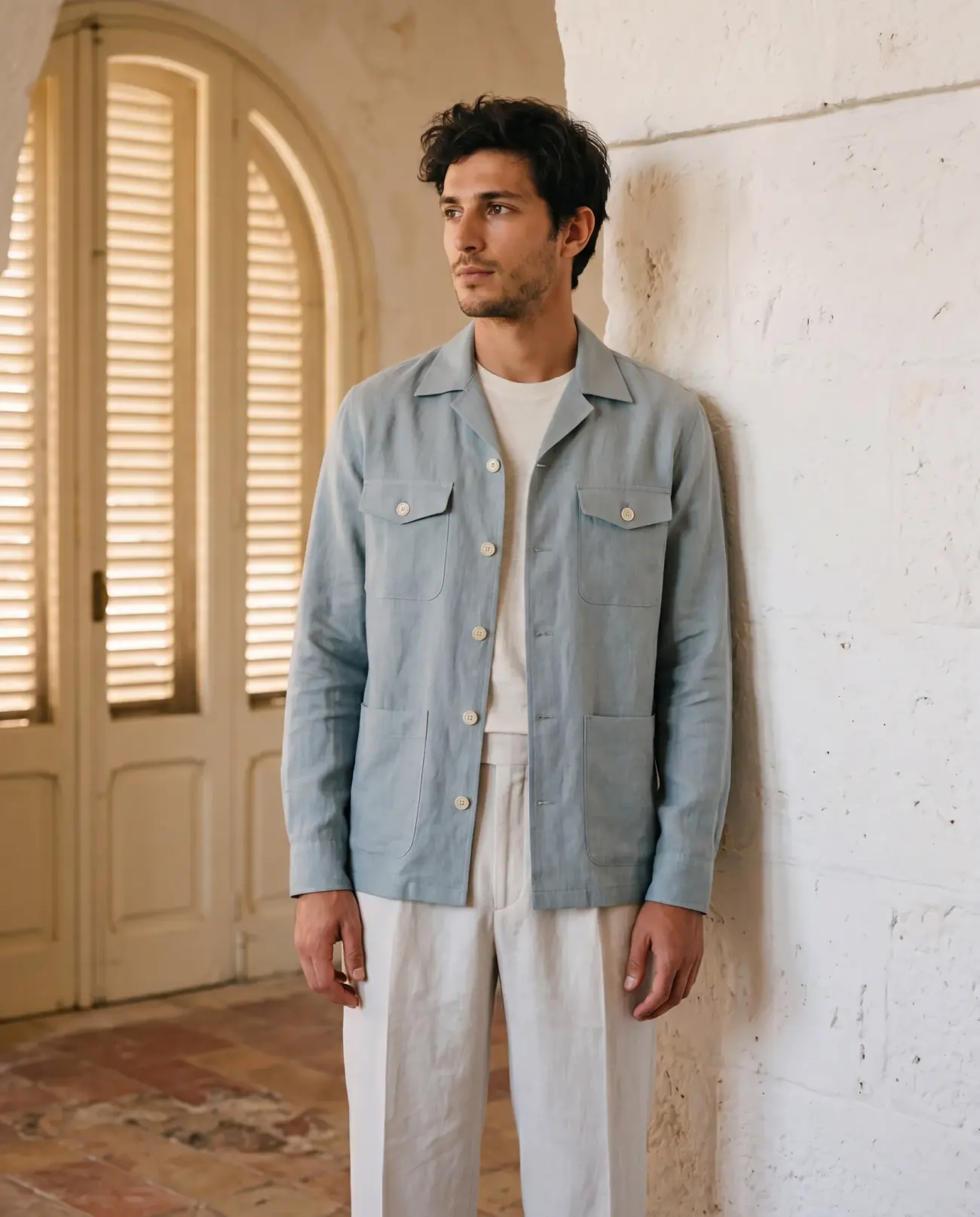
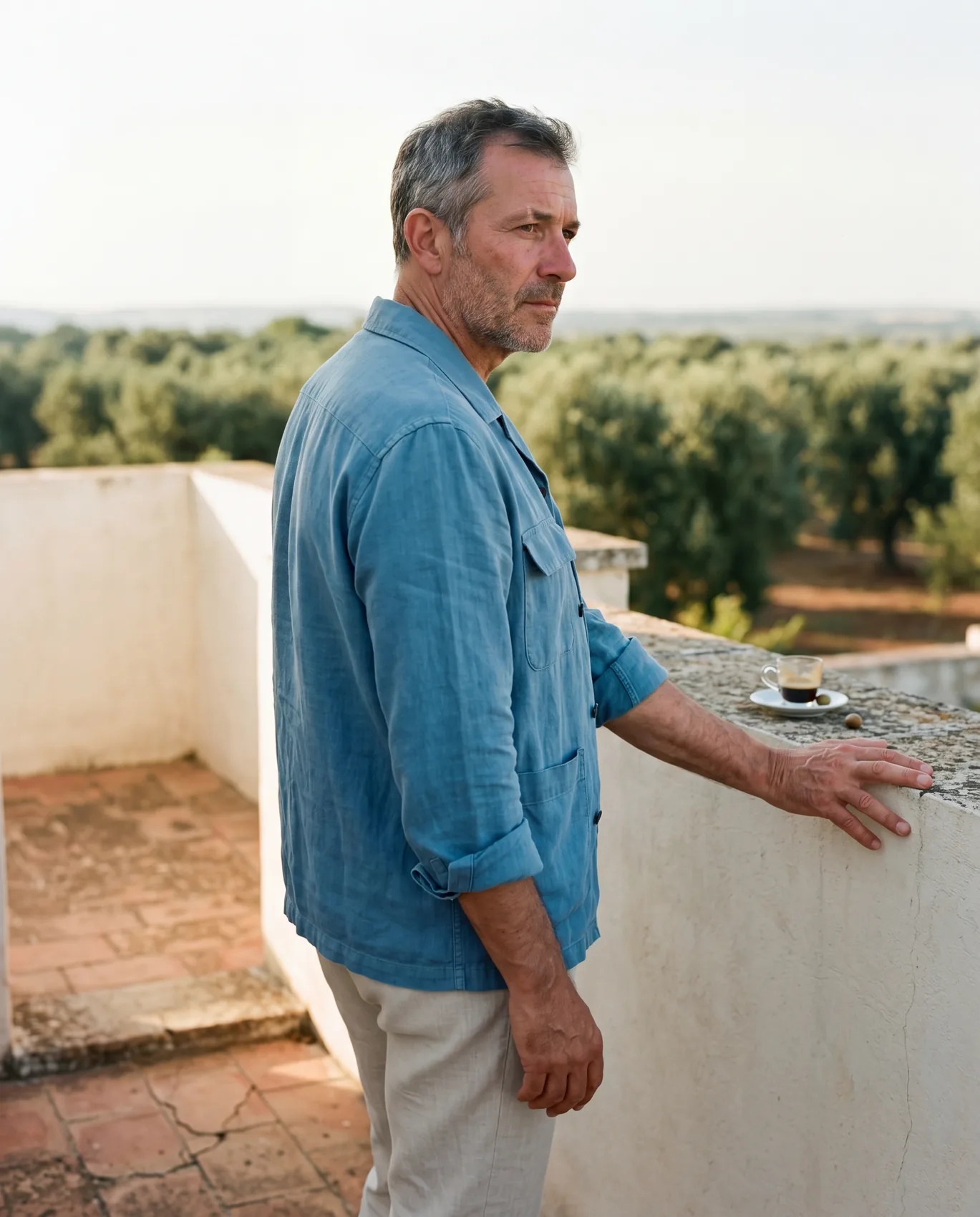
  • The Frame — Overshirts. 220 GSM · 100% European Linen · The Gravity Drape. ₹6,950. A layer built for structural independence. Woven at a dense 220 GSM in 100% European long-staple flax, the fabric carries enough physical weight to act as a frame rather than a shell. The gravity of the wet-spun yarn pulls the hem straight down, settling quietly onto the shoulders without gripping them. It holds its own line, moving with the wearer while keeping its form intact. Made to soften, never to lose its weight. Colourways: Natural, Olive, Burnt Sienna, Ink, Cerulean, Travertine.
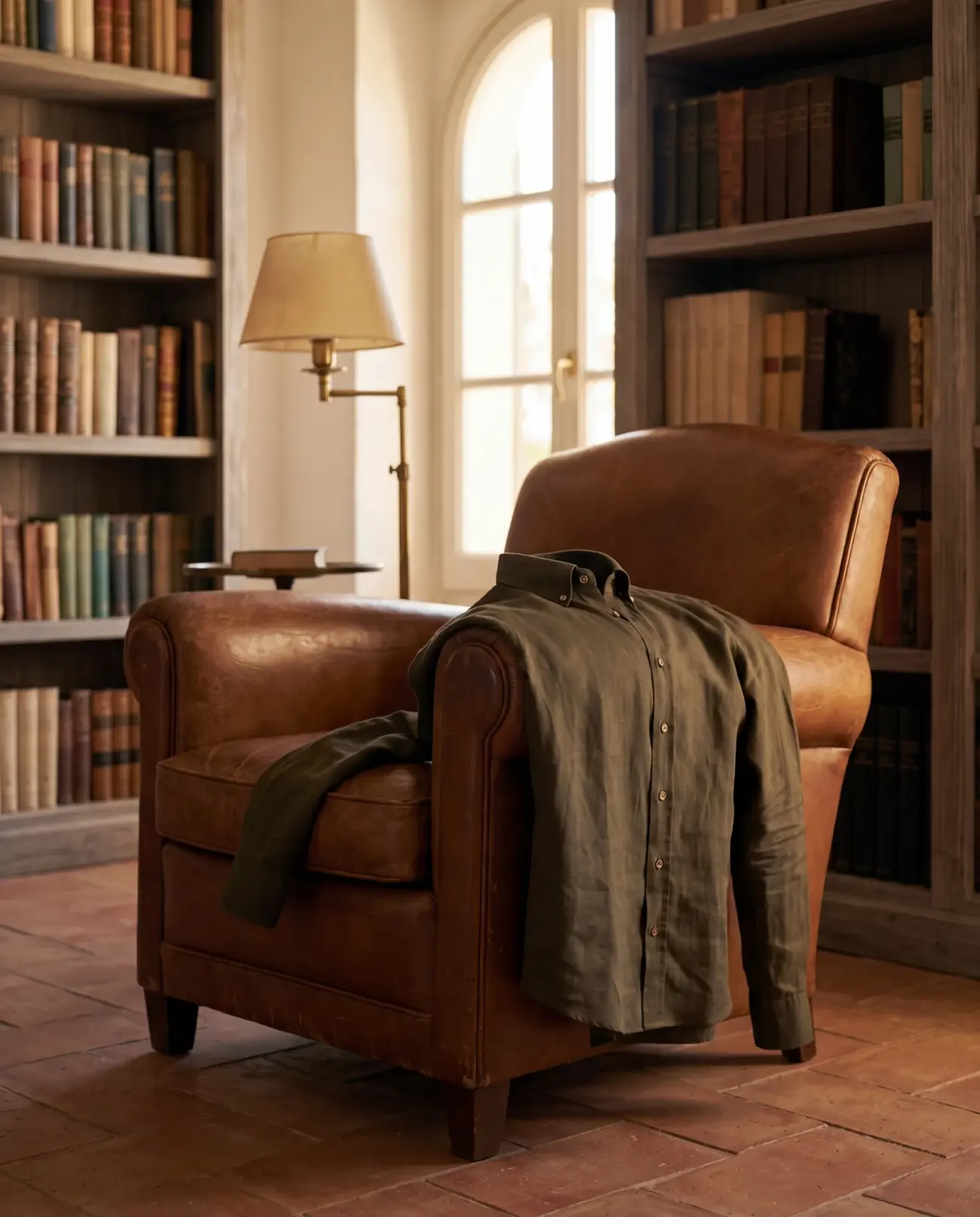
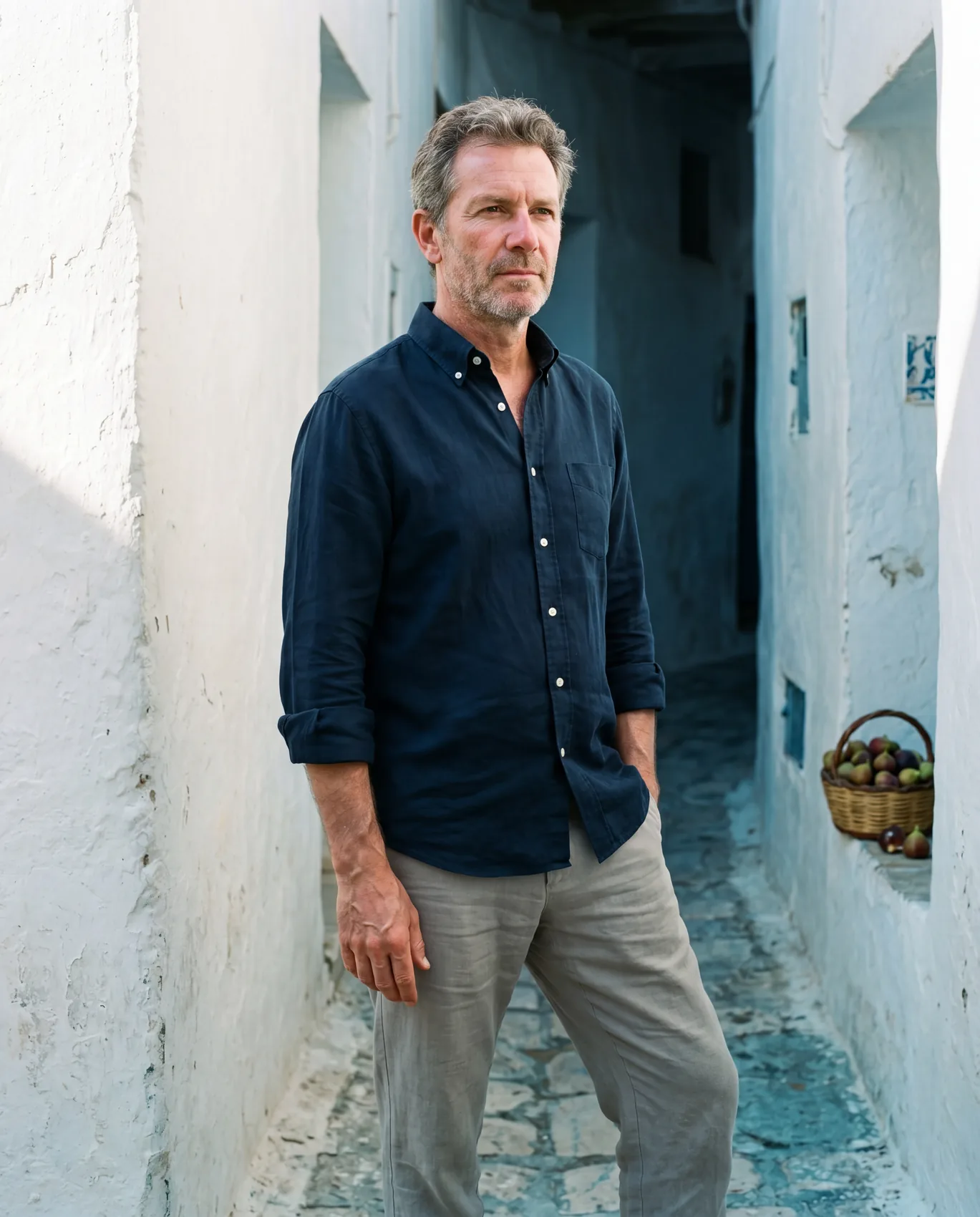
  • The Hollow — Shirts. 160 GSM · 100% European Linen · Yarn-Dyed · Enzyme Washed. ₹4,950. The shirt the studio reaches for on the days that matter — and most of the days that don't. Cut tapered through the body so the silhouette is shape-defined, then drawn loose through the chest and torso so the cloth moves with the wearer rather than against them. Woven at 160 GSM in 100% long-staple European flax — yarn-dyed at the spool so the colour lives inside each thread rather than coating the surface, then enzyme-washed in the finished piece so the second wear already feels like the fiftieth. Button-down collar that holds position through a working day. Box pleat at the back yoke for movement; no chest pocket so the line of the front stays clean. Four colourways — Ink, Chocolate, White, and Dark Olive. The same cloth in Natural sits on its sister product, The Cutaway, alongside the SS26 women's accents. Colourways: Ink, Chocolate, White, Dark Olive.
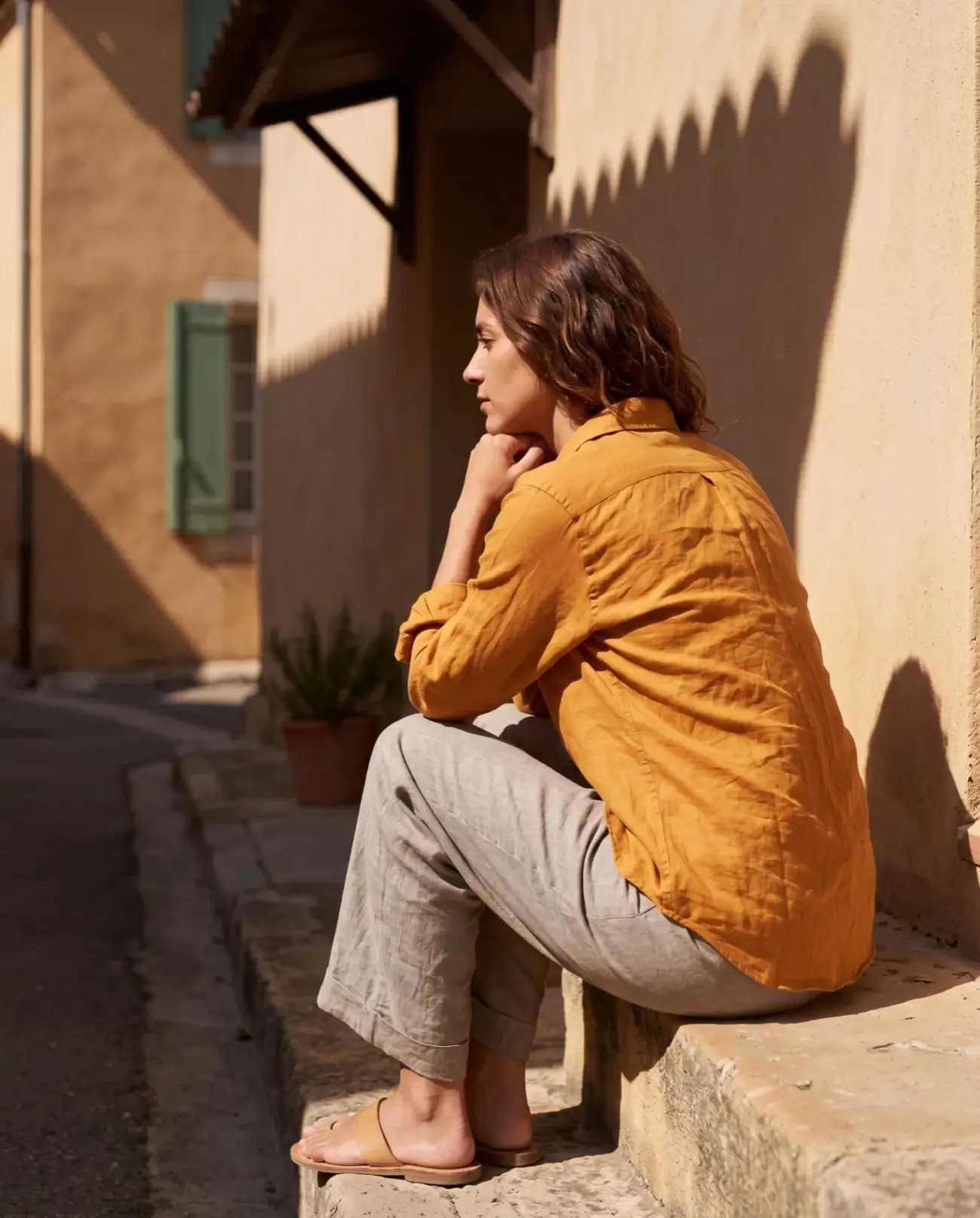
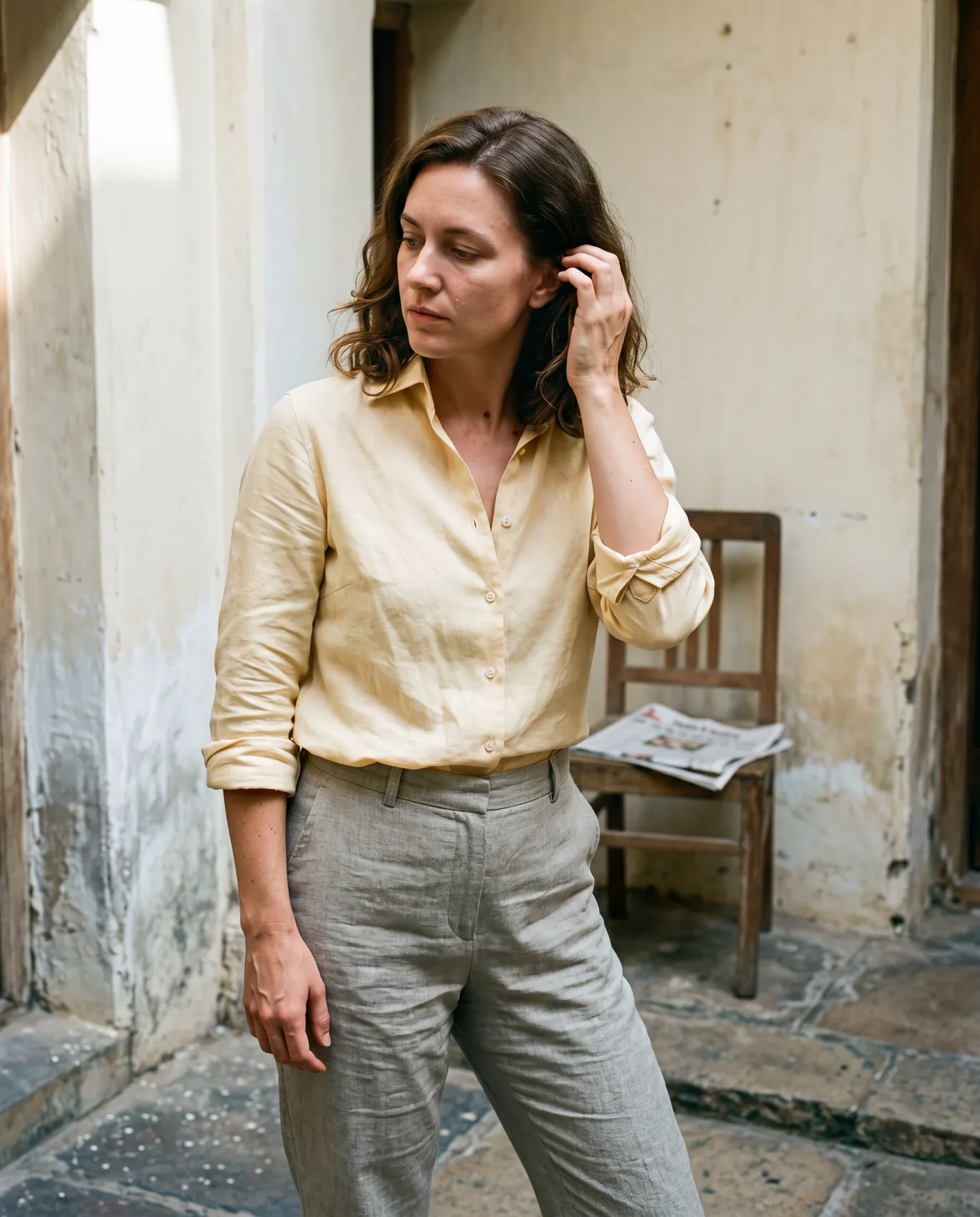
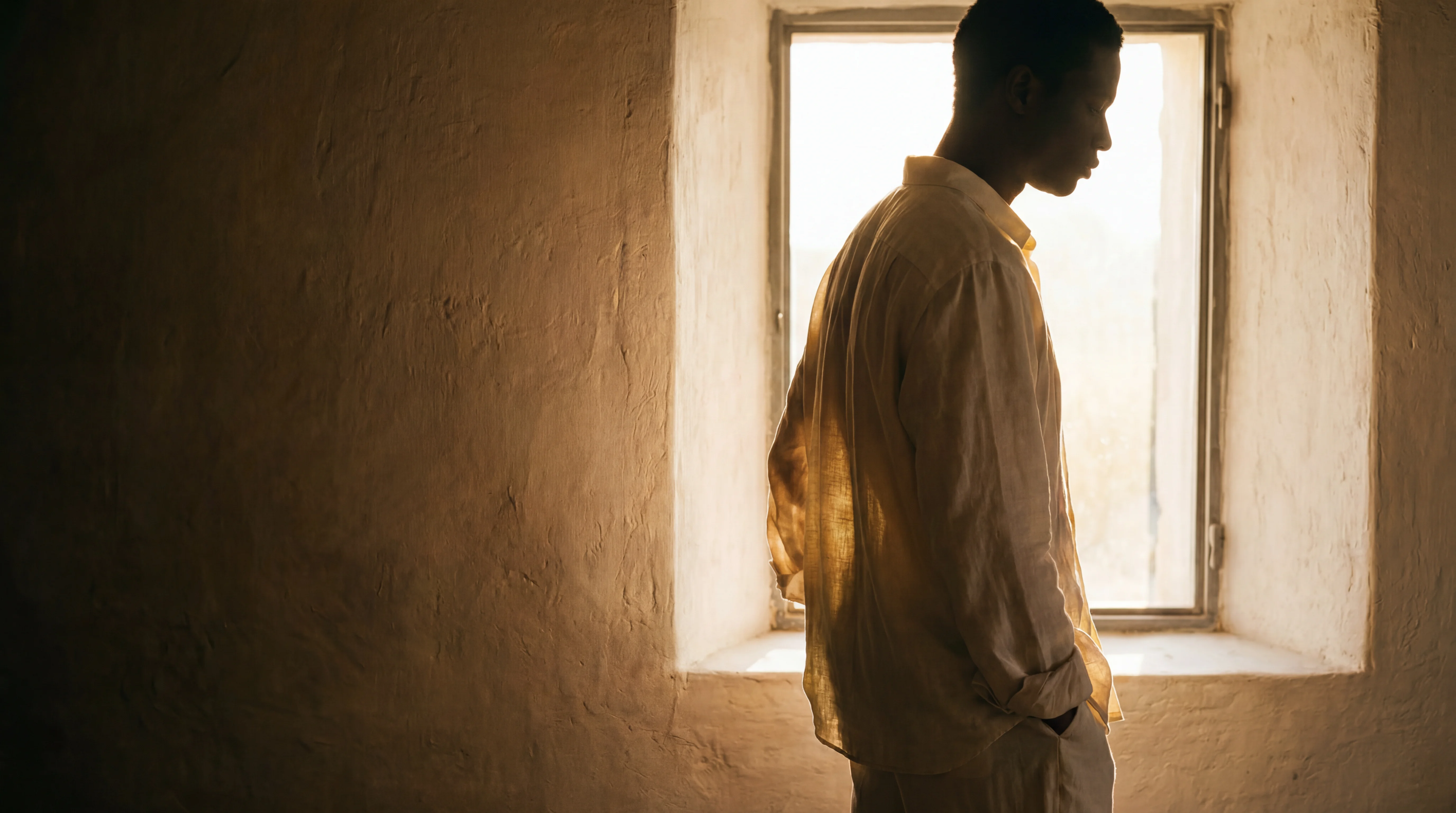
  • The Cutaway — Shirts. 160 GSM · 100% European Linen · Yarn-Dyed · Enzyme Washed. ₹4,950. Same cloth, same body, a different collar. The Cutaway pairs the Hollow's tapered drape with a spread / cutaway collar — a wide horizontal opening, soft natural roll, no buttons at the points — for the days when the line of the front needs to read open and unfastened rather than buttoned-down. Cut tapered through the body so the silhouette is shape-defined, then drawn loose through the chest and torso so the cloth moves with the wearer rather than against them. Woven at 160 GSM in 100% long-staple European flax — yarn-dyed at the spool so the colour lives inside each thread rather than coating the surface, then enzyme-washed in the finished piece so the second wear already feels like the fiftieth. Box pleat at the back yoke for movement; no chest pocket so the line of the front stays clean. Four colourways — Natural as the foundational neutral, Butter, Pale Pink and Saffron as the SS26 women's accents (soft pale, blush, and the deeper gold-orange). Colourways: Natural, Butter, Pale Pink, Saffron.
  • The Column — Trousers. 210 GSM · 100% European Linen · Mid-Rise · Tailored Straight · The Gravity Drape. ₹5,950. A tailored straight-leg linen trouser cut for the considered end of warm-climate dressing. The 210 GSM wet-spun European flax descends from a mid-rise waistband under its own weight, the cloth falling clean and straight from the hip to the hem — neither slim nor wide, but a precise considered line. The hem breaks once at the top of the shoe. Clean front — single tonal button-fly closure, three belt loops, slash side pockets, no pleats, no drawstring. 100% linen, no cotton, no compromise. Colourways: Stone, Ink, Natural, Olive.
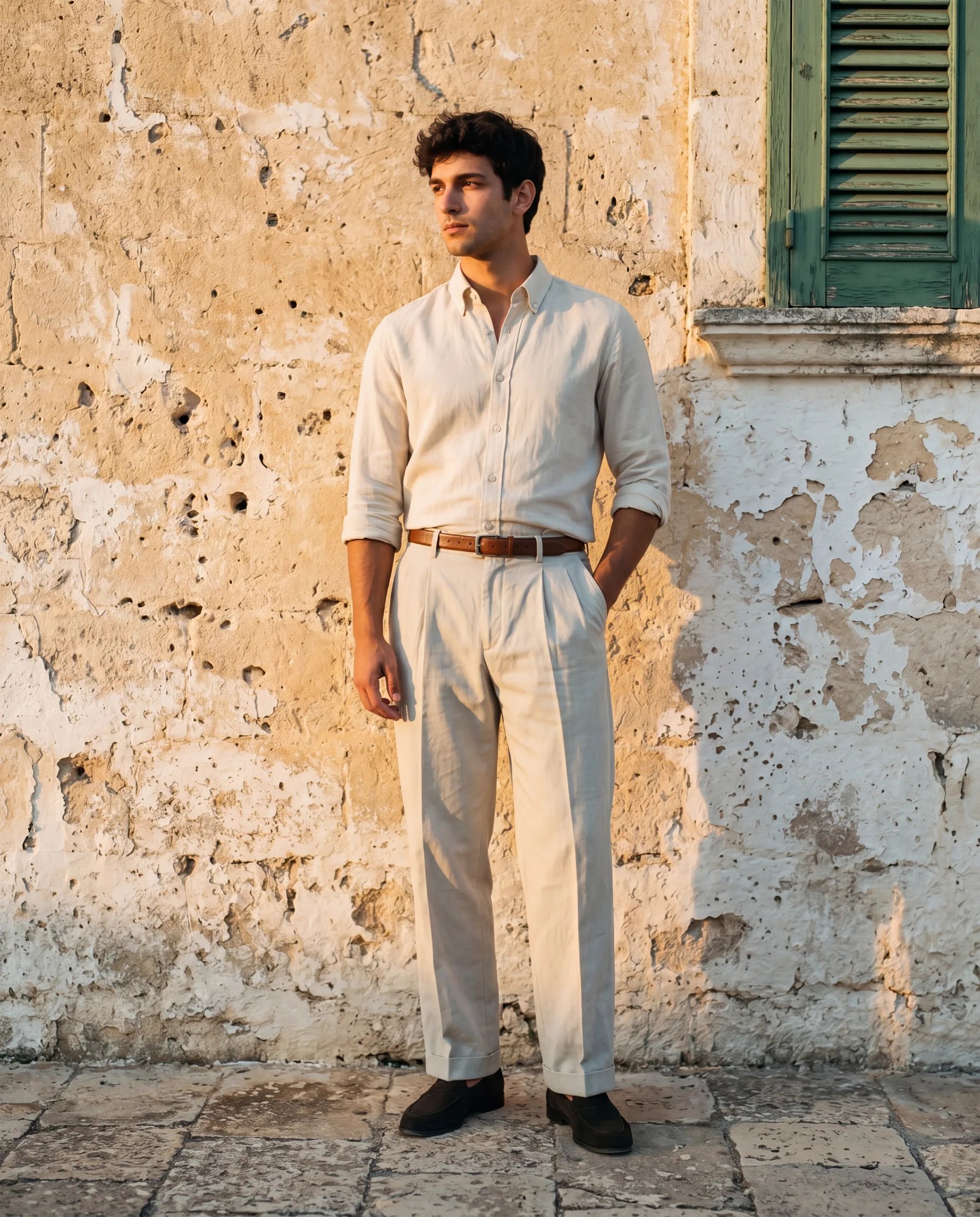
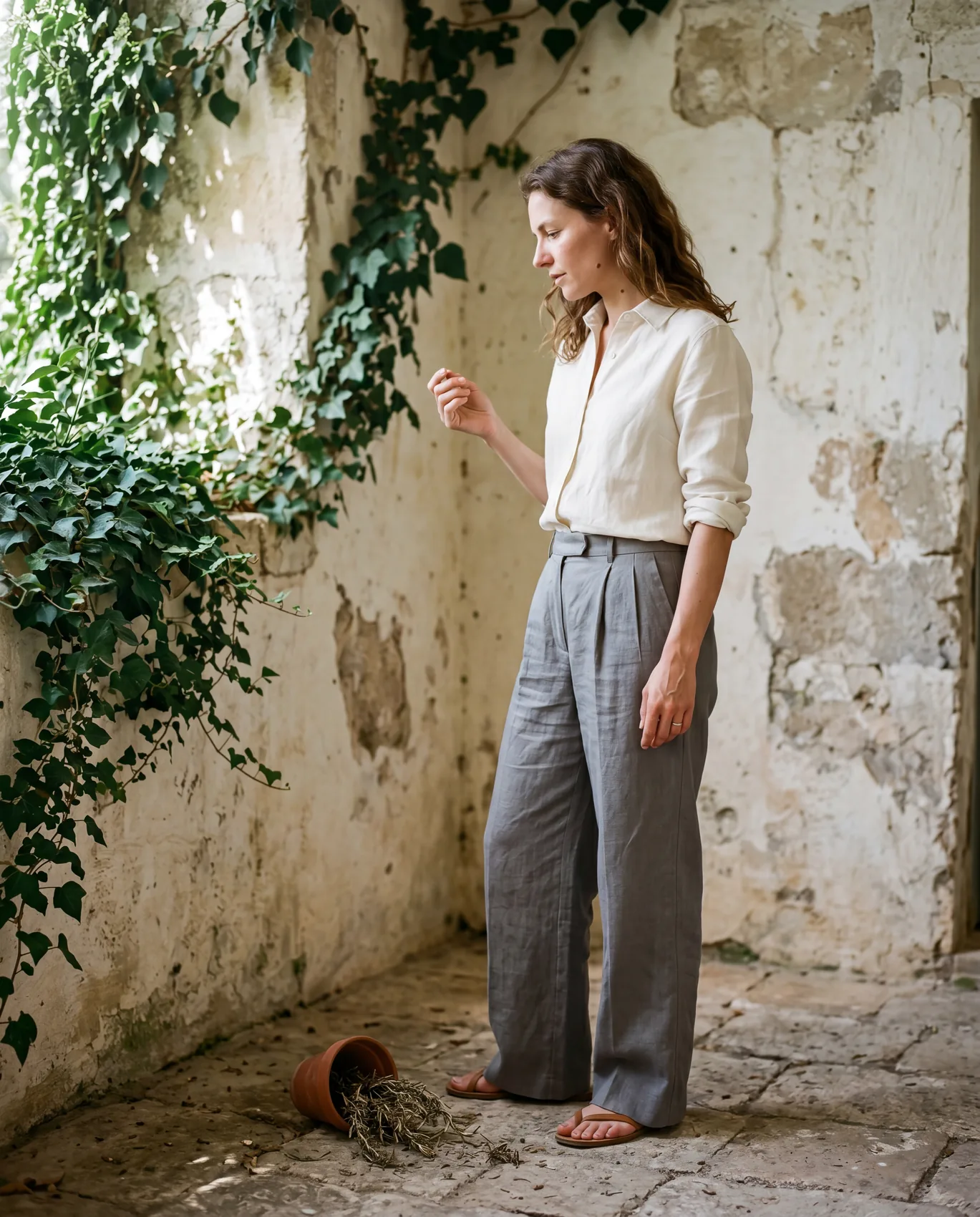
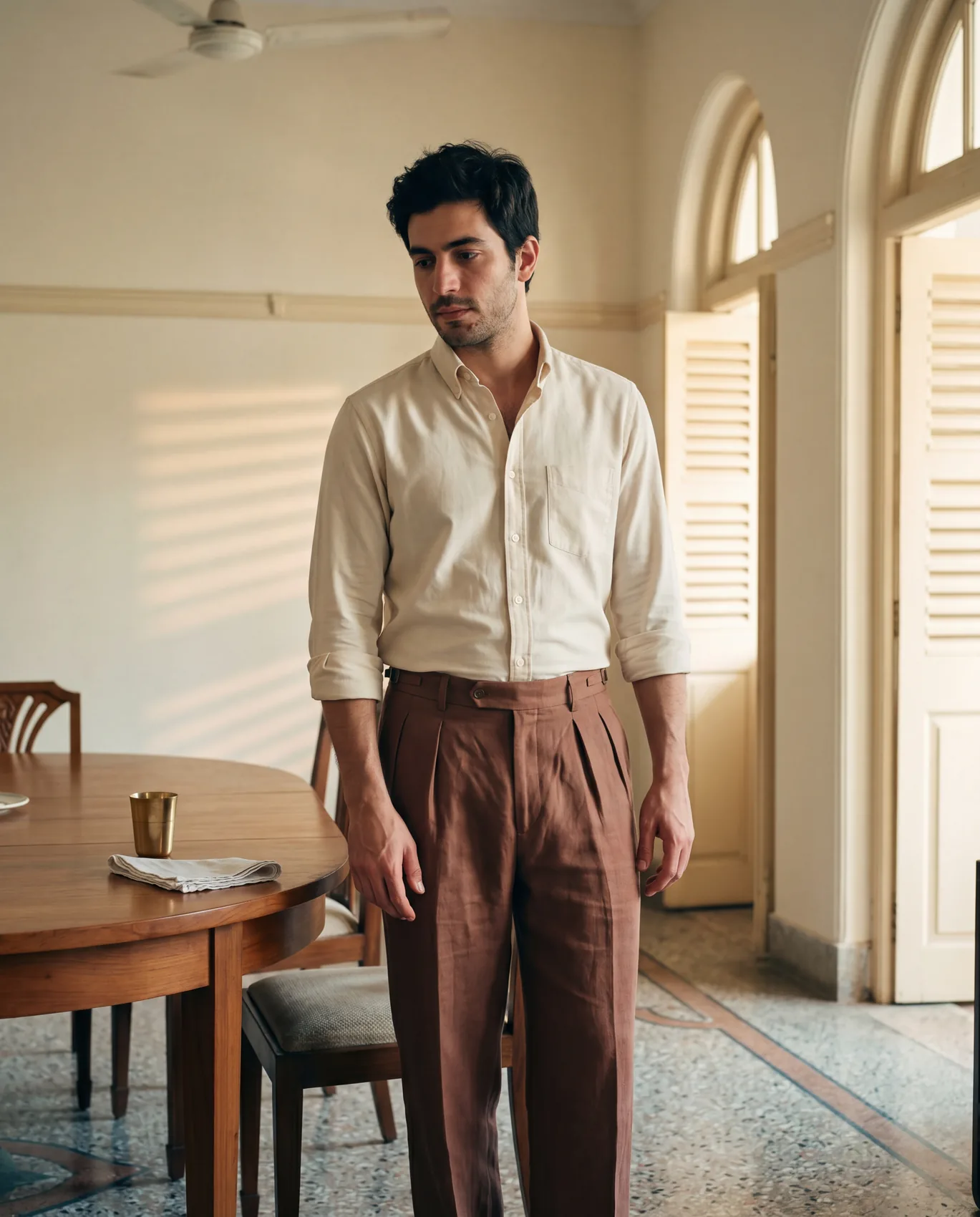
  • The Column Wide — Trousers. 210 GSM · 100% European Linen · High-Rise · Wide-Leg Pleated. ₹6,450. A wider, more dramatic cut of The Column — same 210 GSM wet-spun European flax, taken to a high-rise waistband and deep double pleats at the front. The cloth falls full and unbroken from the pleat to the floor in the gravity of the yarn alone, never tapered, never tight. A 1930s Italian-gentleman silhouette done in our linen — generous through the thigh, considered through the leg, finished with a turn-up. Pairs with the Hollow tucked in or the Frame open over a tee. The Column for those who want a quieter line; The Column Wide for those who want the silhouette to do the talking. Colourways: Stone, Natural, Tobacco, Olive, Ink.
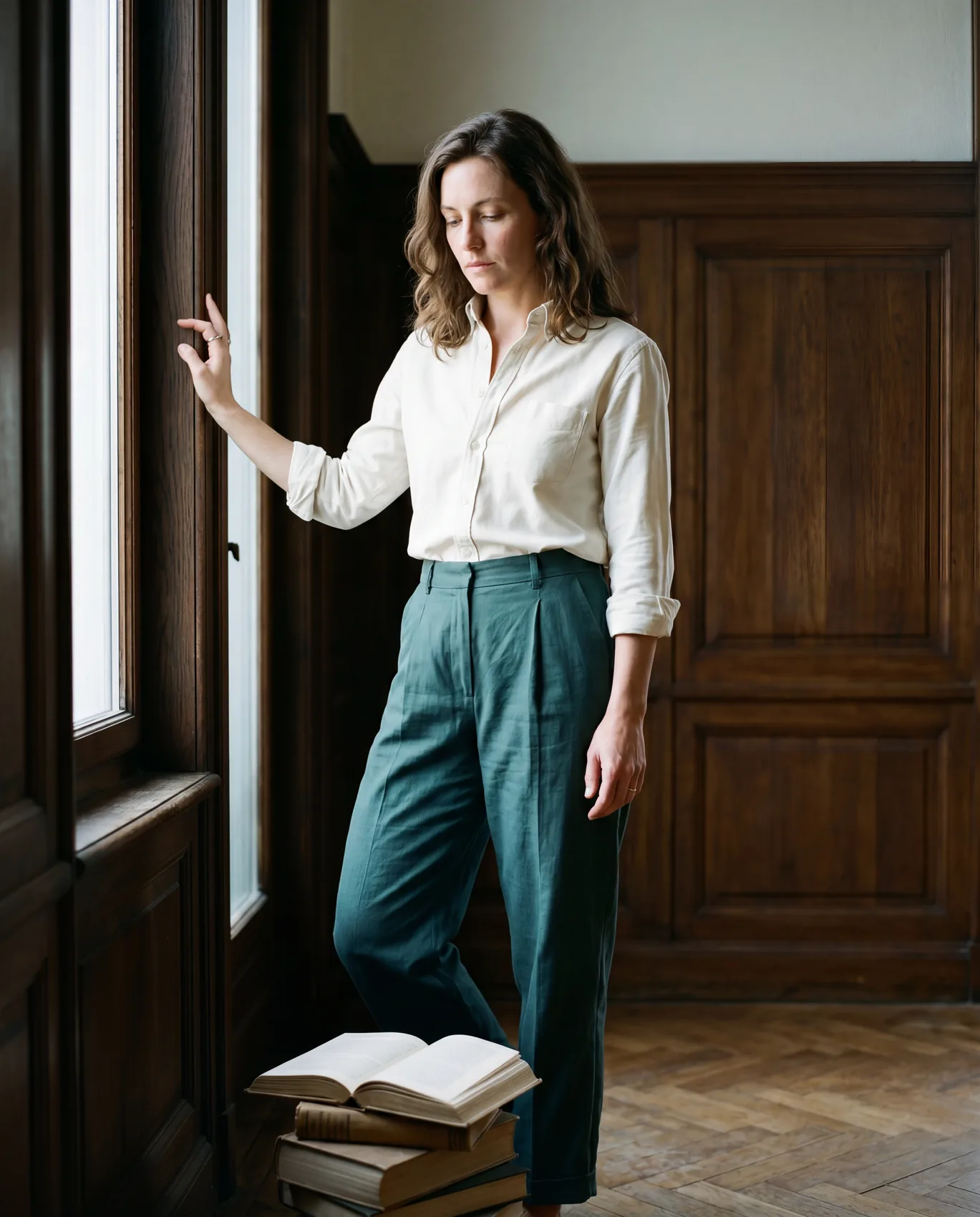
  • The Mirror — Trousers (Women’s). 210 GSM · 100% European Linen · Extra-High Rise · Wide-Leg Pleated. ₹6,450. The feminine counterpoint to the Column Wide. Same 210 GSM wet-spun European flax, recut for the woman’s form. An extra-high waistband sits at the natural waist; deep double pleats fall straight at the front into a wide-leg silhouette that drapes clean from hip through thigh to a plain straight hem at the ankle bone. Hidden side-zip on the left seam for a clean front line; two slash pockets, one back welt. Same architectural drape principle as the Column Wide, the same cloth — recut, with the small construction shifts that distinguish a women’s trouser from a man’s. Pairs with the Cutaway tucked in or open. Colourways: Bone (Mahogany, Seaweed, Pewter pending).
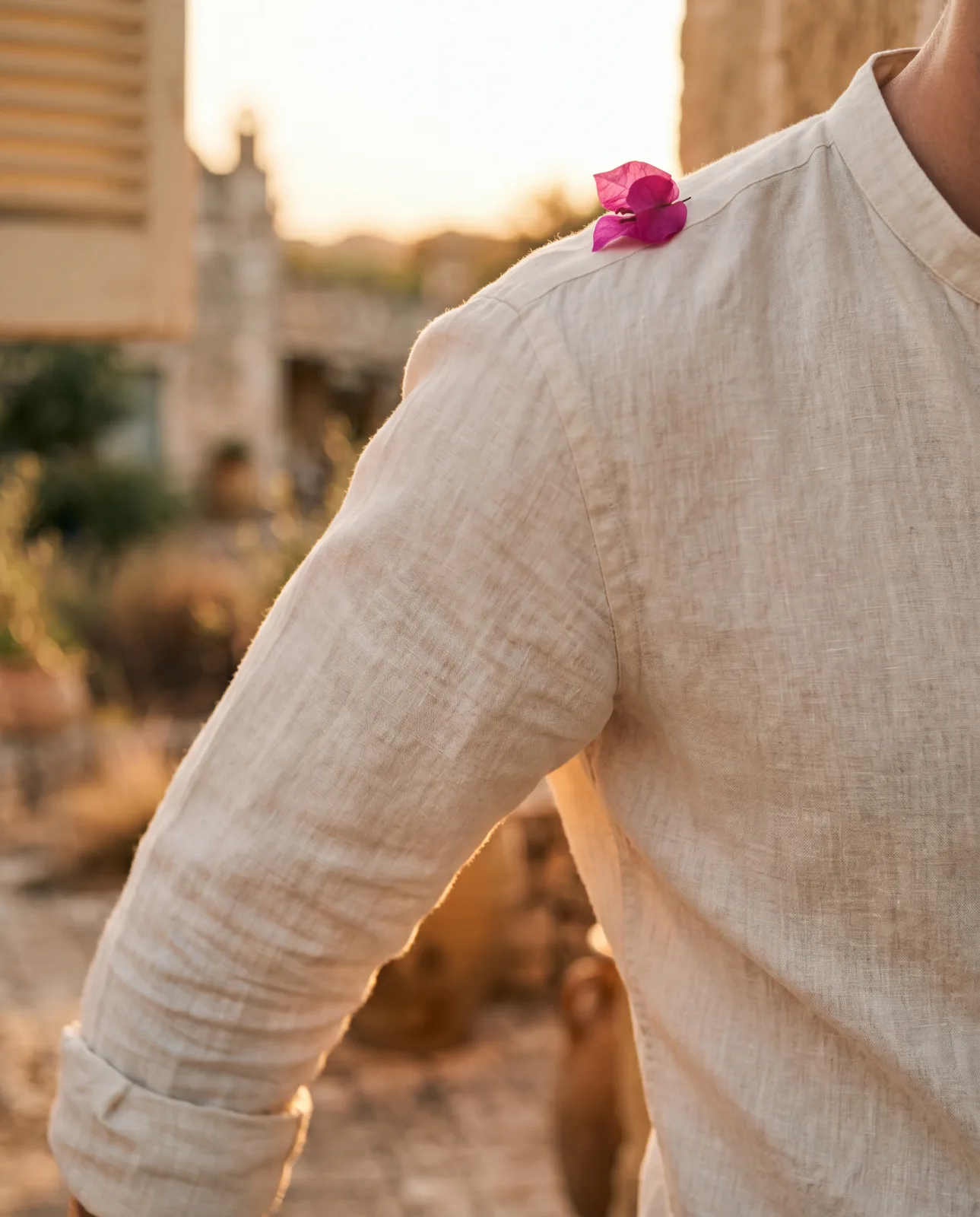
  • The Bare — Shirts. 160 GSM · 100% European Linen · Enzyme Washed. ₹4,950. The band collar earns its place in a wardrobe by removing a decision — no collar to press, no collar to wilt by lunchtime, no collar that reads as either too formal or too casual. Same fabric, same fit as The Hollow; only the collar changes. Reads as considered at the office, at dinner, on a Sunday. Colourways: Parchment, Stone, Ink, Powder, Sage.
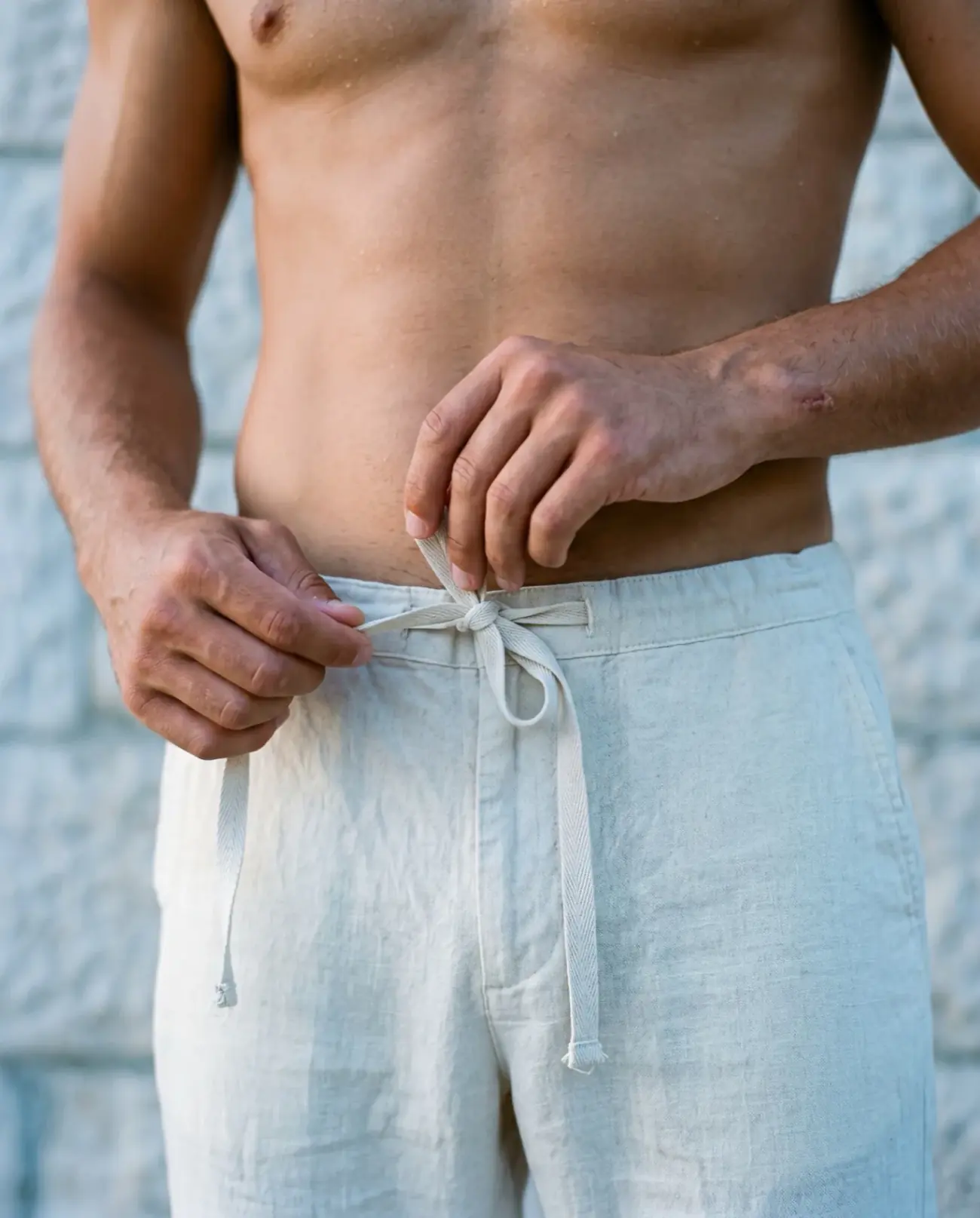
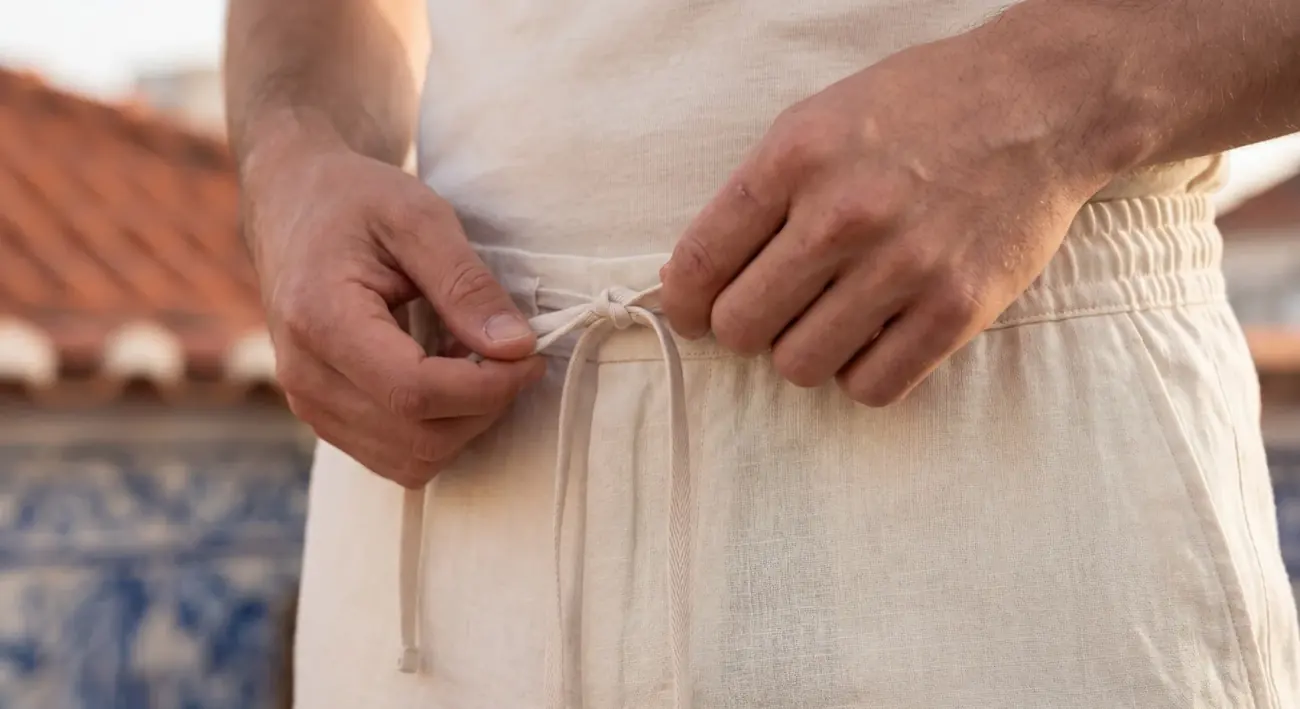
  • The Ease — Trousers. 210 GSM · 100% European Linen · Drawstring · The Gravity Drape. ₹5,450. A trouser cut to the same engineering principle as the Column, in a more forgiving register. Drawstring waist over an elastic back panel; the 210 GSM wet-spun European linen carries its own weight to the floor. Architectural room through the hip and thigh, straight to the ankle — no taper, no cling. The silhouette is the gravity of the yarn, not the cut. The leg never adheres to skin in heat. Colourways: Parchment, Stone, Natural.

Edits

  • Pieces for when the heat won't break.. Linen built for it, not against it. Lighter weights, looser cuts, the colours that hold up to glare. Worn through afternoons that ask nothing of you.
  • Pieces that hold their line for the whole day.. Heavier cloth, controlled cuts. The pieces you reach for when the day is full and you need clothes that don't ask anything back. Morning meetings through the walk home.
  • Pieces that go in a single roll.. Linen packs flat. These four pieces between them carry you through a week — heat and air-conditioning, plane and terrace, walks and tables. Each washes back to itself.

Journal

  • The Cloth That Returns.. A note on the cloth and where it goes — without using the word that most brands use loudly.
  • Why Linen Works in Hot Weather.. The structural reasons linen outperforms every other fabric above thirty degrees — and why hot-climate wardrobes never should have abandoned it.
  • Understanding Fabric Weight (GSM).. The single most useful number in fabric evaluation. What it means, why it matters, and how to read it on a product page.
  • How Linen Ages Over Time.. Most fabrics decline. Linen is one of the few that improves. Three years of wear, observed.
  • Linen at the Office.. Three configurations that work in a formal context — and the structural reason each one holds without effort.

Information & service

  • Care for your linen.. Line dry · in shade Linen rewards good habits. Treat it well and it will soften, drape, and outlast almost anything else in your wardrobe. Treat it badly and it will tell you so within a season. Washing Cold water, gentle cycle. Mild detergent, free of optical brighteners
  • Shipping & returns.. Each piece insured in transit on despatch Pre-order — current status ARKEN is currently on pre-order. Production timelines are firming up; we will write to every ordered client by name when ship dates are set. Until then, no piece leaves the studio. Specific shipping rates
  • Size guide.. Reference · the four measurement points ARKEN garments are cut to a relaxed-tapered fit unless specified otherwise. Linen relaxes ~3% with the first wash; we account for this in the pattern, so the size you order is the size it remains. Shirts & overshirts SizeChe
  • Size consultation.. Personal · complimentary · discreet If you've never worn ARKEN before, fit can be an act of faith. We'd like to remove that. Send us your height, weight, chest, waist, and a photograph of yourself in a shirt that fits you well — and our concierge will recommend the size, fit, an
  • Speak with ARKEN.. Concierge The fastest way to reach us. Sizing, fit, fabric, returns, anything garment-related. WhatsApp +91 XXXXX XXXXX  ·  concierge@arkenofficial.com Hours: Monday to Saturday, 10:00 to 19:00 IST. WhatsApp messages outside these hours are answered the next morning. Press &
  • Practical questions.. Will the linen wrinkle? Yes. Linen wrinkles. This is part of the material's character, not a flaw. ARKEN's enzyme-washed finish gives the wrinkles a relaxed, lived-in quality rather than a sharp, dry one. If a perfectly smooth garment matters to you, linen may not be the right fabric. W
  • Press & mentions.. For editorial requests, image rights, and product loans, please write to studio@arkenofficial.com. We respond within two business days. A press kit including high-resolution lookbook imagery, brand statement, founder biography, and product specifications is available on request. Recent
  • Privacy.. The short version: we collect what we need to fulfil your order and keep you informed about ARKEN. Nothing more. We do not sell, rent, or share your data with anyone outside our shipping and payment partners. What we collect Name, shipping address, email, phone — to fulfil orde
  • Terms of service.. By using arkenofficial.com you agree to these terms. They are written plainly because legal language tends to obscure rather than clarify. Orders An order is confirmed only when payment clears and we email confirmation. Until then, prices and availability are subject to change. We reser
ARKEN
  • Shop ›
    New In
    Shirts Trousers Layers
    All pieces  →
  • Edits
  • The Fabric
  • Editorial
New In
Shop
Shop All Shirts Trousers Layers
Discover
Lookbook Edits The Fabric The Standard The Hands Editorial Studio Notes About
Service
Wishlist Visit the Studio Shipping & Returns Size Guide Speak with the Studio
Bag

The bag is empty.

Begin with a single piece. Wear it through a season.

Items ₹0
The Linen Trio −₹0
Subtotal ₹0
Delivery and tax resolved at checkout.

Linen softens with wear. Buy for the year.

30 days to exchange or return, on unworn pieces with original tags.
Between sizes?

Image viewer

Tap outside or × to close
A Note to the Studio

Register your interest.

A short note to the concierge. We will let you know — by name, by email — the moment the piece returns to the atelier in your size.

Added to bag
Region & language

Where are you shopping from?

ARKEN ships in India today. International launch is in planning — register below to be told first.

United Kingdom English  ·  £ GBP Coming
European Union English  ·  € EUR Coming
United States English  ·  $ USD Coming
Japan English  ·  ¥ JPY Coming
Elsewhere By request Coming
Notify me

One quiet message when ARKEN ships to your region. Nothing else.

Find my size

A few details. One recommendation.

No account, no follow-up email. The numbers stay on this page.

Height
ft in
cm
Build
Fit preference

Heuristic guidance only. The concierge can advise more precisely — speak with a stylist.

Recommended
M

Based on your details, we'd suggest size M.

A man and a woman in linen, leaning against a low whitewashed parapet on a stone terrace overlooking the Adriatic at golden hour
A study in linen.

Made for heat.
Made to last.

Scroll
As seen in

First, the cloth.

The Hollow in Ink — a man in a deep navy linen button-down shirt and Stone Column Wide trousers, seated reading in a leather club chair in an Apulian masseria library
Shirts
The everyday linen shirt.
3 cuts · 9 colourways Shop  →
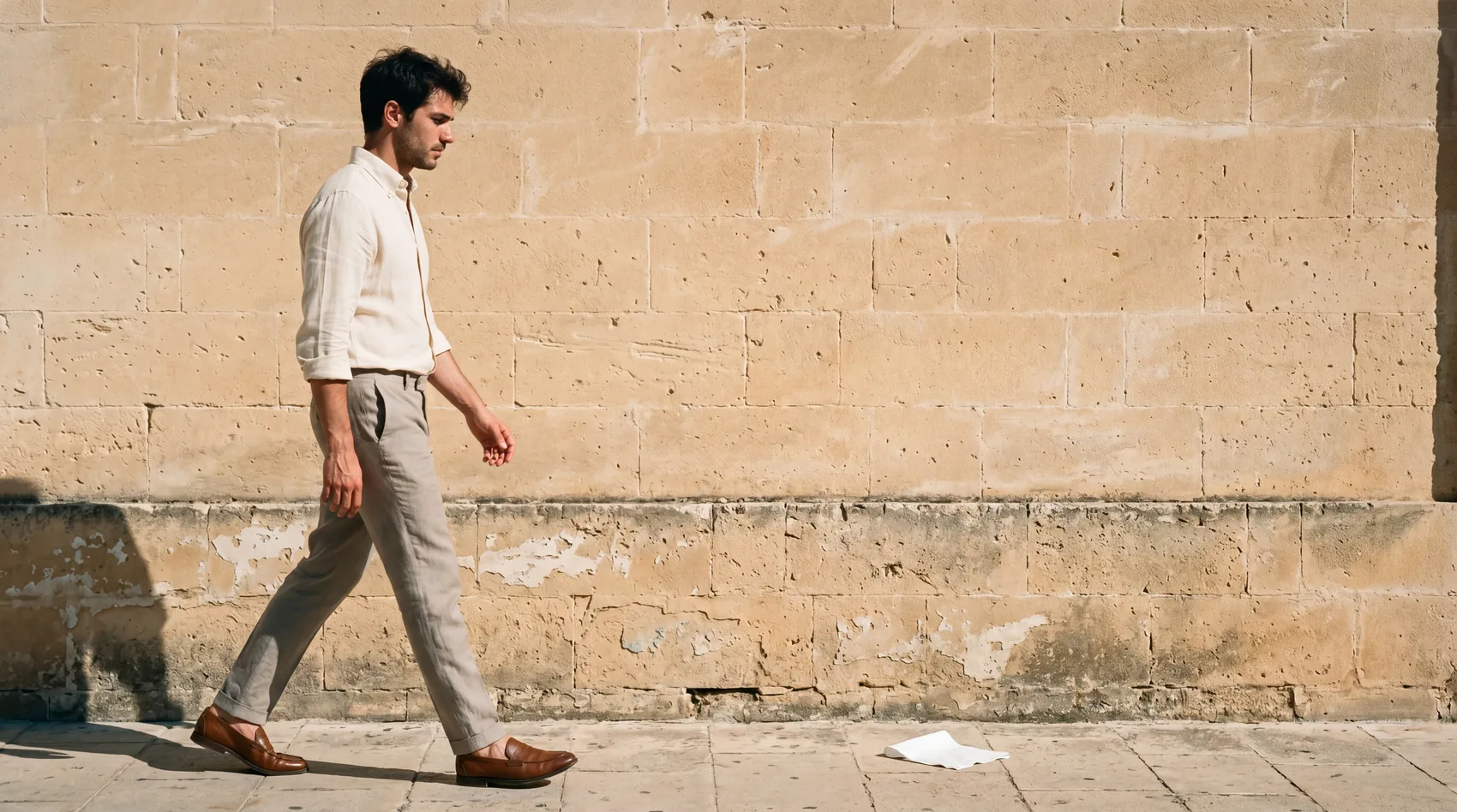
The Column in Stone — a man in stone wide-leg pleated linen trousers and cream linen shirt, against a weathered honey-stone masseria wall at golden hour, green shutter edge in frame
Trousers
A trouser that drapes by weight.
3 cuts · 9 colourways Shop  →
The Frame in Olive — a sage-olive linen overshirt draped over a worn dark oak chair in a sunlit Apulian masseria room, terracotta tile floor
Layers
The shirt you wear over the shirt.
2 cuts · 9 colourways Shop  →
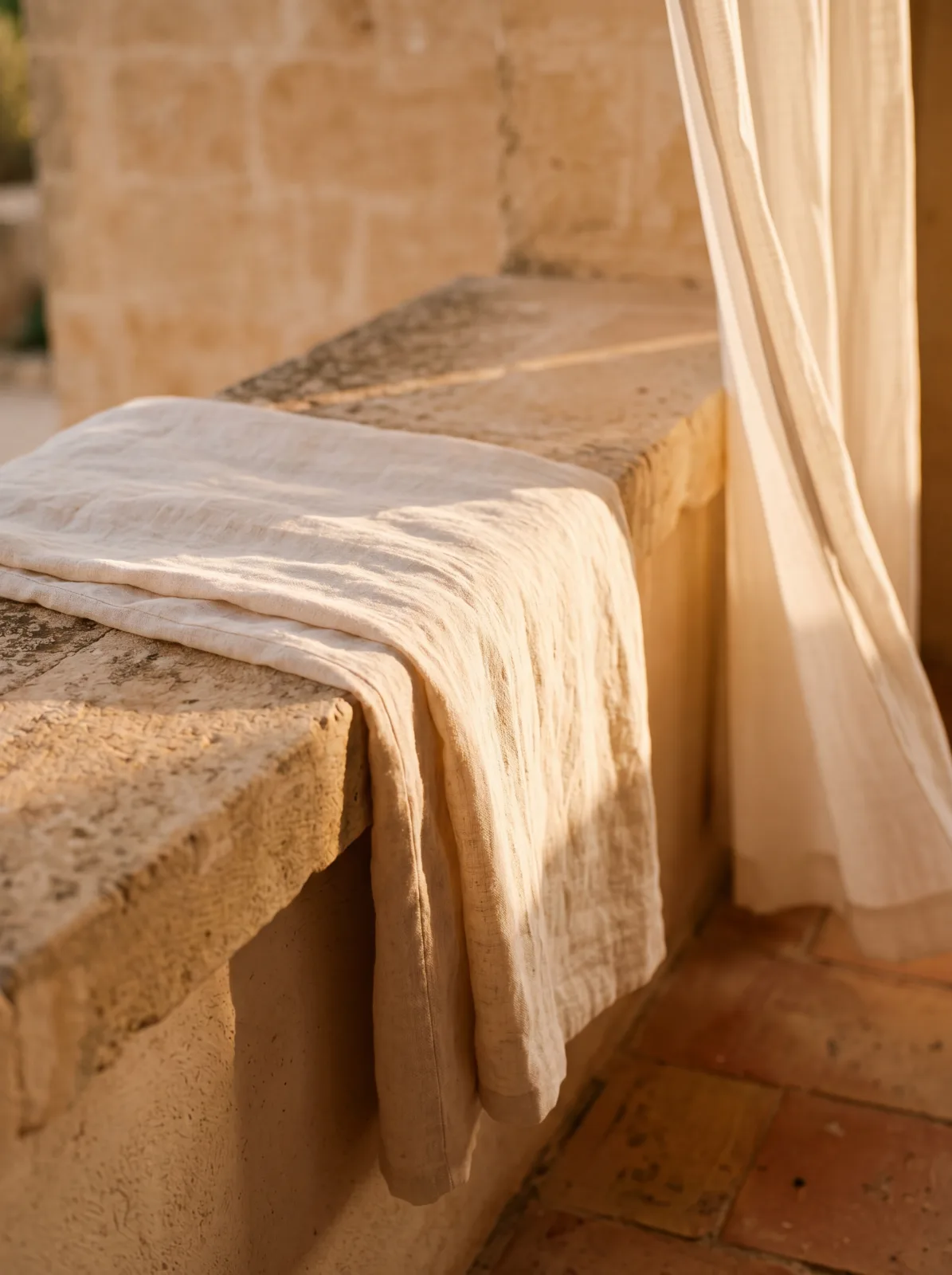
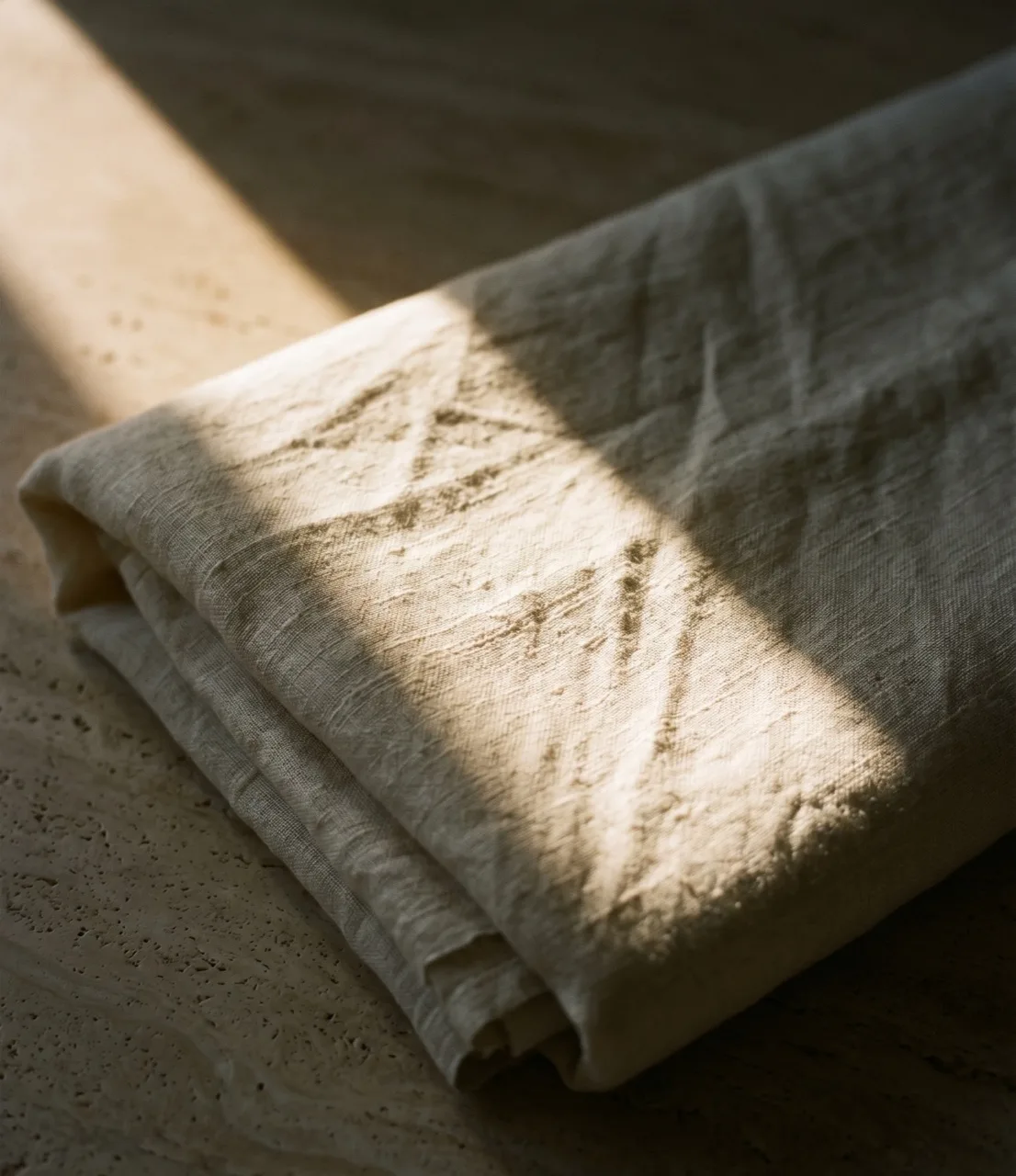
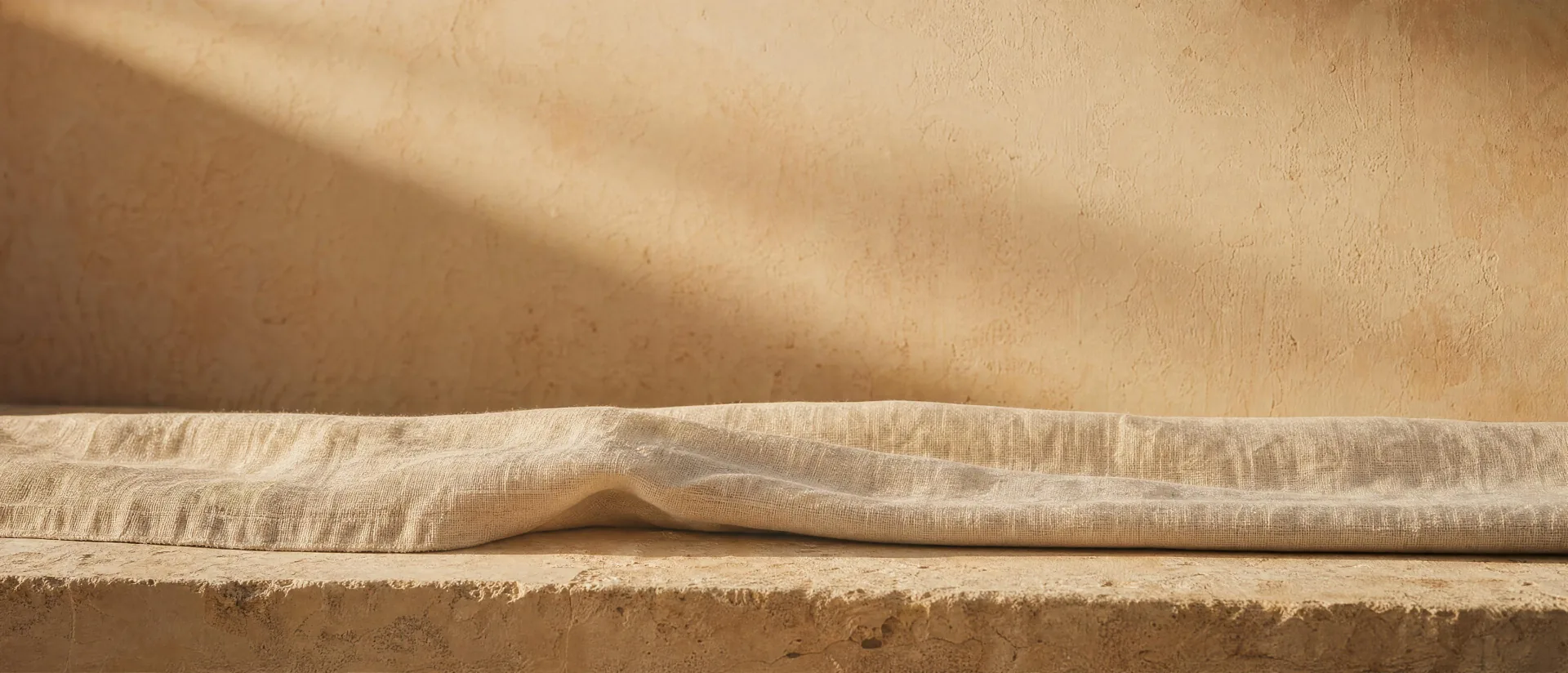
A folded length of cream linen on travertine
Editorial
The fabric that improves with age.
Linen Lifecycle · The Standard Read  →
A man in a sage-olive linen overshirt over a pale chambray shirt and stone wide-leg pleated linen trousers, leaning against a weathered Apulian villa wall in soft afternoon light
A complete uniform

The Linen Trio.

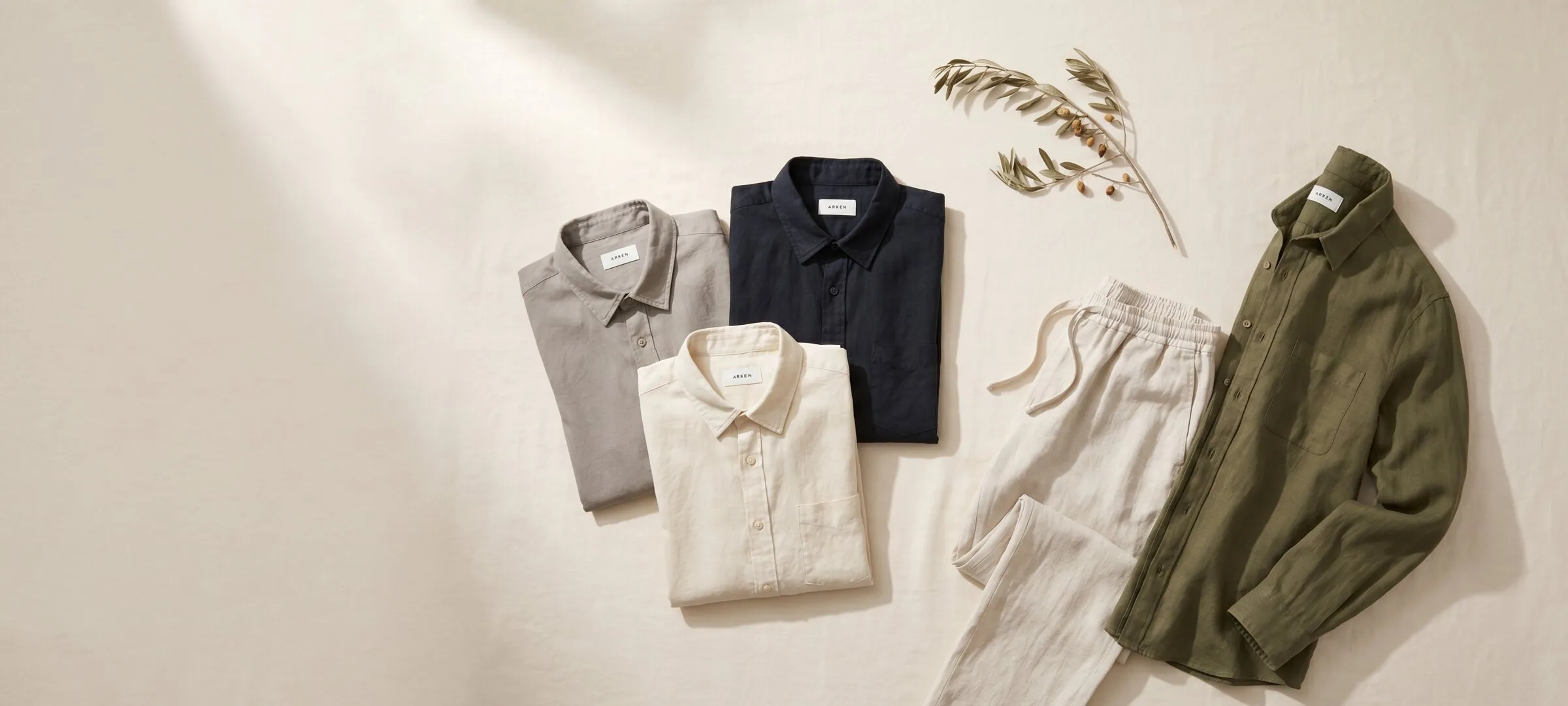
Shirt, trouser, overshirt. One linen, three weights.

  • 01 The Hollow — Classic Shirt
  • 02 The Column — Linen Trouser
  • 03 The Frame — Canvas Overshirt
₹15,900

Sizes selected at the cart. Returns and exchanges as standard.

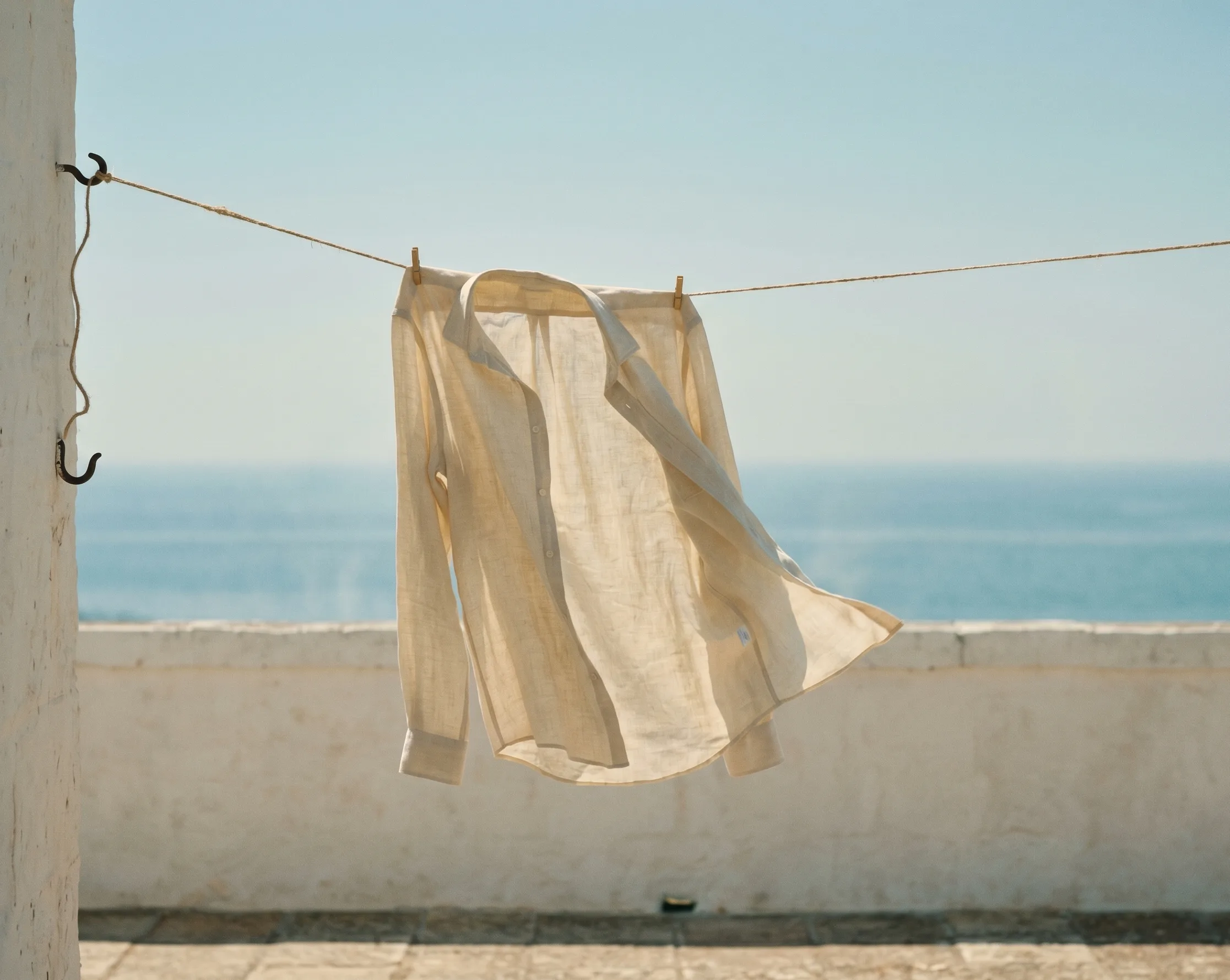
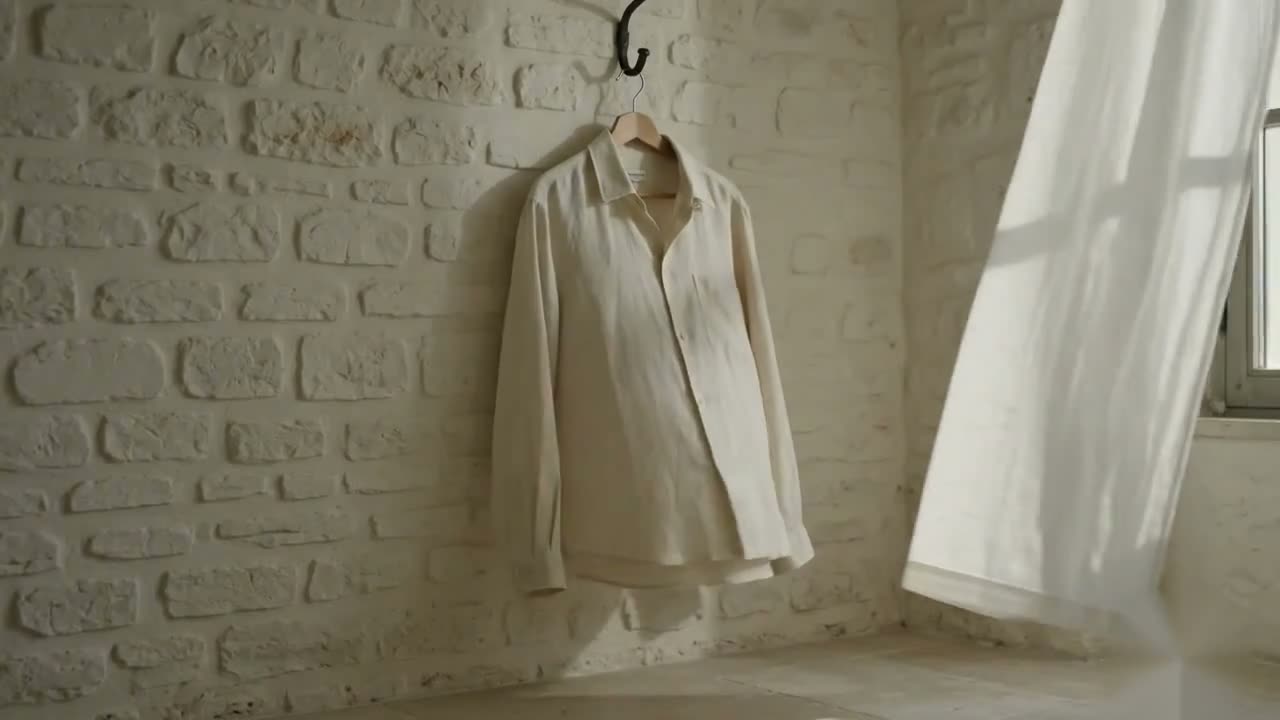
A cream linen shirt on a natural-jute clothesline strung across a low whitewashed parapet, the Adriatic hazy behind, a soft breeze catching one corner of the cloth
Fabric · 5 min
Why Linen Works in Hot Weather
Read  →
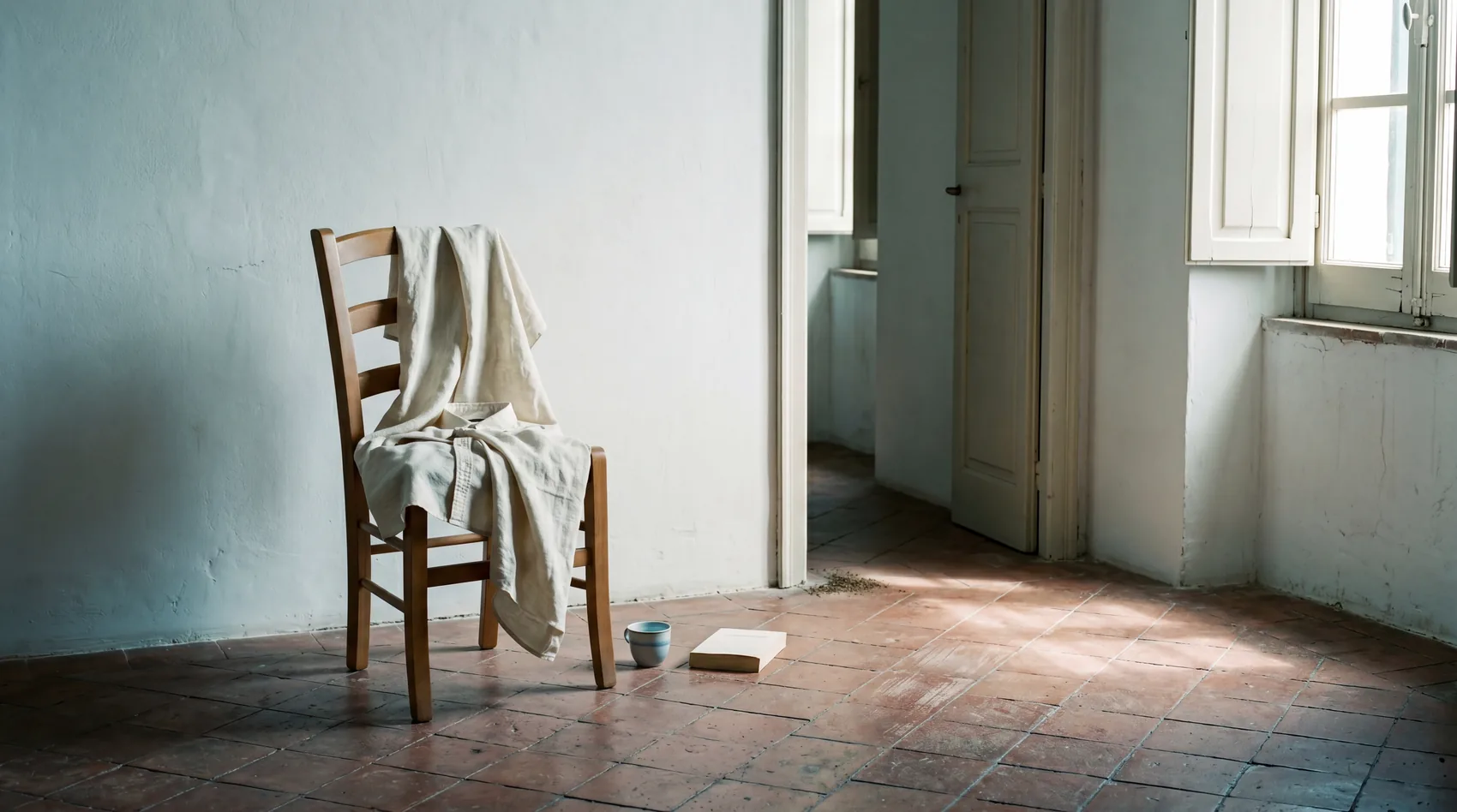
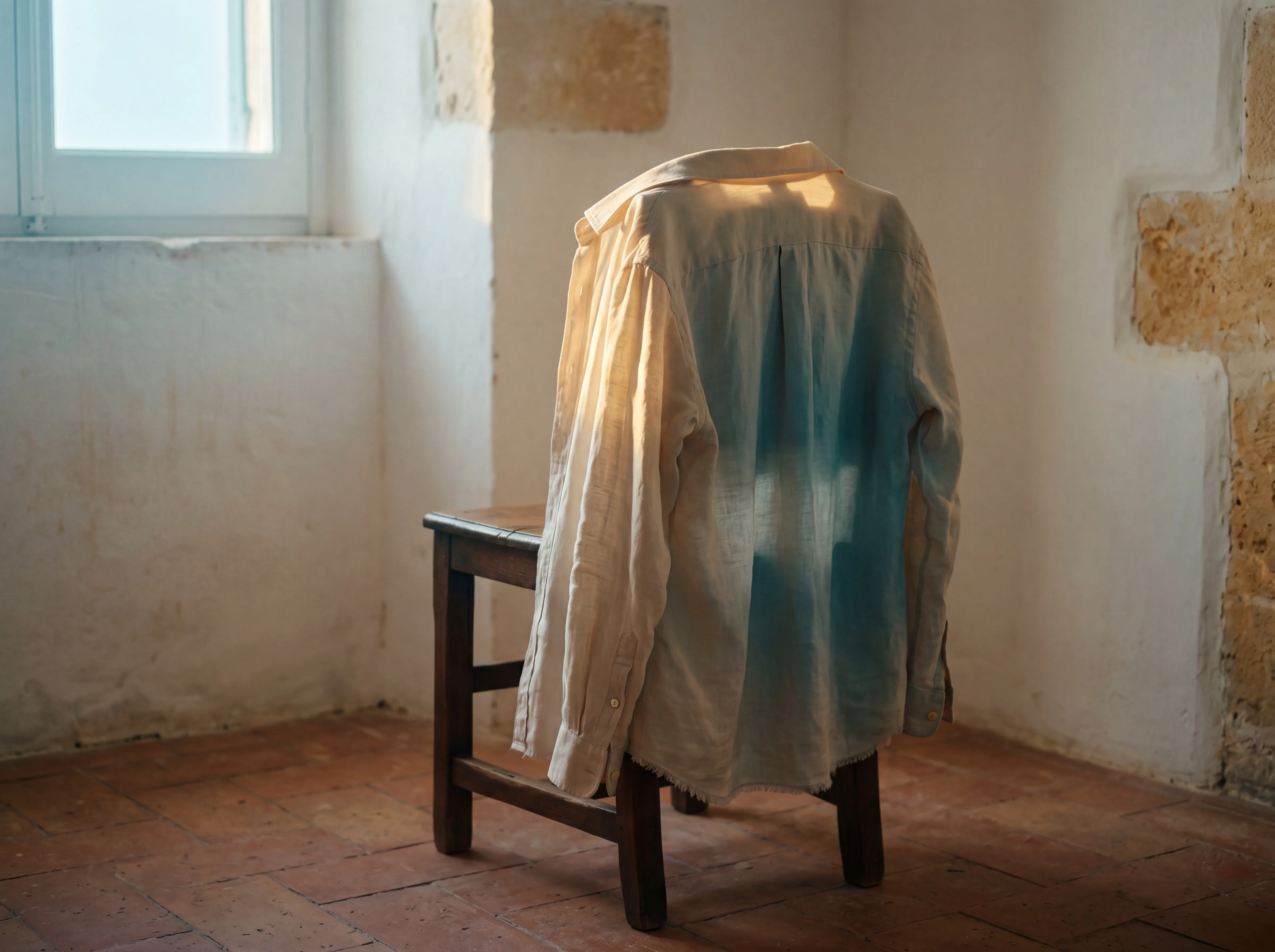
A worn cream linen shirt draped over the back of a simple wooden stool in a stone-floored masseria bedroom, late afternoon window light from the side
Craft · 7 min
How Linen Ages Over Three Years
Read  →
A folded length of cream linen on a stone slab in late afternoon light — the standard
Authority
How to verify real linen in five tests
Read  →
ARKEN collection — drape and weight
Shop

All Pieces

Every piece declared. Weight. Origin. Wash count. Most brands don't publish this.

The Hollow in Ink — a man in a deep navy linen button-down shirt and Stone Column Wide trousers, seated reading in a leather club chair in an Apulian masseria library
Shirts
The everyday linen shirt.
3 cuts · 9 colourways Shop  →
The Frame in Olive — a sage-olive linen overshirt draped over a worn dark oak chair in a sunlit Apulian masseria room, terracotta tile floor
Layers
The shirt you wear over the shirt.
2 cuts · 9 colourways Shop  →
The Column in Stone — a man in stone wide-leg pleated linen trousers and cream linen shirt, against a weathered honey-stone masseria wall at golden hour, green shutter edge in frame
Trousers
A trouser that drapes by weight.
3 cuts · 9 colourways Shop  →
Category
Fit & Use
The ARKEN Fabric Story

The fabric that
improves with age.

⊕
European Flax
France & Belgium origin
◈
Single mill
Spun and woven in India
△
Enzyme Washed
Soft from first wear
A man in parchment linen seated by a deep stone-framed masseria window, late afternoon side-light cutting across the cloth, a ceramic cup of water on the sill

Flax grown in Belgium and northern France.

Spun and woven in India.

Returns to soil in months.

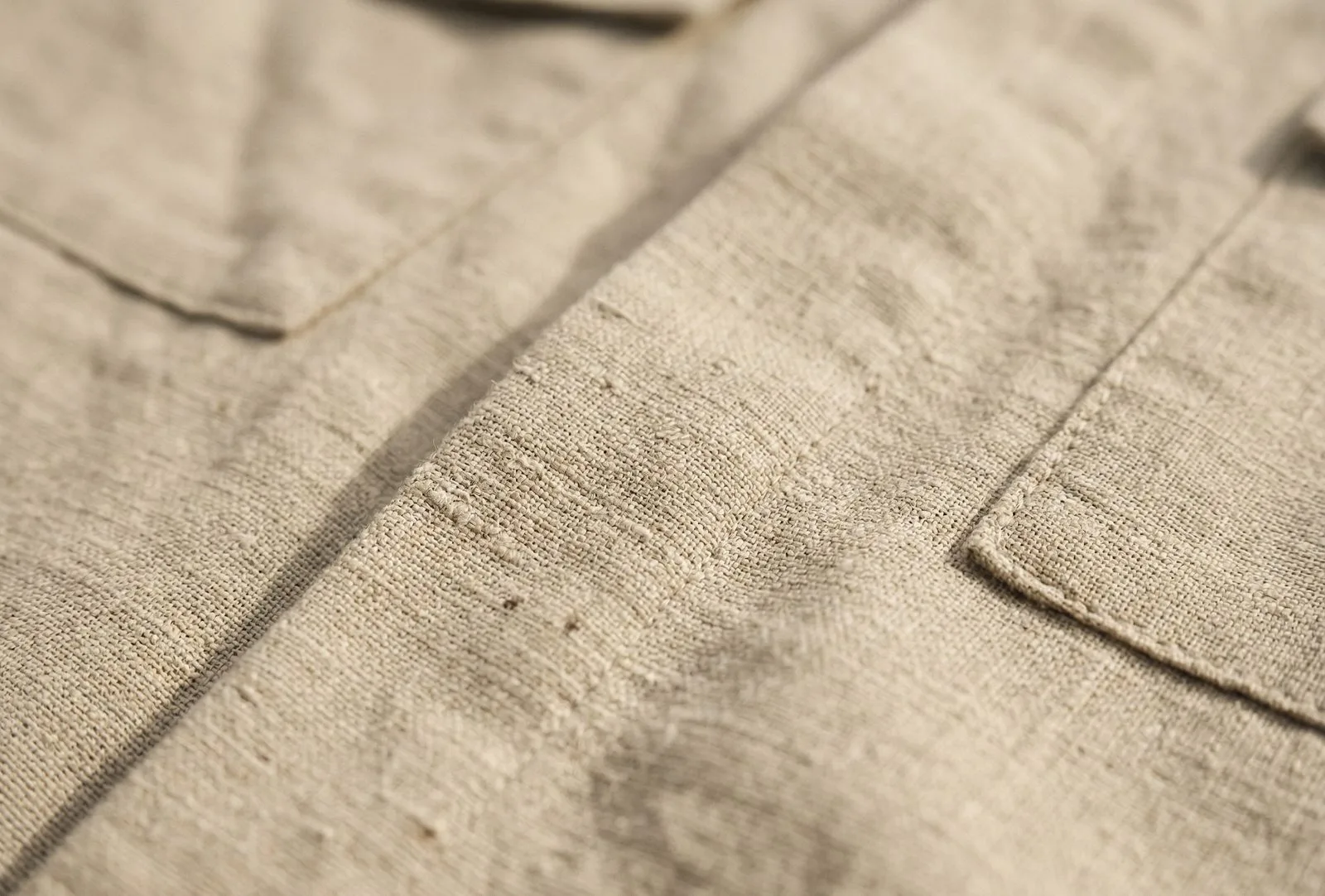
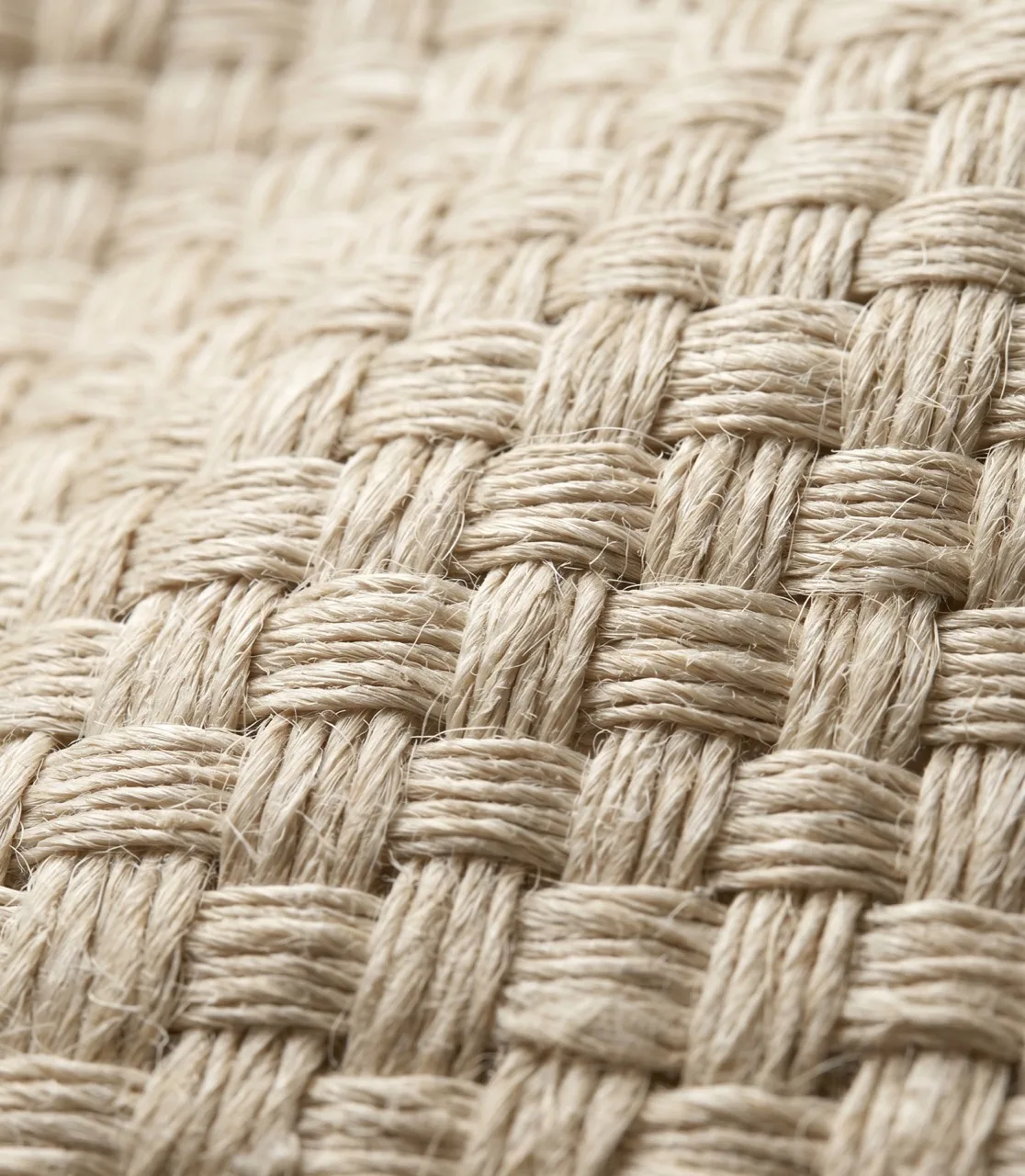
True 1:1 macro of cream long-staple linen weave — individual fibre slubs visible
Woven texture
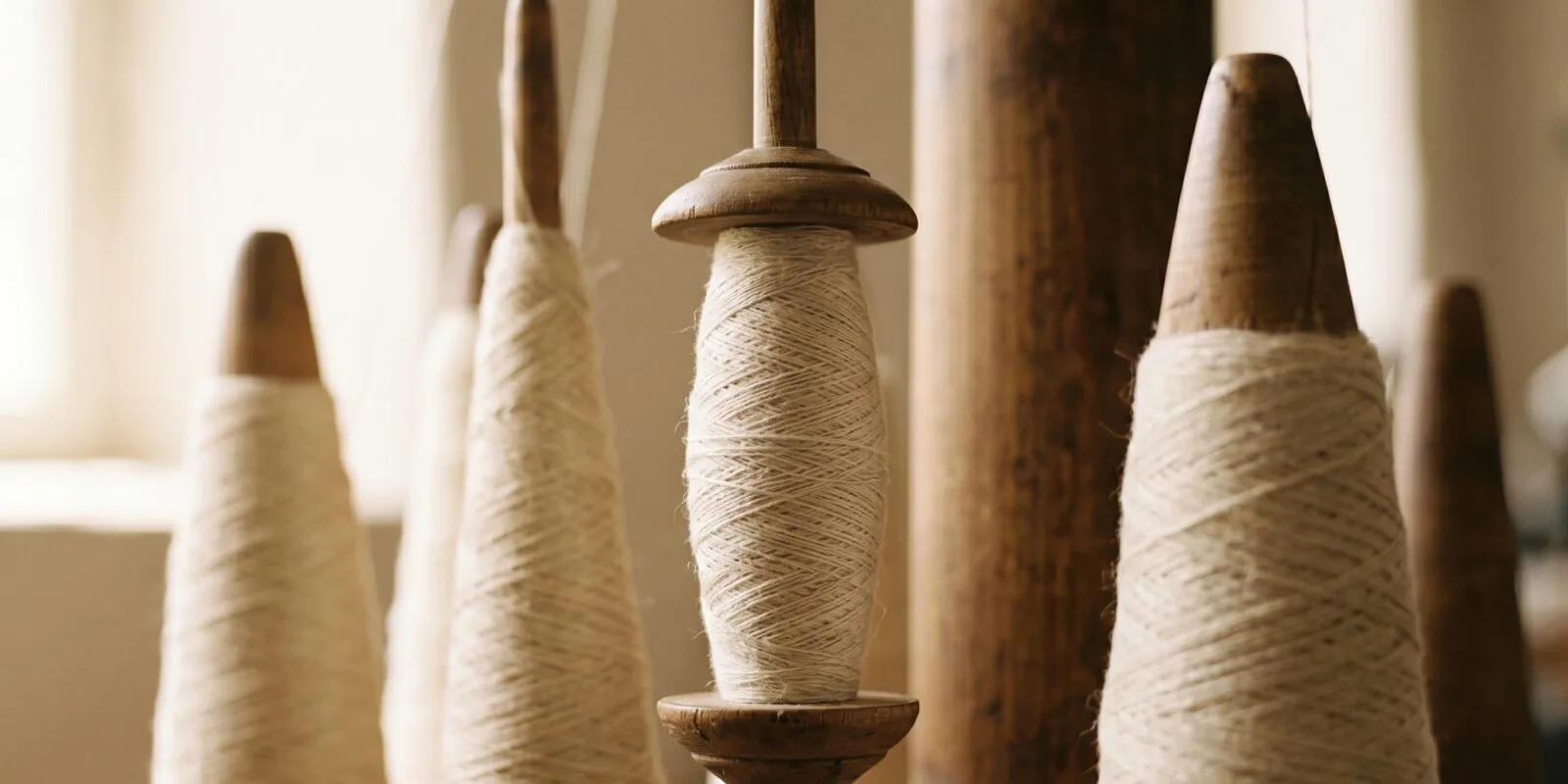
Long-staple flax yarn on traditional wooden spools
European flax yarn
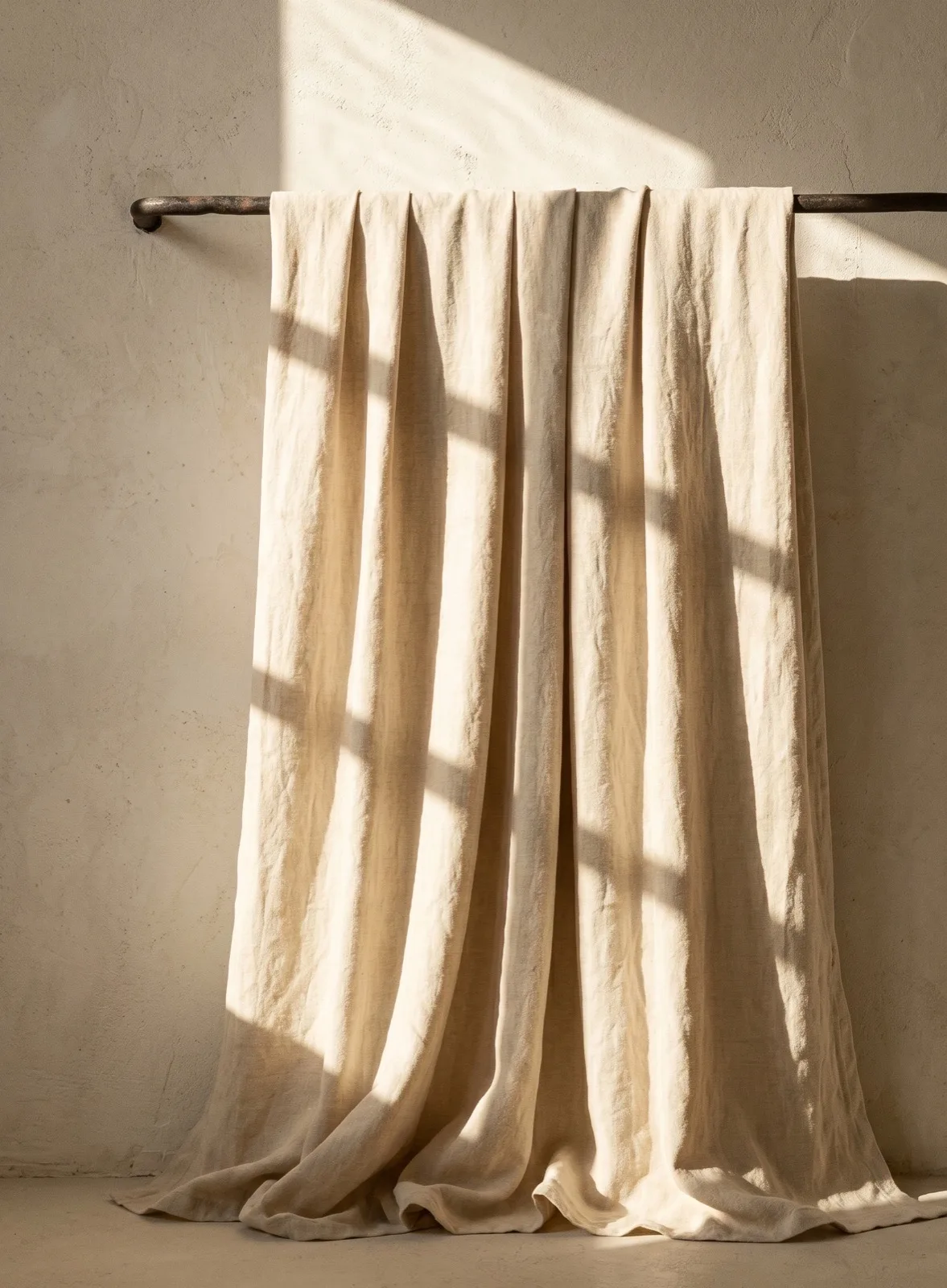
Cream linen draped over an iron rod, hard diagonal sunlight cutting across the cloth
Natural sunlight drape
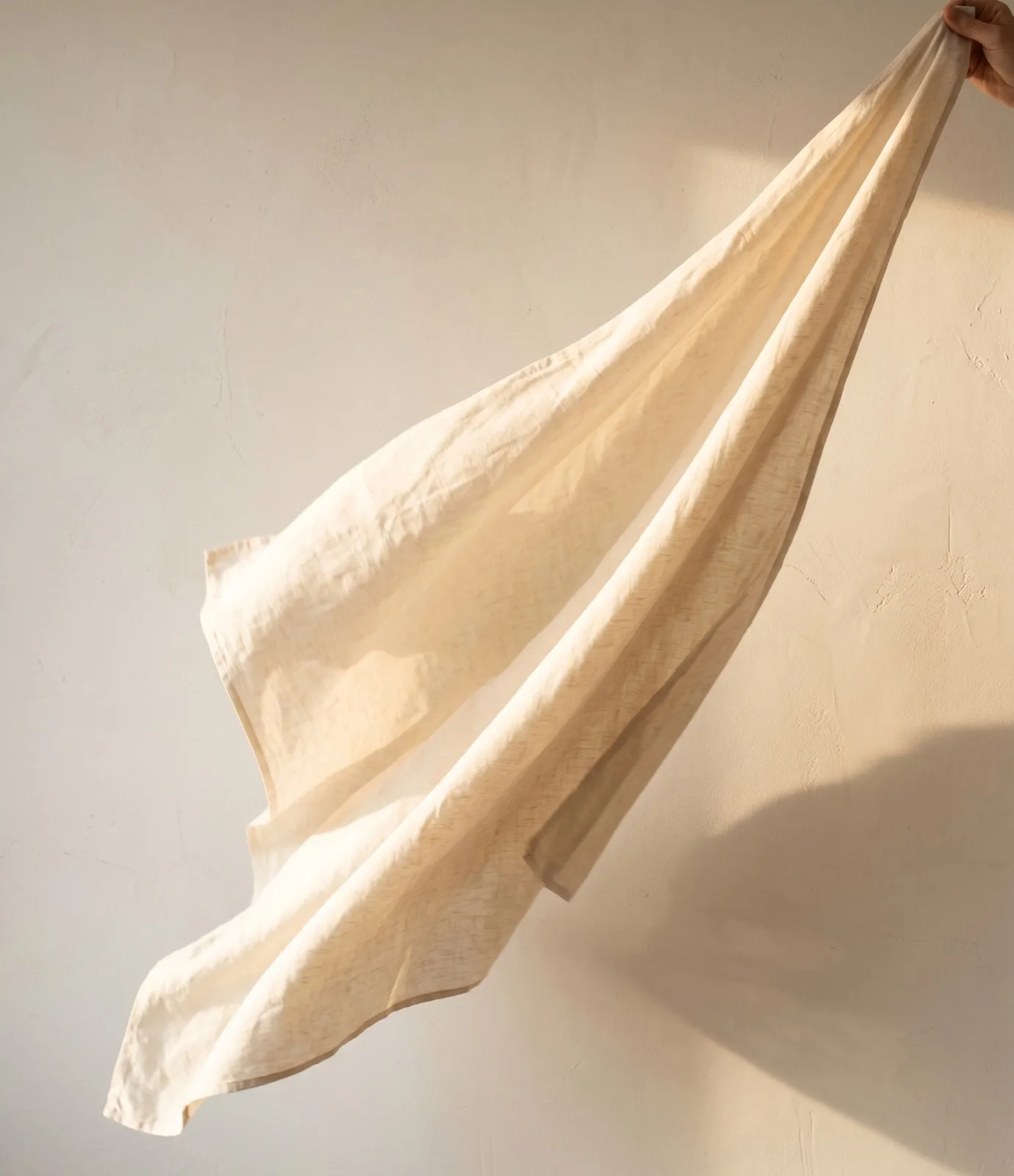
A length of cream linen caught mid-flutter against a limewashed wall
Fabric in motion
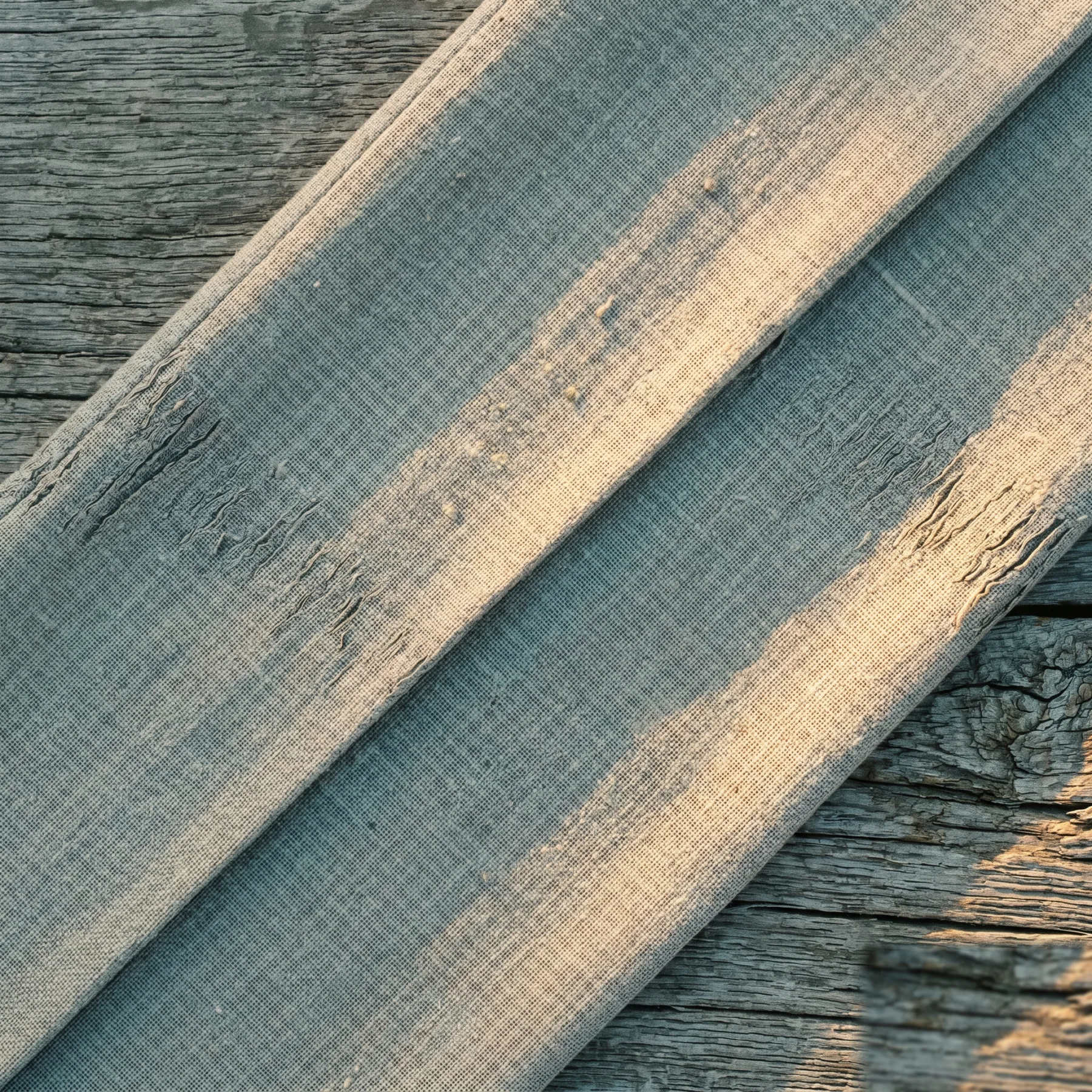
A length of cream linen draped diagonally over weathered wood, late afternoon raking light revealing the weave + slubs at macro
Cloth, on wood
The Doctrine

Seven principles, and the work follows.

  1. i

    The cloth is the engineering. The fabric is not a substrate for cut — it is the working part of the garment.

  2. ii

    Drape is gravity, not tailoring. A garment for heat must hang from the shoulder under its own weight.

  3. iii

    Heat is not a season. Half the world lives in it; they are not a fashion edge case.

  4. iv

    Stillness over silhouette. The body in repose is the wearing condition; design for that.

  5. v

    The wrinkle is not a fault. It is the cloth's signature. Hide it and the cloth disappears.

  6. vi

    Subtraction is the discipline. Every Edition removes more than it adds.

  7. vii

    The wearer is the last designer. A finished garment is unfinished; three years of wear complete it.

A length of cream linen at rest on weathered wood in late afternoon raking light

The cloth is the same cloth, every Edition. The hand changes, slightly.

Technical Trace

The fibre, under section.

A material reading of the cloth — what flax actually is, how a wet-spun yarn behaves under heat, and why the same fibre dry-spun produces a different garment.

01

Hollow Fibre Structure

FIBRE WALL CAPILLARY CORE

Each long-staple flax fibre is structurally hollow — a sealed capillary tube. Moisture is drawn from the skin into the core and released to the air across a much larger surface than cotton offers. The cloth dries roughly three times faster, then continues to breathe.

02

Wet-Spun Construction

HOT BATH 65°C SPINDLE

Long fibres are drawn through a hot-water bath, softening the natural pectin so they bind into a finer, more even yarn than dry spinning produces. Wet-spun cloth holds airflow without surface collapse and matures cleanly through wear. Most volume linen is dry-spun. The difference is structural.

03

Tension Release Through Wear

W1 W5 W10 W20 SOFTNESS

Linen leaves the loom under tension. Each wash releases more of that loom memory; the hand softens, the drape personalises. ARKEN garments arrive at Wash 2 — structured, but already moving. Wash 10 is a different garment. Wash 20 is yours.

Climate Engineering

Designed for high heat,
not European summer.

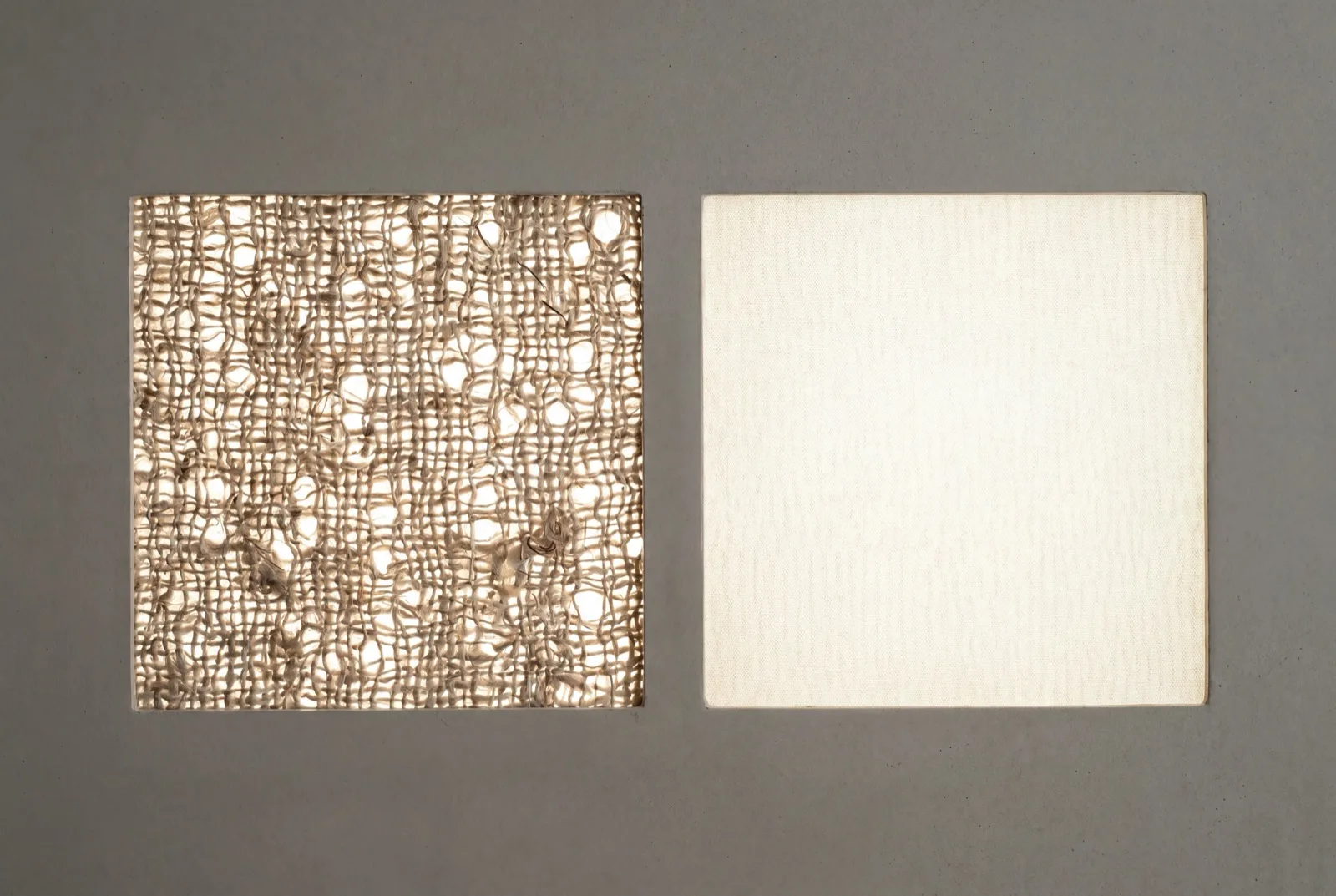
Backlit comparison — ARKEN long-staple flax on the left shows visible hollow capillary structure; synthetic blend on the right is a flat uniform surface
Backlit · ARKEN flax (left) shows the hollow capillary · synthetic blend (right) is structurally flat
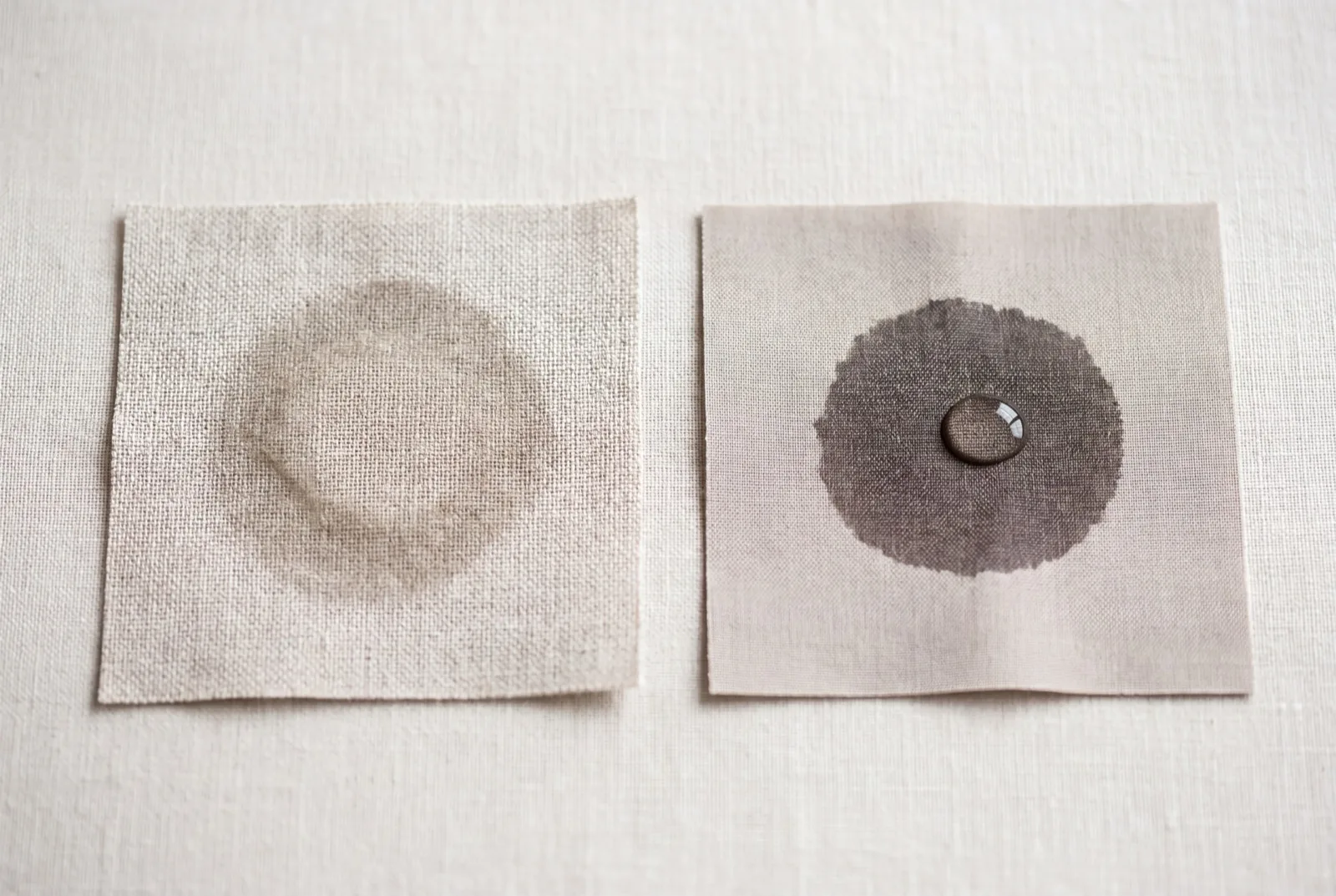
Wet-patch test — water disperses into ARKEN linen on the left; synthetic blend on the right holds the droplet as a dark wet patch
Wet-patch test · ARKEN linen disperses moisture (left) · synthetic blend holds it on the surface (right)

Why ordinary linen fails in high heat

  • 01Above 70% relative humidity, the surrounding air can no longer absorb sweat the body releases. Weak fabric structure collapses against the skin and stops working.
  • 02A garment cut without spatial allowance clings as it absorbs moisture; the cloth becomes a second skin and traps heat instead of releasing it.
  • 03Lightweight, dry-spun yarns produce cloth that flies and bunches. The drape collapses by mid-day and the line of the garment is lost.
  • 04Softness applied at the mill — without underlying fibre integrity — reads as comfort on the rack and as failure on the body in heat.

Why ARKEN performs differently

  • 01Long-staple flax behaves as a hollow capillary. Moisture is wicked into the core and released across a far greater surface area than cotton or blended linen offers.
  • 02Wet-spun construction produces a finer, more even yarn with higher tensile coherence. Cloth holds airflow without surface collapse.
  • 03Controlled drape preserves a deliberate column of moving air across the chest, the back, and the thigh. The looseness is the mechanism, not the look.
  • 04Twice garment-washed before release; the cloth continues to soften and settle with wear. Thermal comfort improves, not degrades, over the life of the garment.
Why this linen

Four claims, plainly stated.

Numbers, mill names, and verifiable specifications. Four declared claims, in the order a buyer should read them.

01

100% European flax. No blend, no compromise.

Every ARKEN garment is woven from 100% long-staple flax grown in the cool, damp climates of northern France and Belgium — the only region whose climate produces the long, consistent fibres that drape the way linen is supposed to drape. Tropical-grown flax is shorter, coarser, and cheaper, and it produces the kind of cloth most volume buyers have come to assume is what linen feels like. It is not.

No cotton. No polyester. No blend. The performance case is in the fibre itself: a hollow flax thread wicks moisture from the skin and releases it across a far greater surface than any cotton blend can offer, dries roughly three times faster, and softens cleanly through years of wear. The shirts run at ~160 GSM, the trousers at ~210, the shackets at ~220 — heavy enough to drape under their own weight, light enough to breathe through high summer.

Flax field in northern Europe — cool, damp climate
Flax field · France & Belgium
02

A 1931 mill. Several international houses.

The fabric is woven and finished at a textile facility established in 1931 — one that supplies multiple international brands operating at the Lemaire/COS price tier. The mill works with most of its larger clients under quiet client agreements, and we honour that practice; the verifiable facts about the cloth — weight, weave, finish, certification — are what matter, and they are stated here. Spinning, weaving, enzyme-washing, sanforising, Oeko-Tex Standard 100 certification — all happen under one roof, by people who have been doing it for three generations. We did not pick the cheapest mill. We picked the one whose existing client list was credible.

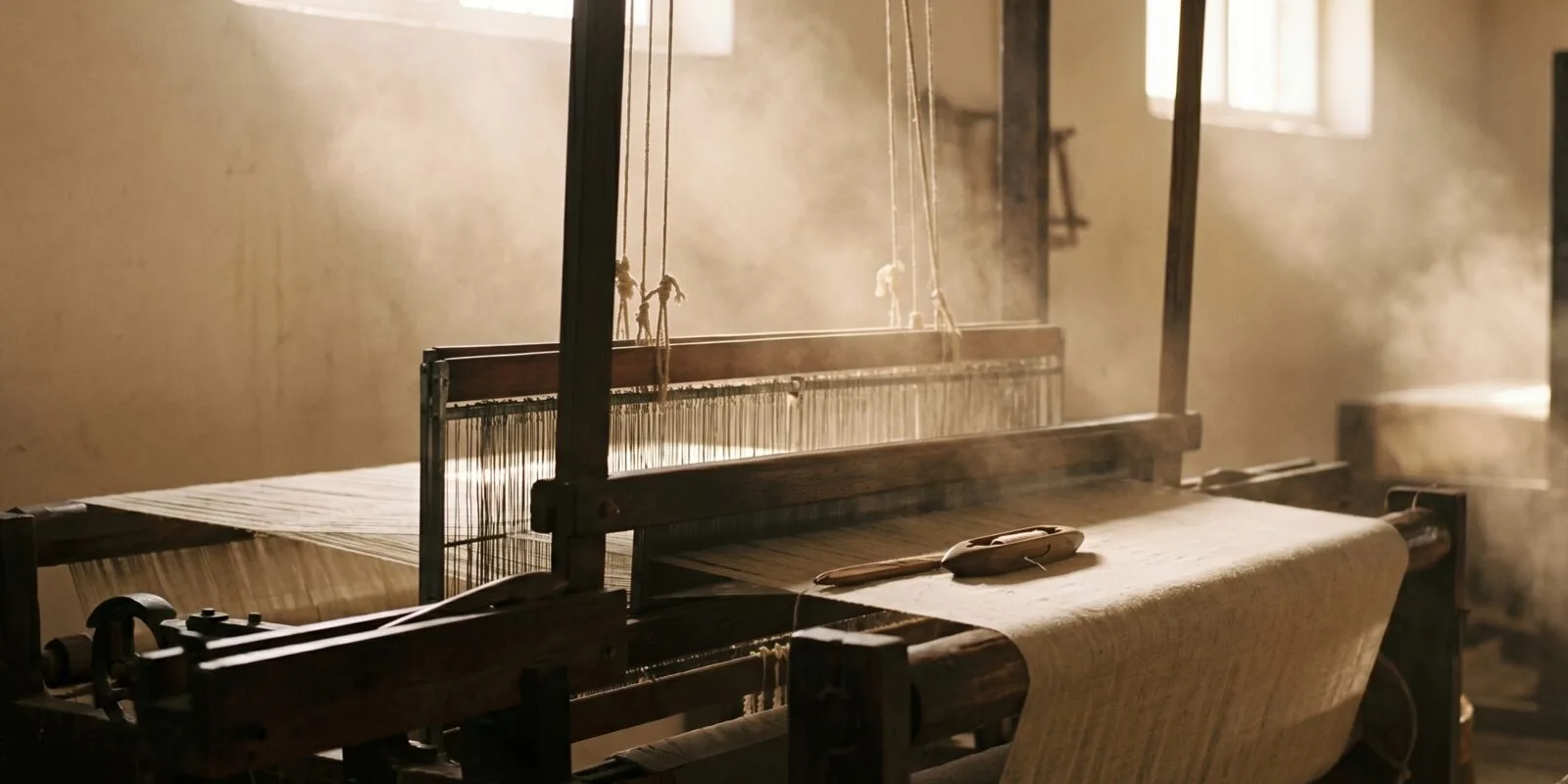
The loom — wet-spun flax woven under one roof
The loom · established 1931
03

Garment-washed. So the second wear feels like the fiftieth.

Linen straight off the loom is stiff, slightly waxy, and uncomfortable for the first ten wears. Most volume linen brands ship the cloth in this state — partly to save on finishing costs, partly because they have not learned the difference. ARKEN garment-washes every piece with enzymes that gently break down surface fibres before the garment ships. The result: the cloth arrives soft, drapes correctly, and behaves on day one the way most linen only behaves after a year. The cost is in the finishing. The benefit is in the wearing.

Enzyme-washed linen — softened before the garment ships
Twice garment-washed · Wash-Two
04

GSM declared. On every product page.

Most linen brands do not publish the GSM of their fabric. Most of them are below 130 GSM — translucent, short-lived, the kind of cloth that wears out in a season. ARKEN shirts are woven at ~160 GSM, trousers at ~210, shackets at ~220. The numbers fluctuate slightly batch to batch — that is what natural fibre does — but the floor is declared. The full case for reading GSM on a product page is in the journal.

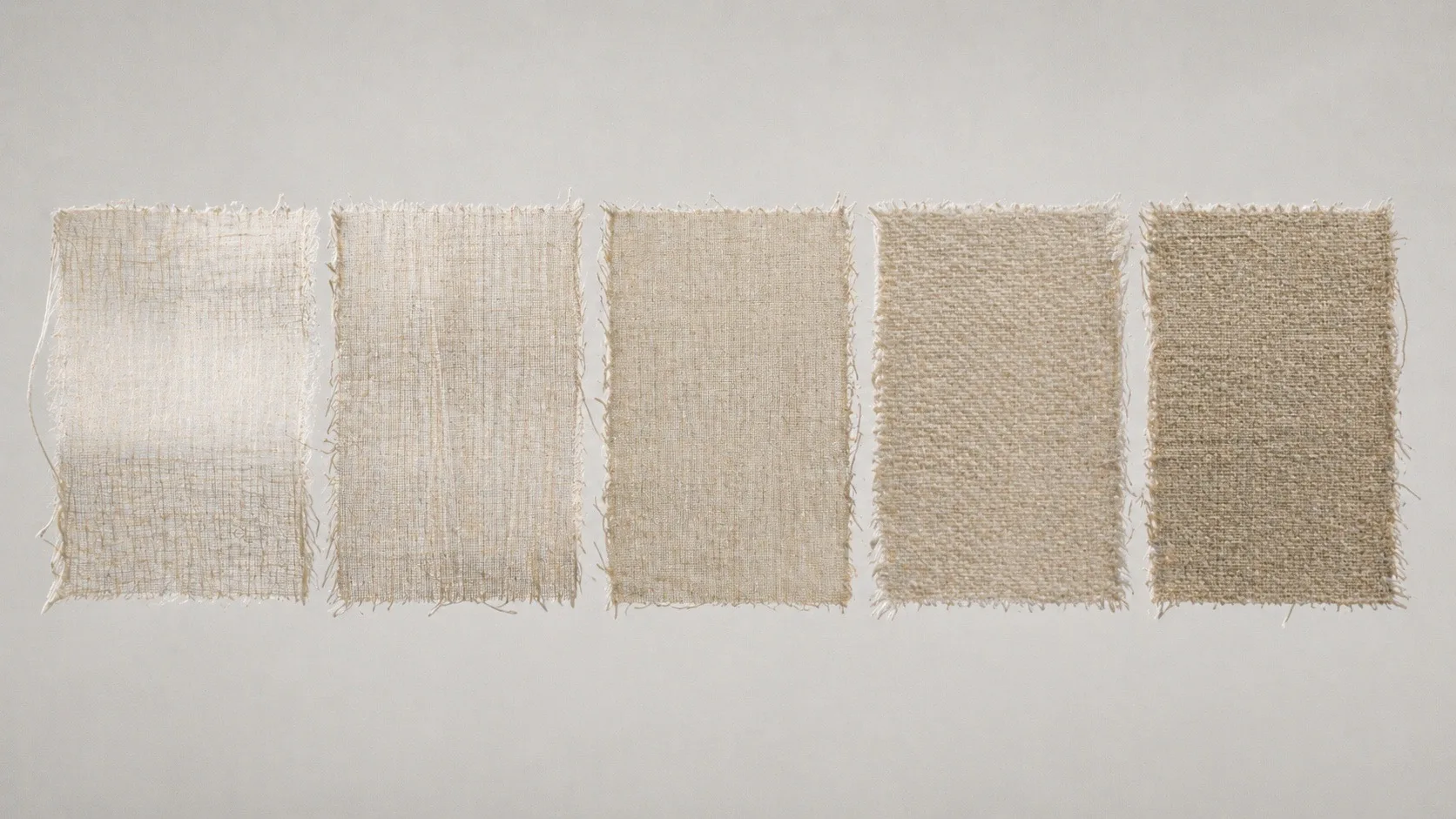
Five swatches at increasing GSM — opacity gradient under backlight
Opacity by weight · 90 → 260 GSM

Each of the four claims is independently verifiable. Each of them costs us money the alternatives would have saved. The price you pay reflects each of them.

How ARKEN Linen is Made

All ARKEN fabrics begin at a single mill — established 1931, audited twice yearly, supplying several international houses at the Lemaire/COS price tier. Each fabric goes through five controlled stages before it reaches a garment.

Step 01
European flax field at golden hour
Fibre Selection

European flax, grown in France and Belgium. Cooler growing temperatures produce finer, longer, more consistent fibres than tropical-grown alternatives. This is the primary reason European linen drapes differently.

Step 02
Linen woven to declared GSM on a traditional shuttle loom
Weaving to GSM Specification

Each fabric is woven to a declared GSM target. Shirts at ~160 GSM — sufficient opacity, sufficient structure, low enough to remain cool through a working day. Trousers at ~210 — heavy enough that the cloth descends under its own weight without clinging. Shackets at ~220 — structural canvas that holds its own line.

Step 03
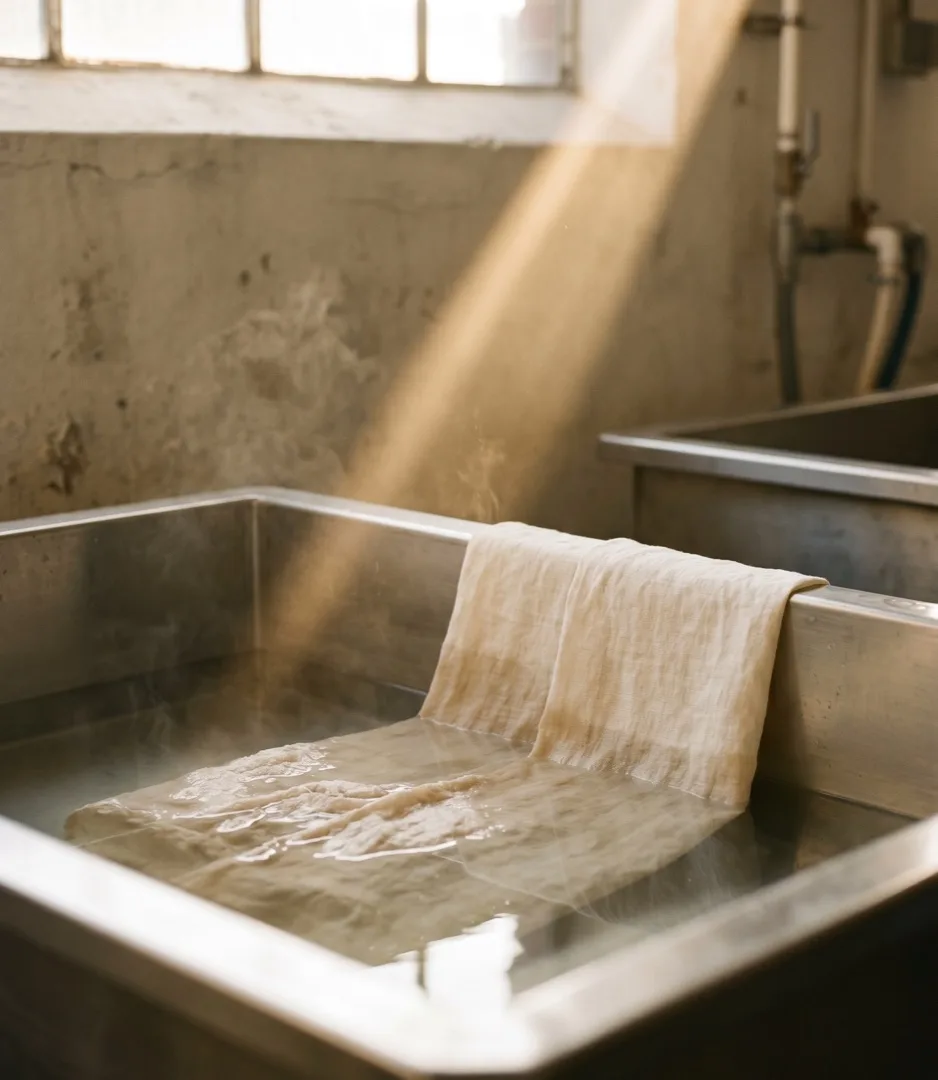
Cream linen submerged in a warm enzyme bath — surface fibres softening
Enzyme Washing

Every ARKEN fabric is enzyme washed before cutting. This biological finishing process removes protruding surface fibres — the primary cause of the scratchy texture associated with inexpensive linen. The result is a fabric that is soft from first wear, without artificially flattening the natural weave.

Step 04
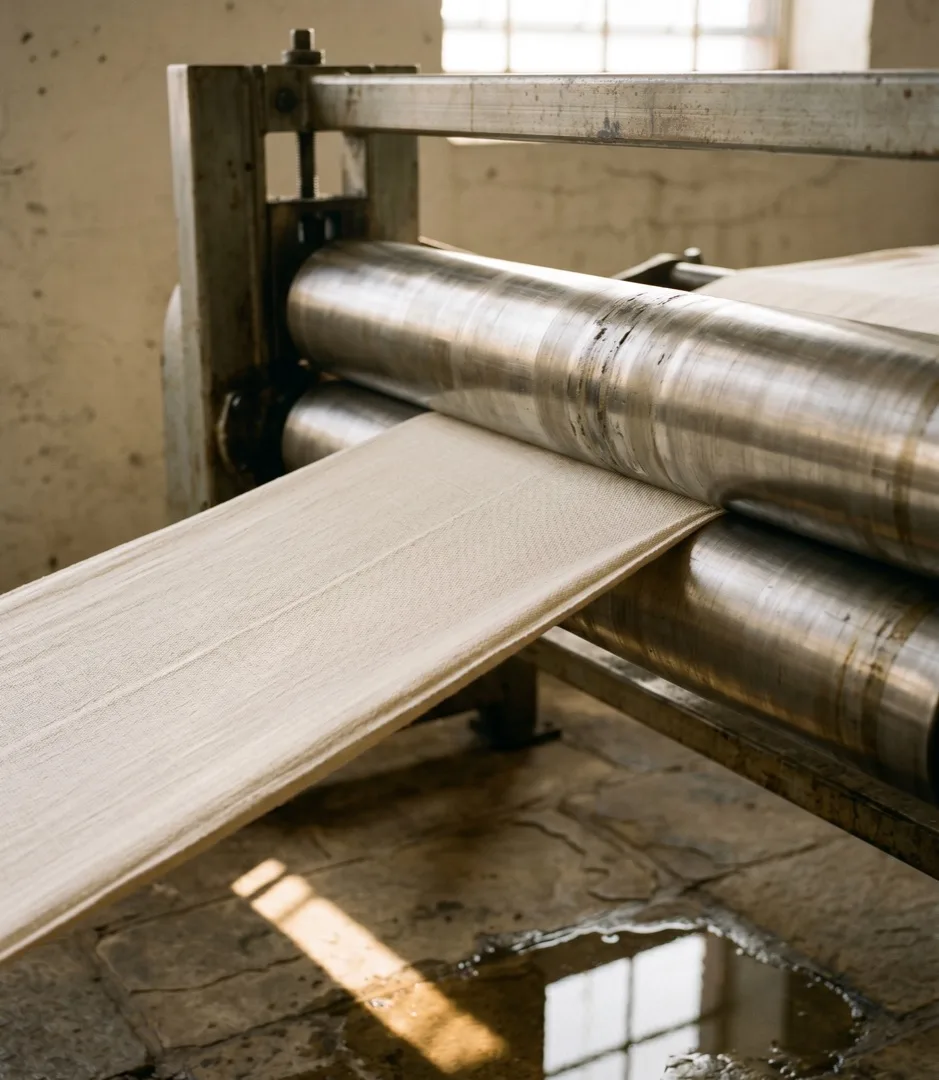
Linen drawn taut between heavy steel rollers — mechanical pre-shrinking
Sanforization

A controlled mechanical pre-shrinking process. An ARKEN garment fits the same after 100 washes as on day one. Residual shrinkage is under 1%.

Step 05
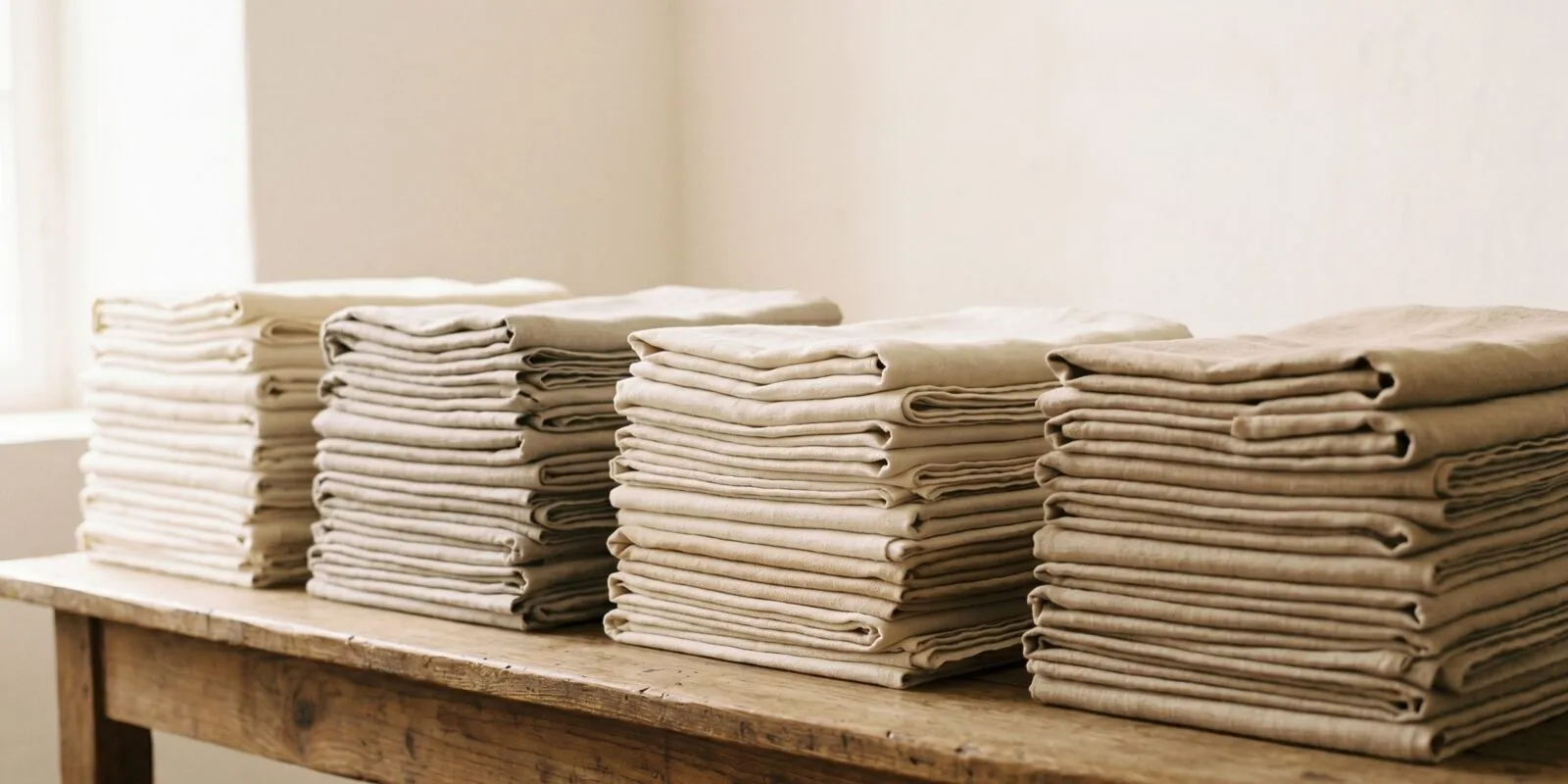
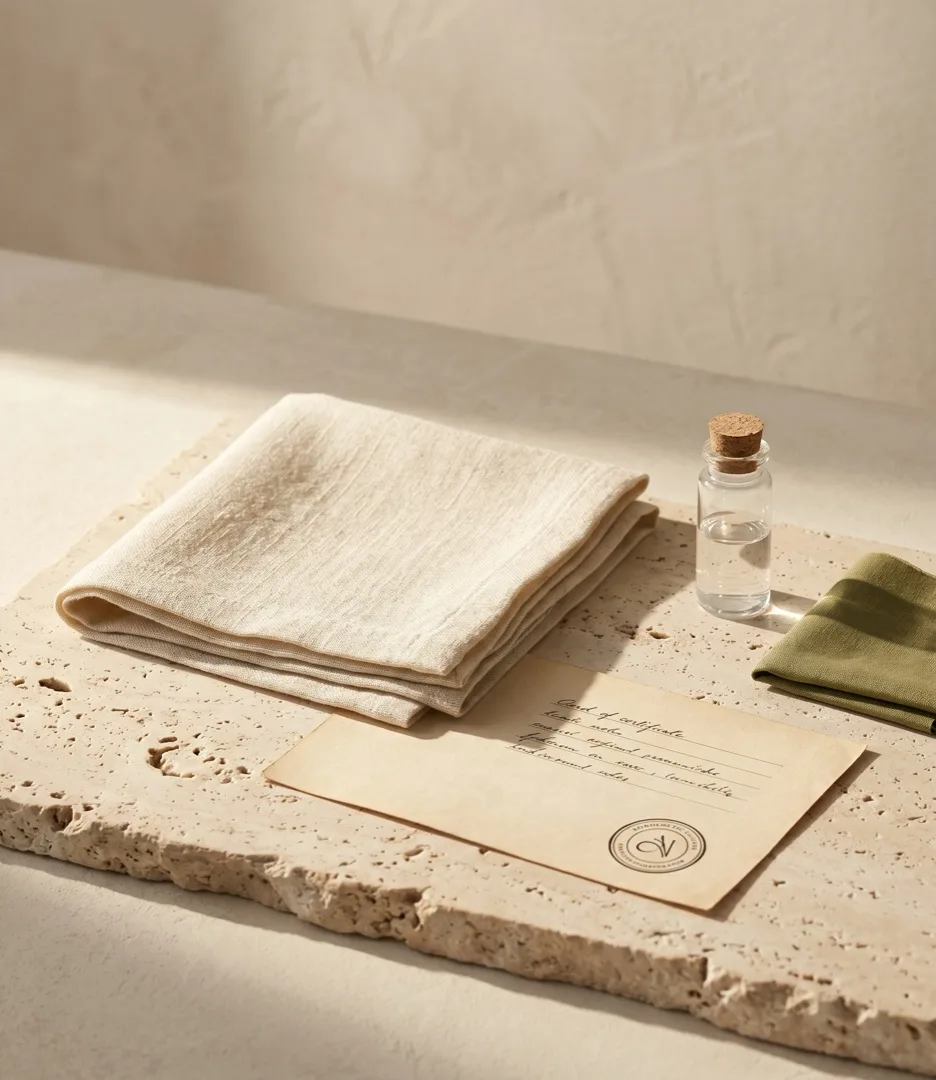
Folded cream linen on travertine beside a discreet certification card
Oeko-Tex Standard 100 Certification

Every ARKEN fabric is independently tested and certified against Oeko-Tex Standard 100 — verified free of over 100 harmful substances. Safe for prolonged skin contact.

The GSM Guide

GSM — grams per square metre — is the single most useful specification when evaluating a fabric. It determines drape, opacity, structure, and thermal performance. Every ARKEN product states its declared GSM.

Tee
130–145
Shirt
~160
Trouser
~210
Shacket
~220
Suiting
220–240
Lighter ↔ More breathable Heavier ↔ More structured
90–130 GSM
Extremely lightweight. Often translucent. The weight most volume linen brands use — it sacrifices opacity for cost. ARKEN does not produce in this range.
130–145 GSM
Lightweight shirting and tees. Maximum airflow. Slightly less opaque. Suited for very high-heat conditions and coastal environments.
155–165 GSM
Classic shirt weight. Full opacity. Good drape. Performs across high summer and the shoulder seasons. ARKEN shirts: ~160 GSM.
200–215 GSM
Trouser weight. Heavy enough that the cloth descends under its own weight; light enough to breathe in heat. ARKEN trousers: ~210 GSM.
215–230 GSM
Shacket / overshirt weight. Structural canvas — holds its own line, layers cleanly without stiffness. ARKEN shackets: ~220 GSM.
220–240 GSM
Suiting weight. Formal application. Structured enough for unlined tropical blazers. Heavy for most warm-climate months.

Most brands do not publish GSM. When they do, it is often below 130. ARKEN publishes the declared GSM on every product — and does not produce anything below the functional threshold for its category.

On purity: every ARKEN piece is 100% European long-staple linen — no cotton, no polyester, no blend. The hollow flax fibre does the work of breathing on its own; nothing needs to be bonded onto it. The weight does the structural work. We declare the composition on every product page because too much of the linen sold today is quietly diluted with cheaper fibres for cost.

How Linen Ages

New linen has a surface stiffness. Enzyme washing reduces this substantially, but it is present. After five washes, that stiffness resolves into a soft, fluid drape that cotton cannot replicate.

Linen does not degrade with repeated washing — it improves. The weave relaxes. The surface becomes more tactile. The garment begins to conform to the body.

A three-year-old ARKEN shirt, washed weekly, is a better garment than the day it arrived. This is the opposite of what fast fashion sells you.

Care

Cool wash. Line dry. Iron damp. Full care guide →

Journal

Fabric intelligence, styling notes, and wearing linen at 40°C.

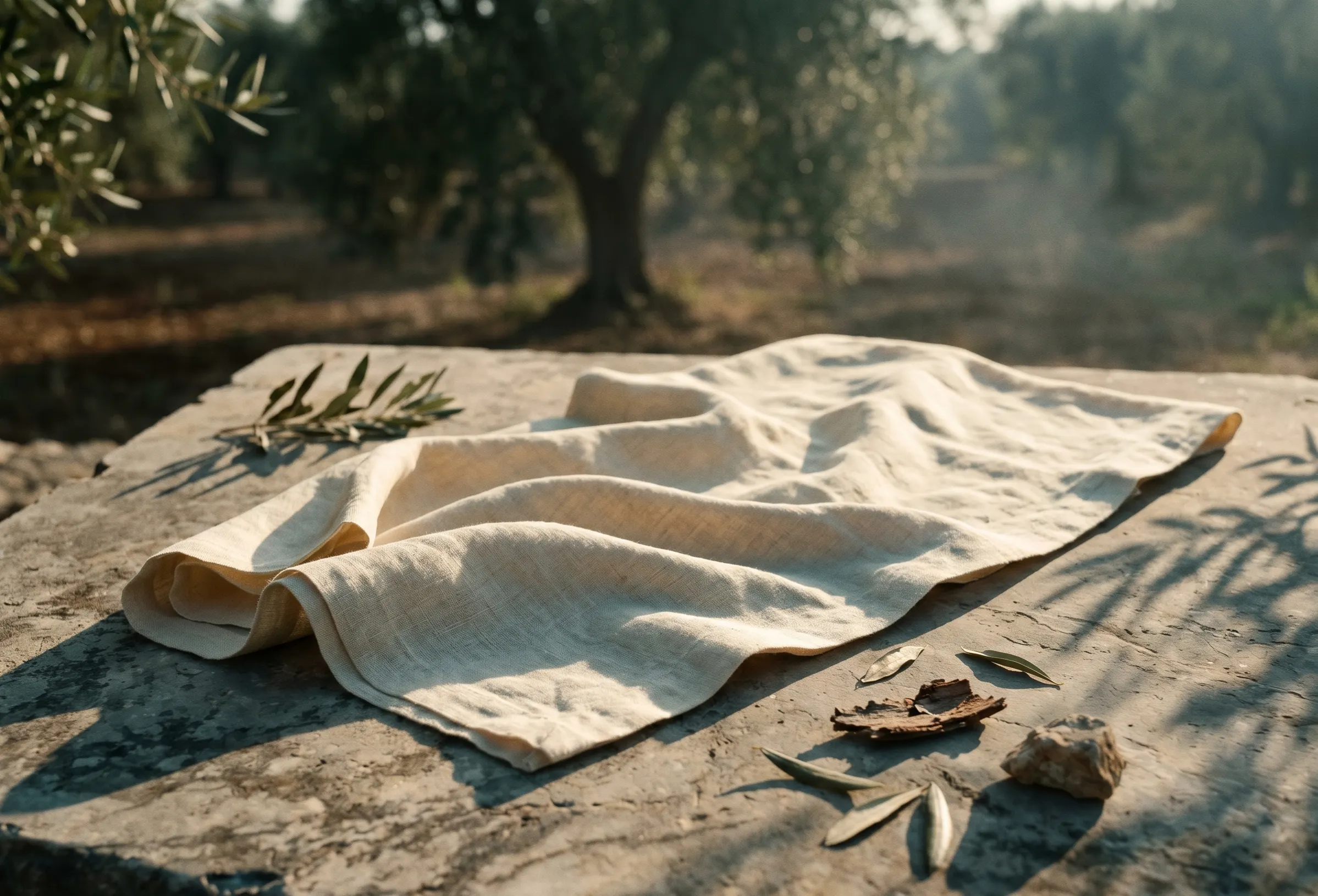
Cream linen laid on a warm stone slab in an Apulian olive grove, dried olive leaves scattered around the cloth in late afternoon raking light
Cloth · 5 min
The Cloth That Returns
A note on the cloth and where it goes — without using the word that most brands use loudly.
A cream linen shirt on a natural-jute clothesline strung across a low whitewashed parapet, the Adriatic hazy behind, a soft breeze catching one corner of the cloth
Cloth · 5 min
Why Linen Works in Hot Weather
The structural reasons linen outperforms every other fabric above 30°C — and why hot-climate buyers should have adopted it earlier.
A worn cream linen shirt draped over the back of a simple wooden stool in a stone-floored masseria bedroom, late afternoon window light from the side
Patina · 7 min
How Linen Ages Over Time
Every wash improves the hand. Here is what to expect across three years of wearing the same linen garment.
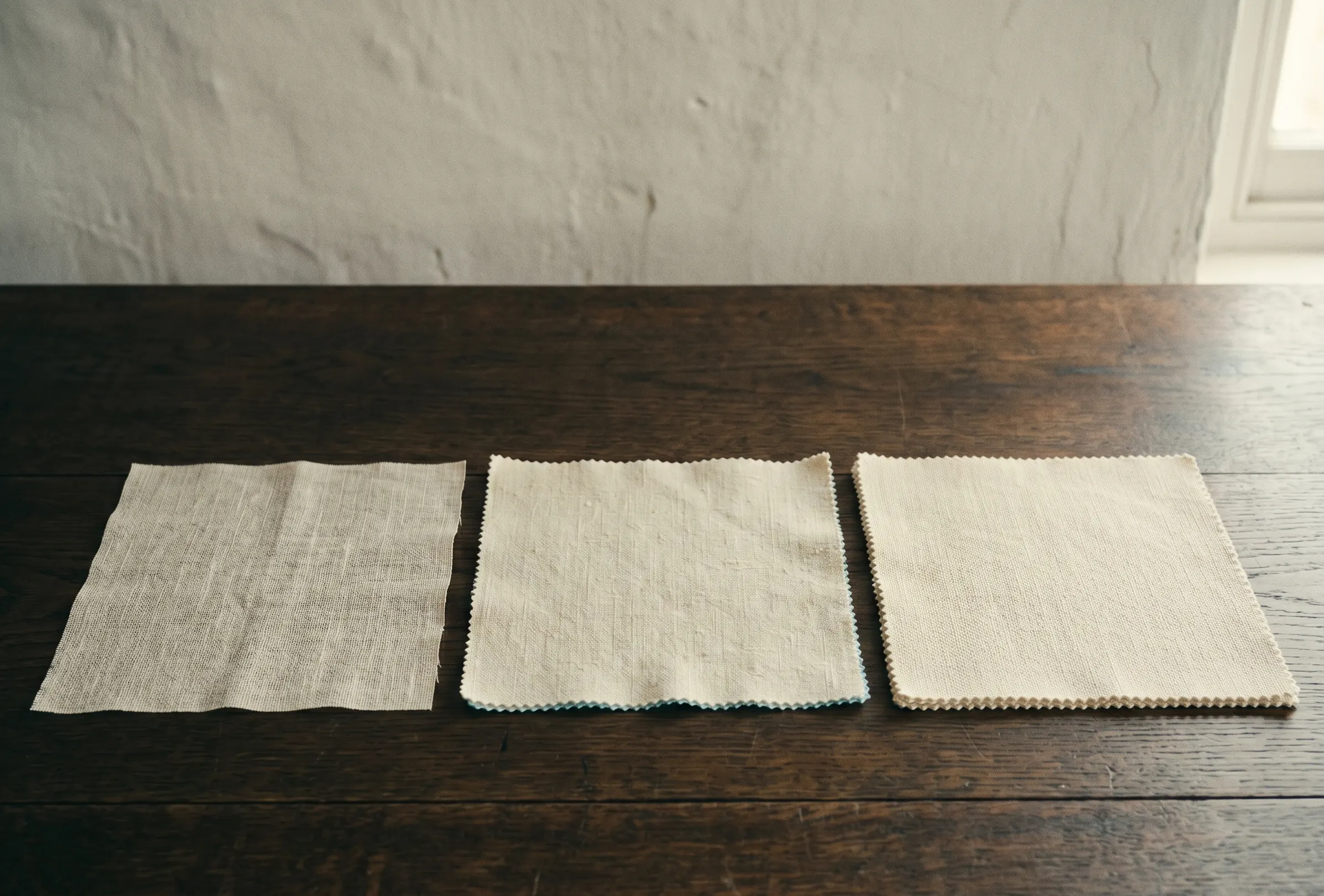
Three 100% European linen swatches laid in a row on a dark oak cutting table — lightweight, mid-weight, heavyweight — same cream colour, varying opacity
Cloth · 6 min
Understanding Fabric Weight (GSM)
GSM is the single most useful number in fabric evaluation. Here is what it means, why it matters, and how to read it on a product page.
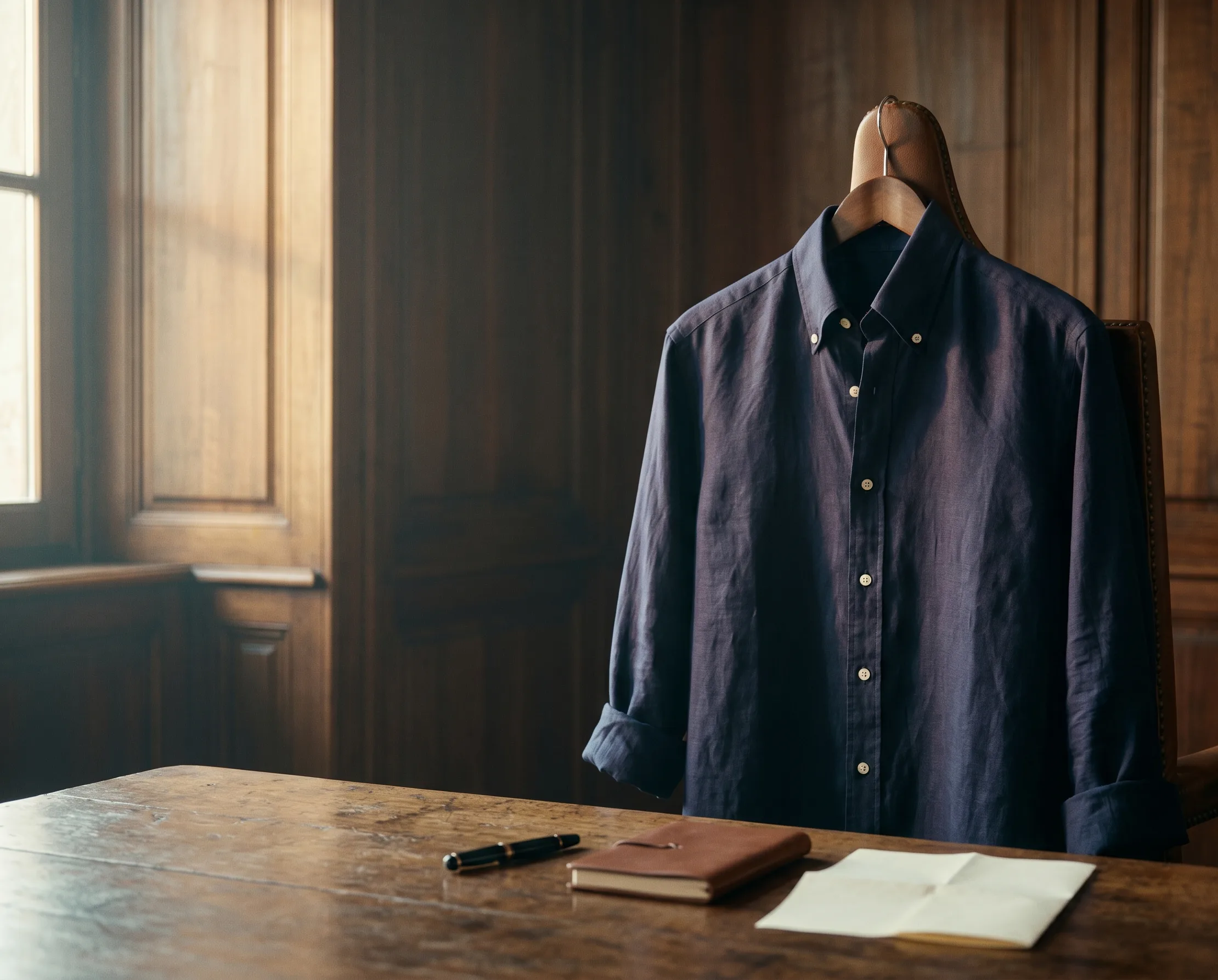
An ink-navy linen Hollow OCBD shirt on a wooden hanger against the warm wood panelling of a masseria library, fountain pen and leather notebook resting on the dark oak desk below
Wear · 4 min
Linen at the Office
Three configurations that work in a formal context — and the structural reason each one holds without effort.
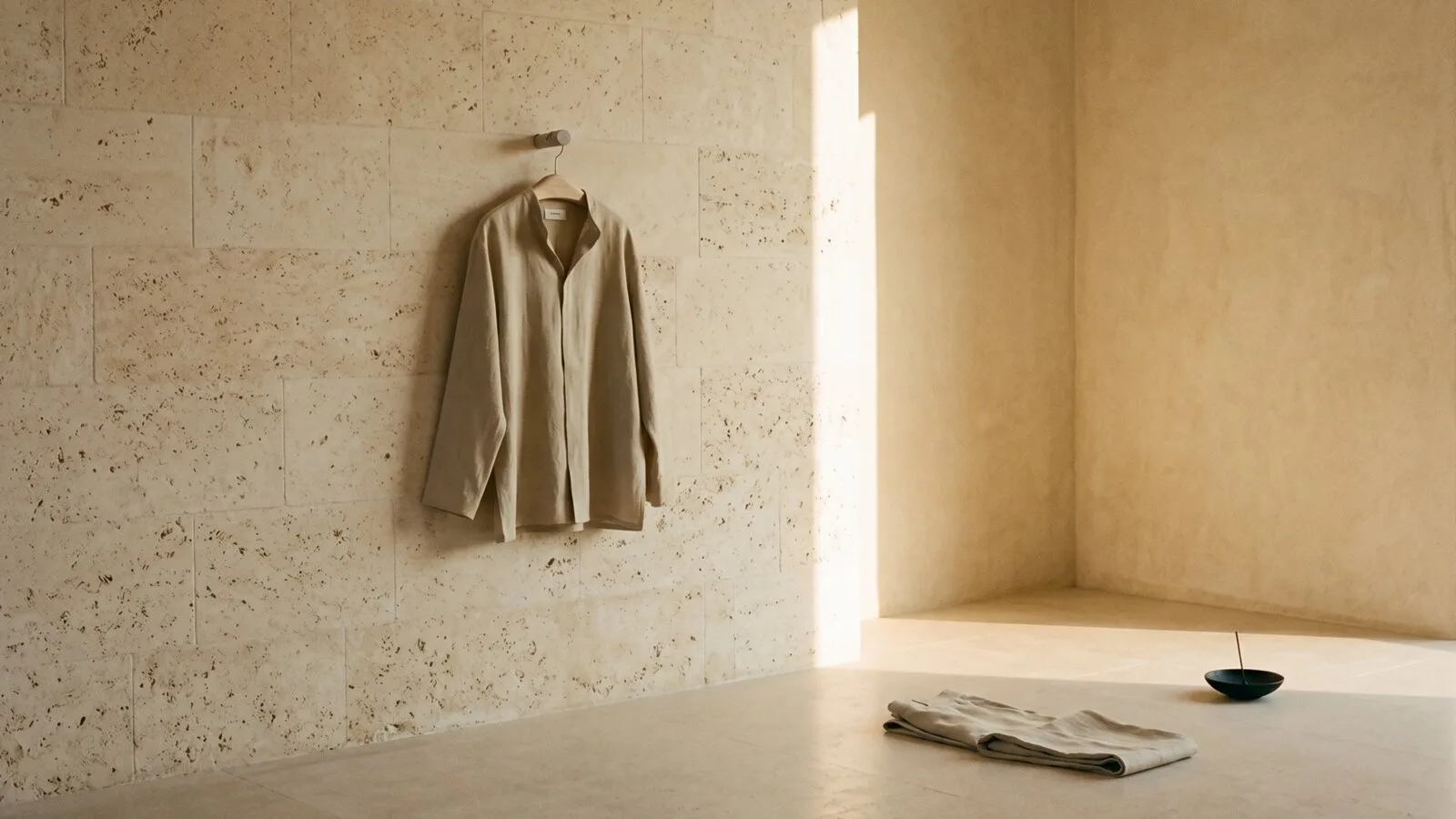
A linen shirt at rest on a wooden hook in a quiet room, late-afternoon light through louvre shutters — the cloth in its own time
Wear · 4 min
The Philosophy of Relief
A short meditation on what it means to stop fighting the climate. Not coolness — relief.
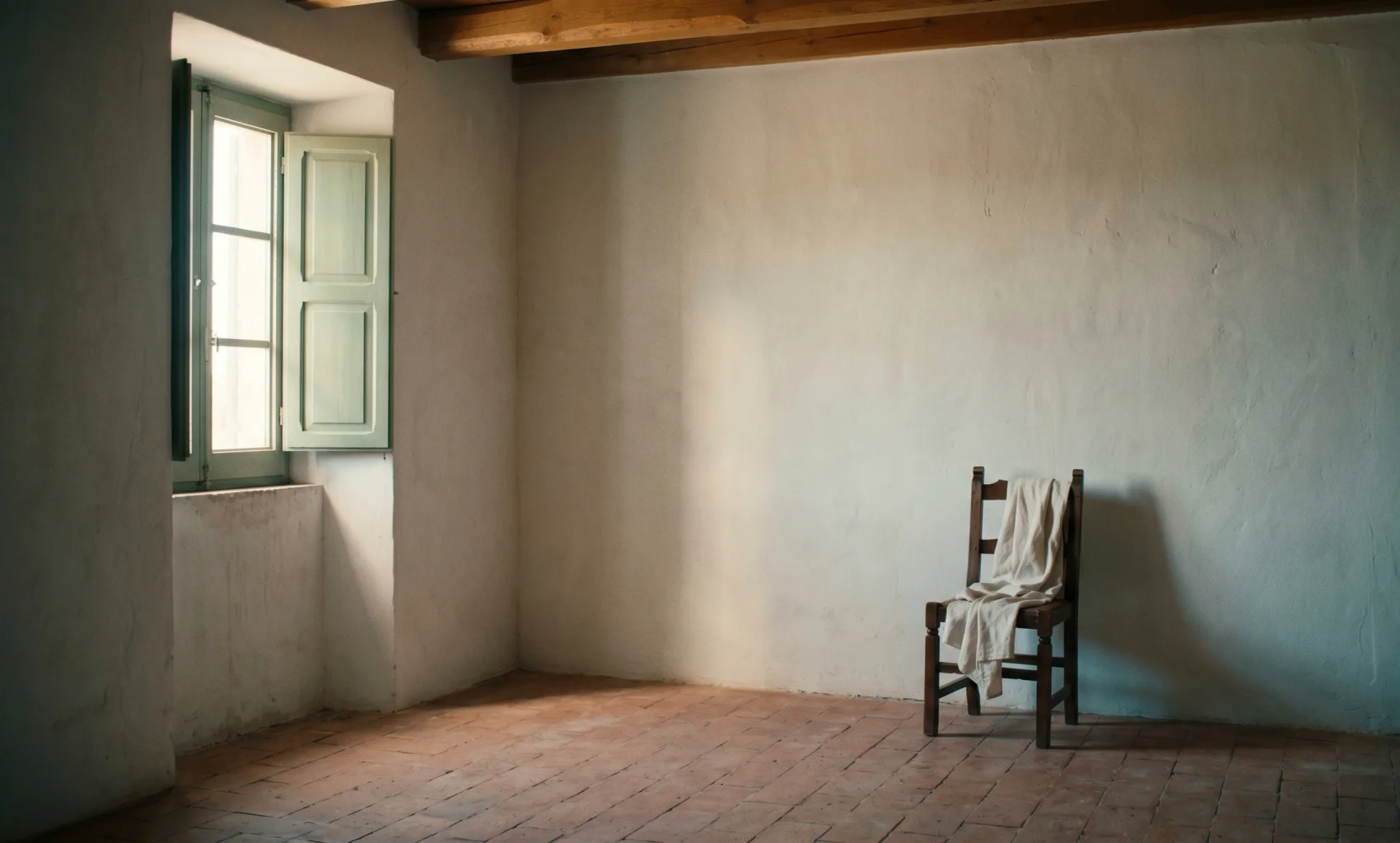
An interior room of the ARKEN atelier — terracotta tile floor, whitewashed plaster walls, a dark oak chair against the far wall with a length of cream linen draped over it, soft Mediterranean daylight pouring in through a tall sage-green wooden shutter
The studio

A study in linen, quietly built.

ARKEN is a linen house. We make linen clothing designed for warm climates — pieces that breathe, soften with wear, and look better in their third year than their first.

A note on the work

Most clothing is drawn for people who do not live in heat. The shirt is shortened. The suit is unlined. The jacket is made of linen instead of wool. The architecture is unchanged. The body is asked to behave the same way at 35°C as it does at 18°C — to hold a silhouette, to bear the friction of cloth, to perform.

We do not think this is design. Heat is not a season; it is a condition that half the world lives in. The architecture of a garment for that condition is a different thing entirely. The cloth has to do work the body can no longer do — wick, breathe, descend, return. The cut has to respect that work — give space around the limbs, generate channels along the spine, drape from the shoulder rather than grip it. The wrinkle is not a fault. It is the cloth's signature.

ARKEN makes a linen system for the world's hot half — the places where the body asks the cloth questions, and the cloth has to answer. The cloth is European long-staple flax, spun and woven in mills with three generations of finishing knowledge. It is finished in India, where the studio is. That is where the work happens; it is not who the work is for.

We make clothes for stillness. The body in a verandah at four. The hand on a cup. The light through a fan. The cloth doing its work.

What follows is one voice.

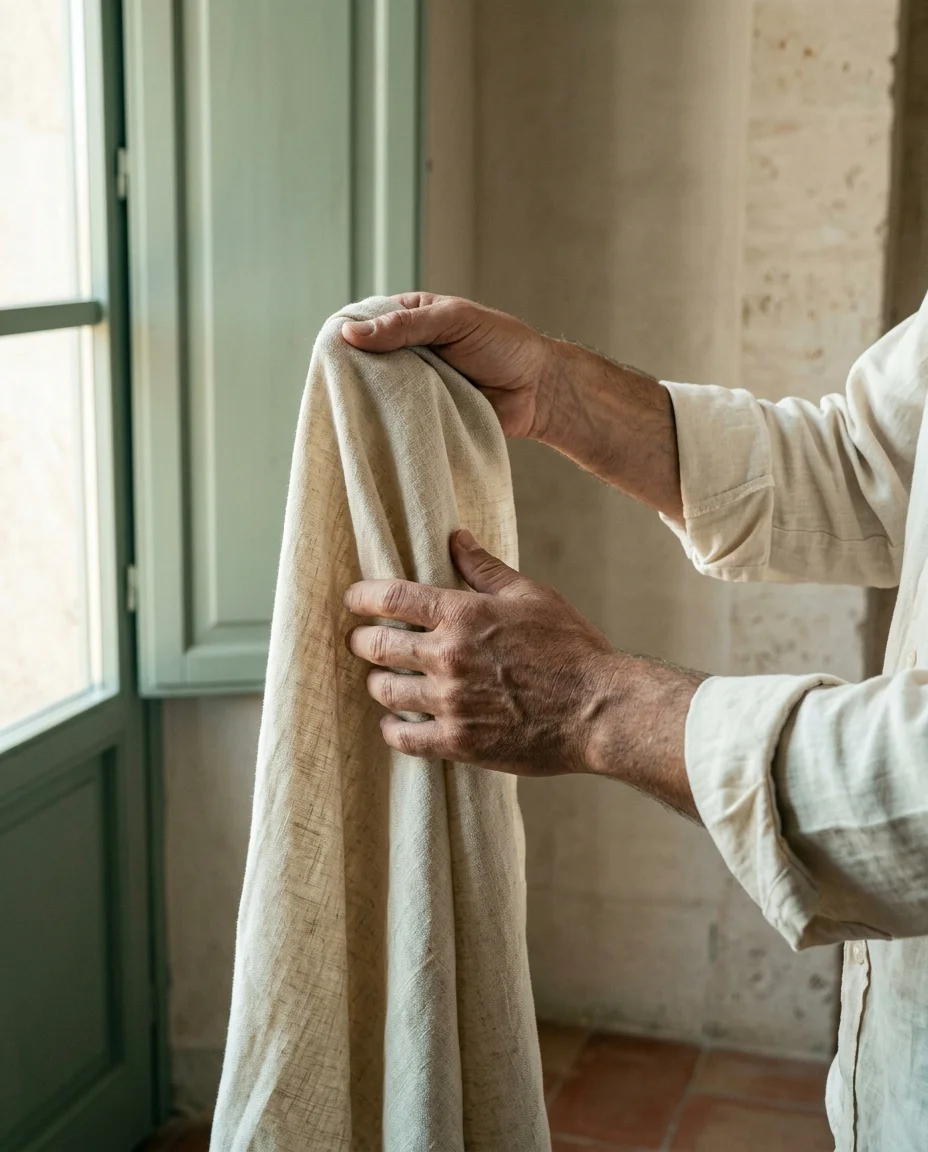
Weathered hands examining a length of cream European linen by a window in the ARKEN atelier, soft Mediterranean daylight
A note from the founder

I didn't start ARKEN because I had a clear plan to build a brand. It began with a quiet frustration I couldn't ignore.

I studied at NIFT, then worked inside large companies where everything is measured — timelines, margins, volumes. I learned how to make things efficiently, how to move them faster, how to keep people buying. But over time, I stopped recognising the clothes themselves. They were designed to pass through your life, not stay in it.

I realised I didn't want to keep contributing to that.

What I was looking for was something I could wear every day without thinking about it too much. Something that would feel the same at 9 in the morning and at the end of the day. Something that wouldn't lose its place after a few months.

I kept coming back to linen.

The first time I wore it regularly, I noticed how little it demanded. It handled heat without effort, it didn't cling, it didn't feel heavy. It creased, but not in a way that felt wrong — just in a way that showed it had been worn. Over time, it softened, adjusted, became easier.

There was something honest about that.

Being here, in this climate, it made even more sense. The way we live, the way clothes are used and reused, the way comfort isn't optional — it all aligns with what linen already does. It didn't need to be positioned or explained. It just worked.

ARKEN came out of that realisation.

I'm not trying to make clothes that stand out. I'm trying to make the ones you stop noticing after you put them on. The ones you reach for because they feel right, not because they look new. Pieces that don't fall apart with time, but instead settle into your life a little more with each wear.

If you wear ARKEN, I don't want you to feel different.

I want you to feel at ease. Like you didn't have to decide much. Like what you're wearing isn't interrupting your day.

And after a while, I want it to feel like it belongs to you — not because of how it looks, but because of how naturally it fits into your routine.

That's all I'm trying to do.

— Faisal
Founder, ARKEN
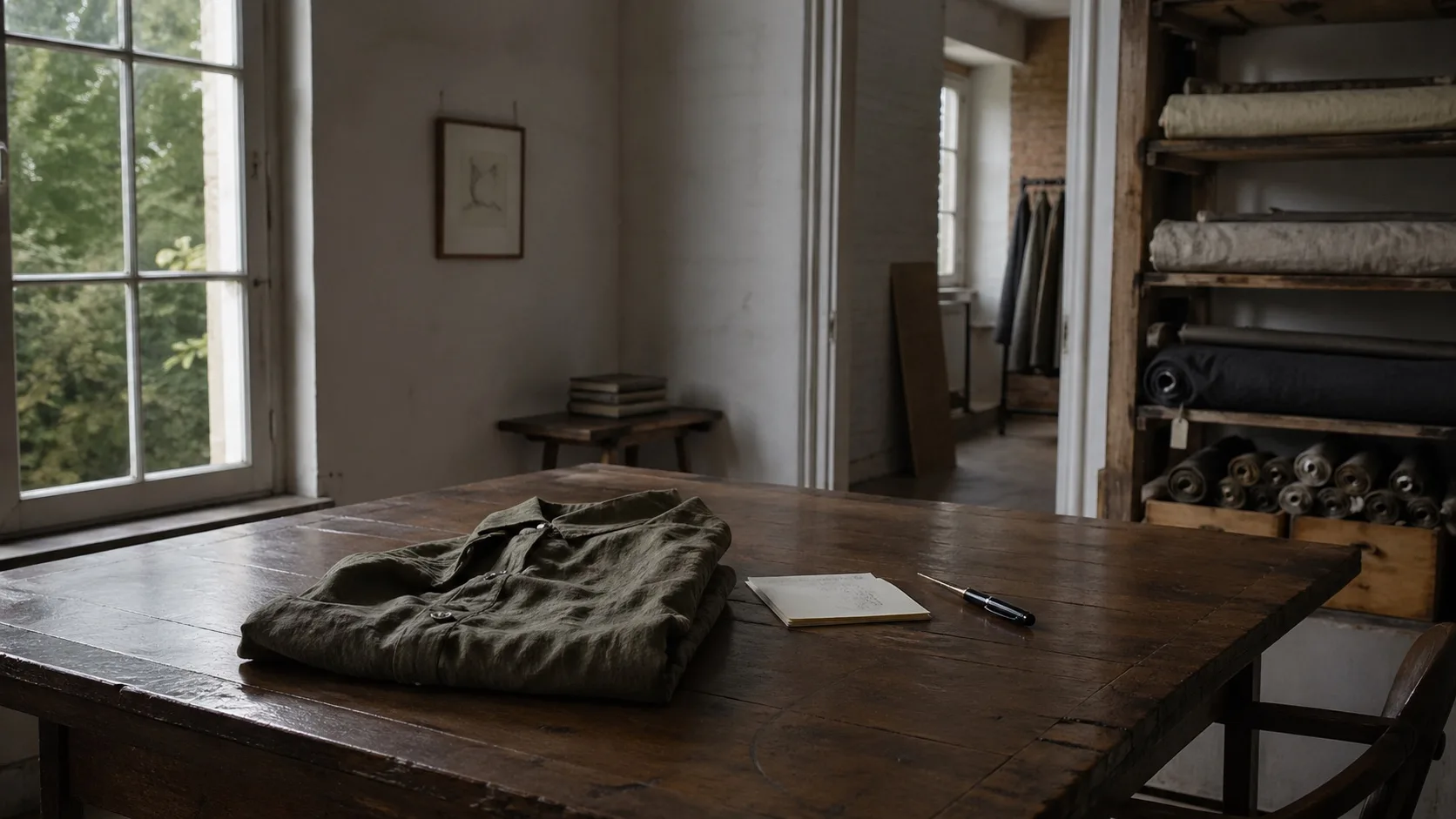
The ARKEN atelier — folded linen and tools at rest in late-afternoon stillness
Service

Information

Personal assistance
Anything not answered here, the concierge is reachable directly during studio hours, and by email always.
Write to the concierge  → concierge@arkenofficial.com
Fabric · 5 min read

By the ARKEN studio ·
◇
A note from the ARKEN studio
← Back to the journal
Edits

Pieces, grouped by occasion of cloth.

A handful of capsules pulled from the studio — each one a use-case, not a season. They overlap: a piece in one edit may sit quietly in another.

← All edits
Wishlist

Pieces you've put aside.

Stored on this device. We don't email reminders. Come back when you're ready.

Nothing saved yet.

Tap the heart on any piece to save it here.

Browse the collection  →
The ARKEN studio — folded linen, cutting table, low afternoon light.
Visit

The studio is small. By appointment.

The ARKEN studio is a working space — fabric on the table, pieces mid-cut, the smell of linen in the air. There is no shopfront window. We hold pieces for you to handle before deciding; we measure if it helps; we don't push.

Appointments run 45 minutes. There is no fee. We do not stock every colourway — write ahead and we'll prepare what you want to see.

Where

The ARKEN Studio
New Delhi · India
Exact address shared on appointment confirmation.

When

Tuesday — Saturday
11:00 — 18:00 IST
Closed Sunday, Monday, and the week of the monsoon.

What to expect

Cloth on hand. Pieces measured against your frame. Tea.
No commitment to buy; we won't ask.

Book by WhatsApp  → Or write to the concierge
Inside the studio
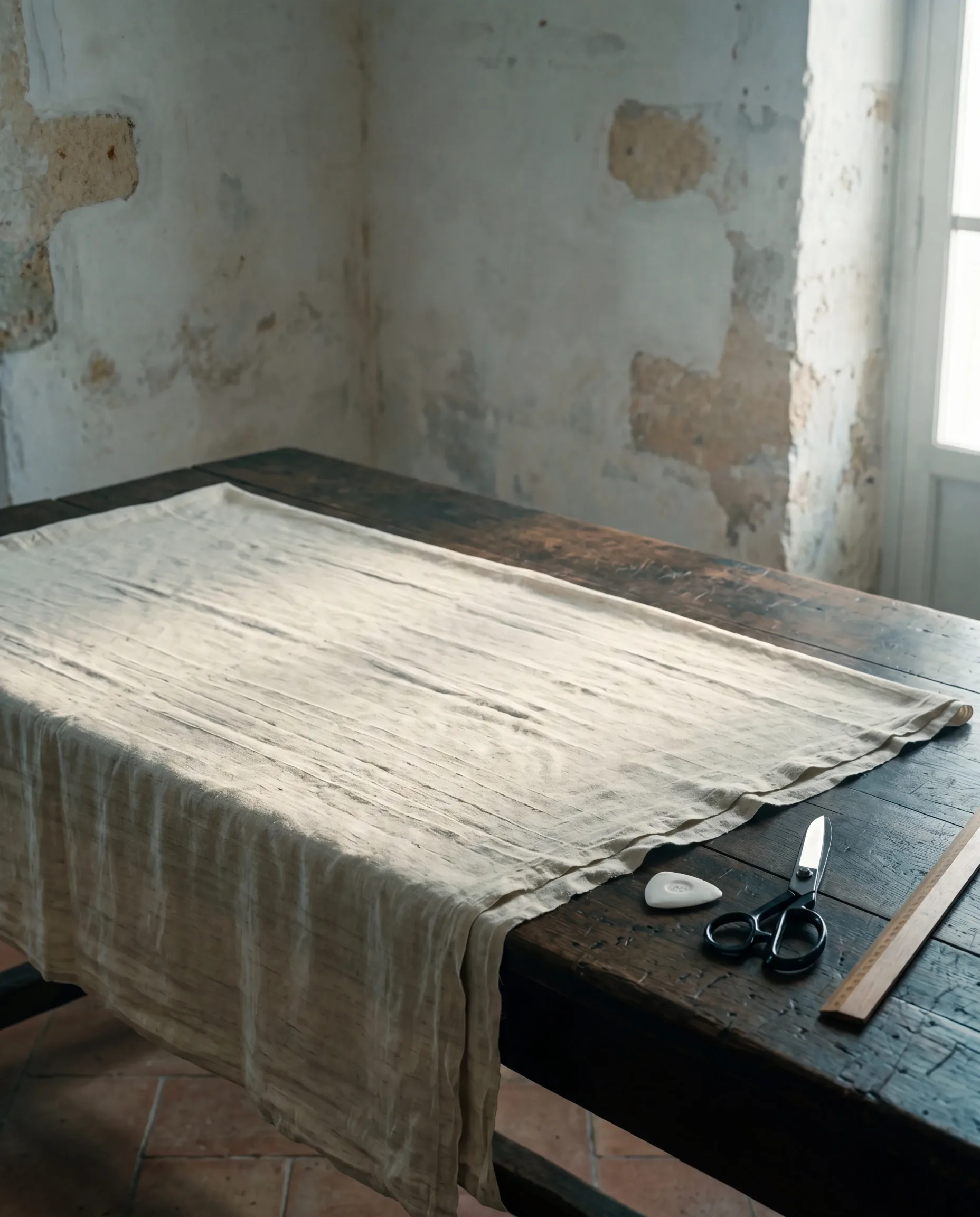
The cutting table, midday — cream linen laid flat, chalk and shears at rest.
The cutting table.
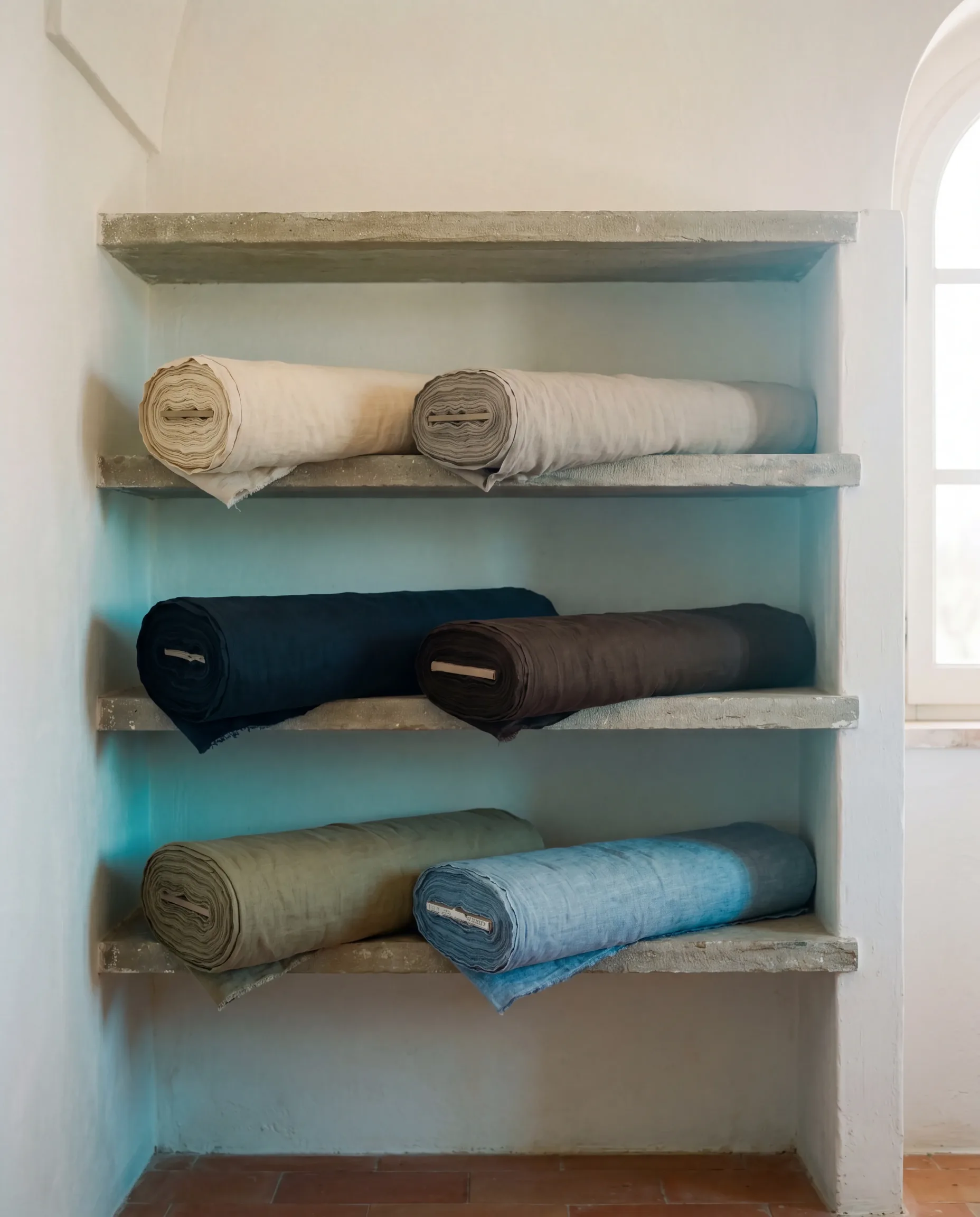
A bay of folded linen bolts on a stone shelf, mid-morning side-light.
The cloth shelf.
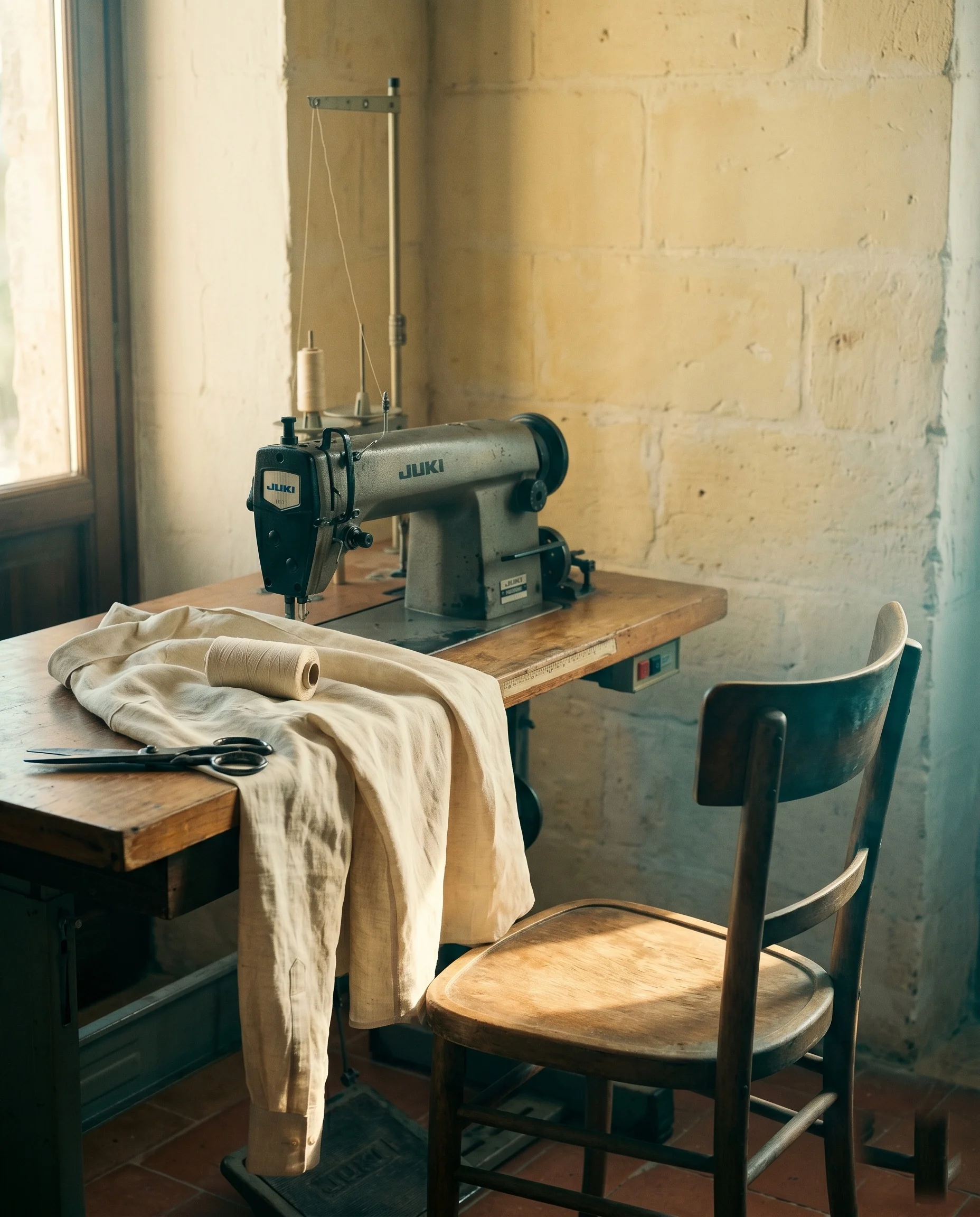
A single industrial sewing machine on a worn wooden bench, low afternoon light.
The machine room.
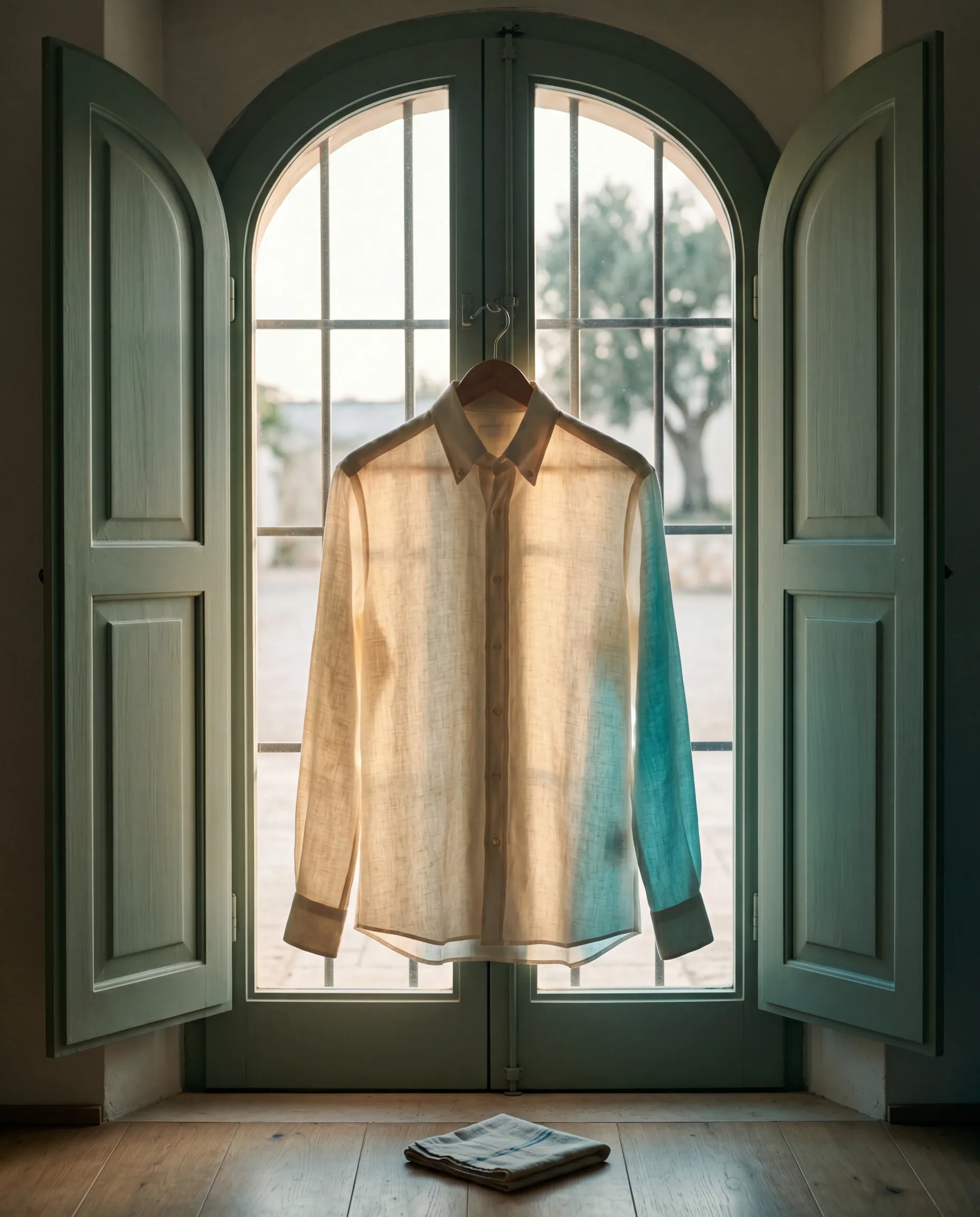
A pressed shirt on a wooden hanger by a window overlooking trees.
The pressing corner.
The senior tailor at the cutting table — early fifties, salt-and-pepper hair, weathered hands marking chalk against a paper pattern on cream linen, raking afternoon light from screen-left.
The senior tailor, cutting.
The senior tailor at the Juki industrial machine — early fifties, three-day stubble, hands working a seam on a half-stitched cream linen shirt, late afternoon side-light.
The senior tailor, at the machine.
The Hands

Three hands cut every shirt.

A note on who makes the cloth into the piece. Cutter, senior tailor, finisher — three hands behind every garment.

01

The cutter

Lays the cloth flat the day before, lets it relax. Marks chalk against a paper pattern; cuts with eight-inch shears, one piece at a time. No stacked cutting — every shirt's panels come off a single layer so the grain is consistent.

02

The senior tailor

Joins the panels. Eighteen seams in a shirt; each one is run through twice — once at the machine, once flat-felled to hide the raw edge. The collar stand sets first; sleeves attach last. The order matters.

03

The finisher

Hand-stitches the inside collar band, sets the buttons by eye, inspects every seam under a single bright light. Anything that doesn't pass goes back to the senior tailor. Most do not.

A hand finishing the inside collar band of a linen shirt under warm studio light.
On the cut

We do not stack-cut.

Most shirt factories cut twenty layers at once. The stack saves an hour; the stack also distorts the grain on the lower layers, because the shears don't pull through linen the same way they pull through cotton. The collar of a stack-cut shirt sits subtly off, and you can feel it on the eighth wear.

We cut one layer at a time. It costs us a morning per batch. It is, on balance, cheap.

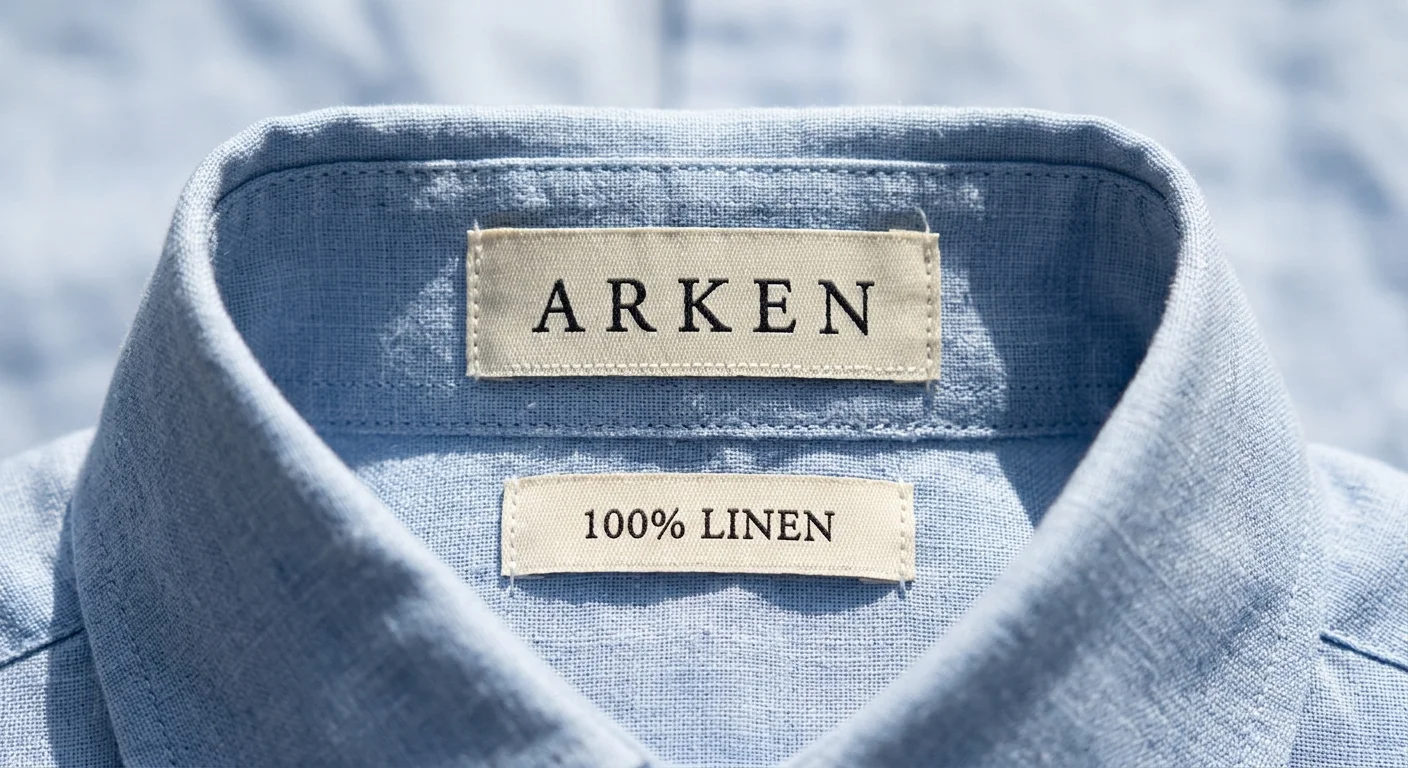
Macro detail of a chambray linen shirt's inside-collar band — two woven cream labels with serif text, the upper reading 'ARKEN', the lower reading '100% LINEN' — stitched into the band by hand.
On the label

The cloth carries its name inside.

You will not find a monogram on an ARKEN piece. No embroidered emblem on the chest, no patch on the sleeve, no contrasting placket. The exterior is unmarked because we think the cloth should be the first thing the room sees.

The name is woven into the inside-collar band, stitched by hand by the finisher as the last step before the shirt leaves the cutting table. You see it when you put the piece on and when you take it off. That, in our reading, is the right place for it.

~ 4 hours · per shirt, end to end
~ 8 hours · per trouser, end to end
A portrait of the senior tailor — early fifties, salt-and-pepper hair, three-day stubble, weathered hands, standing beside the cutting table holding a cream linen shoulder seam to the afternoon light to check the stitch.
The senior tailor

Thirty years at the table.

The hands that join the panels have been doing this work since most of the studio was furniture. Eighteen seams in a shirt; each one run twice. He can tell from the weight of the linen what the cuff will do at the eighth wash. We listen to him.

None of the pieces leave the table without his nod. The cloth knows it.

The studio is small on purpose. We make in batches of forty; we don't make more pieces than the hands can finish honestly. Write to the studio if you'd like to know more.

The pieces leave the studio after I see them. If something doesn't pass under that light, it doesn't ship.

Faisal Founder, ARKEN Studio
A longer note  →
Edition 01 — Spring 2026

A study in linen, worn.

Frames from the studio's first cast. Pieces worn the way they should be — quietly, in the light of the place they were photographed.

A couple at a sea terrace in afternoon light. Cream linen on him, ivory shirt and stone trouser on her.
The terrace, looking at the sea. The Hollow in cream; the Cutaway in ivory.
A figure in deep blue linen reading in a leather chair.
A library, late afternoon. The Hollow in ink, the Column in stone.
A figure framed in a tall window, looking outward. Olive overshirt, parchment trouser.
The Frame in olive, worn over a worn-in Hollow. The piece earns its name standing still.
A figure walking away through a stone arched corridor at midday, sunlight cutting through the arches. Cream linen Hollow OCBD with sleeves rolled, deep ink Column trouser, brown leather belt, dark brown loafers.
An arcade in late light. The Hollow in cream, the Column in ink — walking through.
An older man walking alone down a stone path between cypress trees, from behind. White linen shirt, ink trousers.
A path alone. The Hollow in white, the Column in ink.
An empty stone terrace at golden hour, low parapet wall, the sea hazy behind.
The terrace, before anyone arrived. Stone holding the day's heat.
A young man seated on a stone bench against a whitewashed masseria wall at midday, leaning back, eyes closed. Cream Hollow shirt, parchment Ease drawstring trousers, no shoes.
High noon. The Hollow, the Ease, no socks.
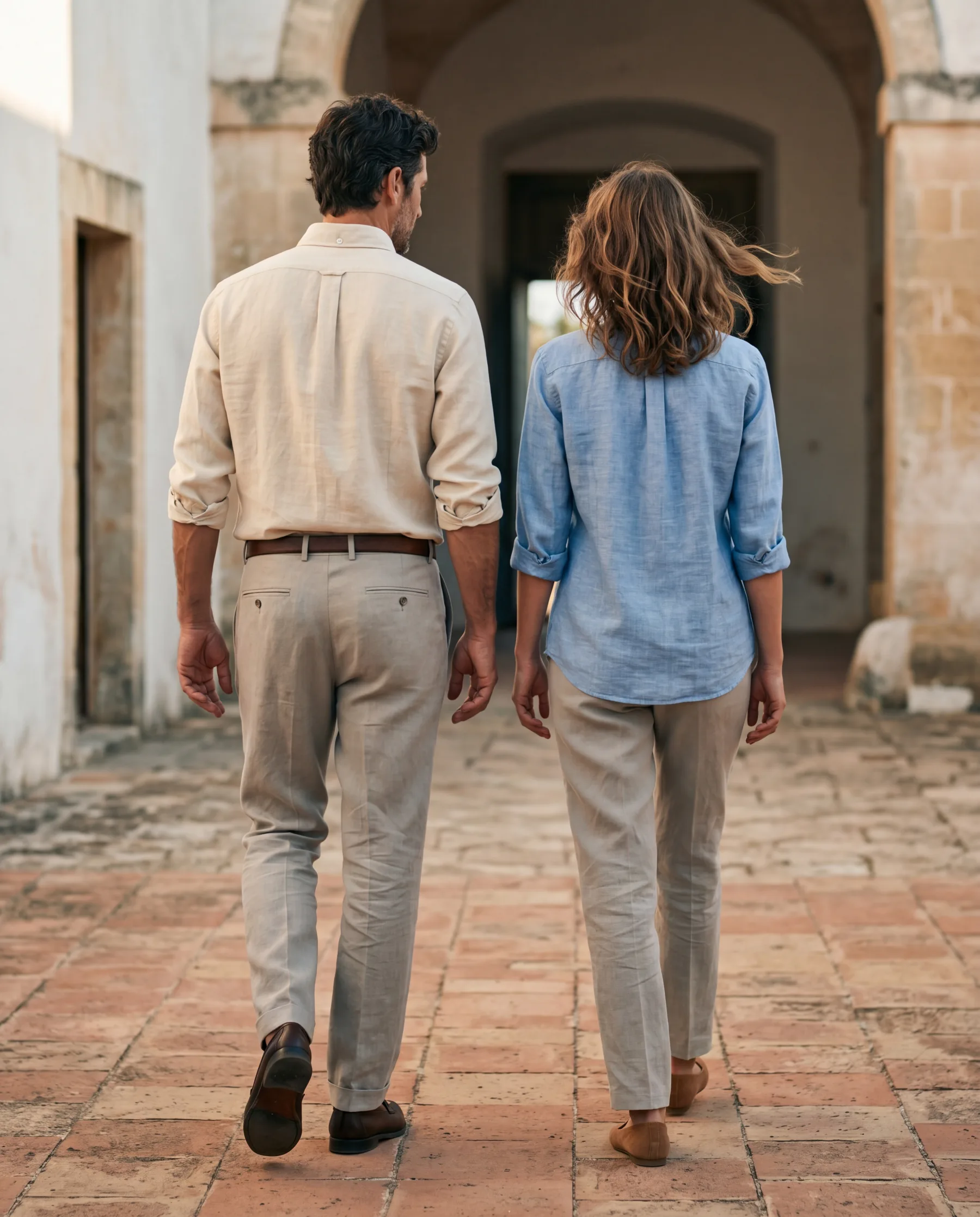
A young couple walking away through a stone courtyard, late afternoon. He in cream linen, she in chambray; both in stone-coloured trousers.
A courtyard, late. The cloth folds with the gait.
A figure in a doorway, afternoon shade.
A doorway in shade. The Bare in parchment.
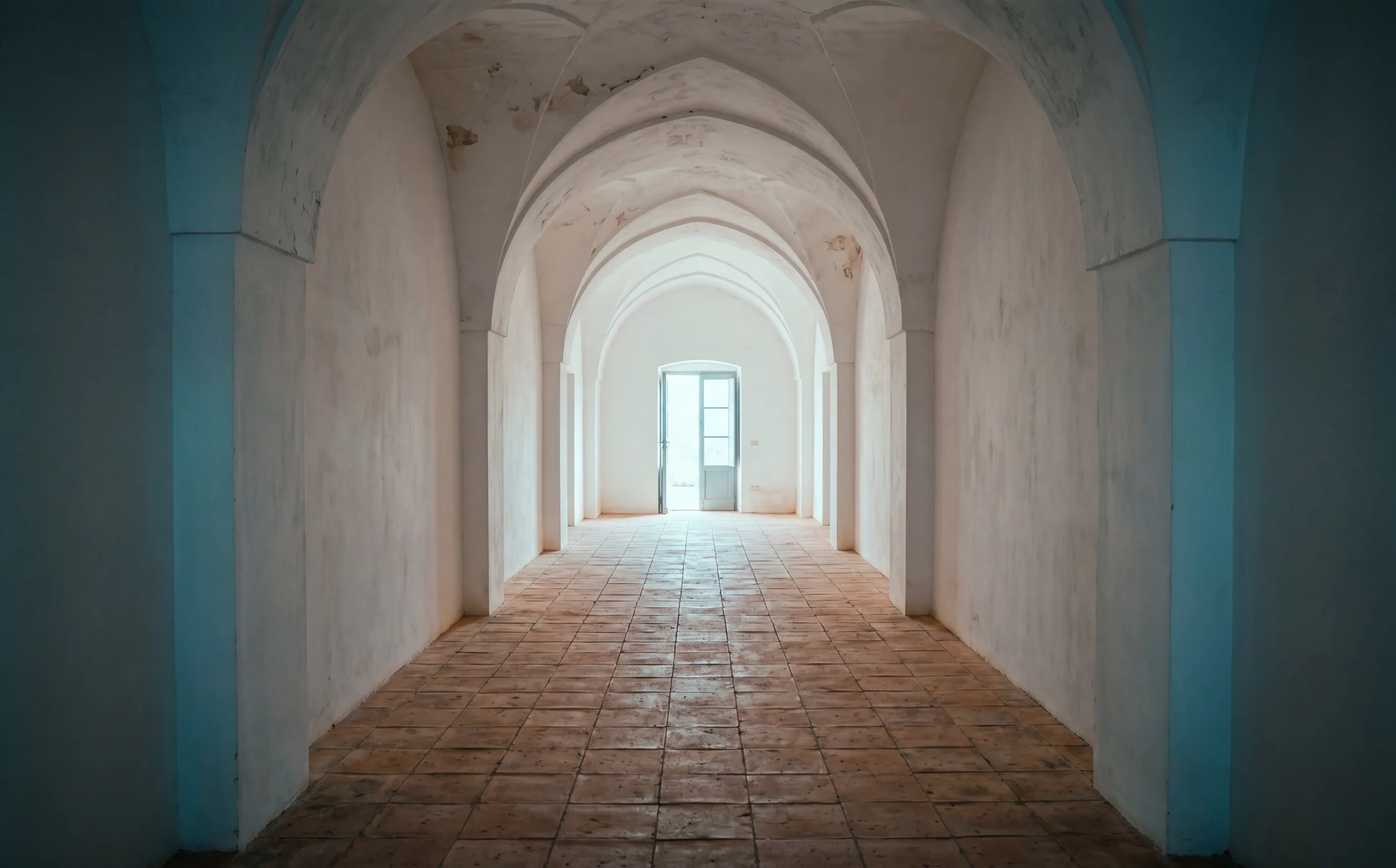
A long whitewashed stone corridor at dawn, vaulted ceiling, terracotta floor, cool light at the far doorway.
The hallway before the day begins. Stone holding the night's quiet.
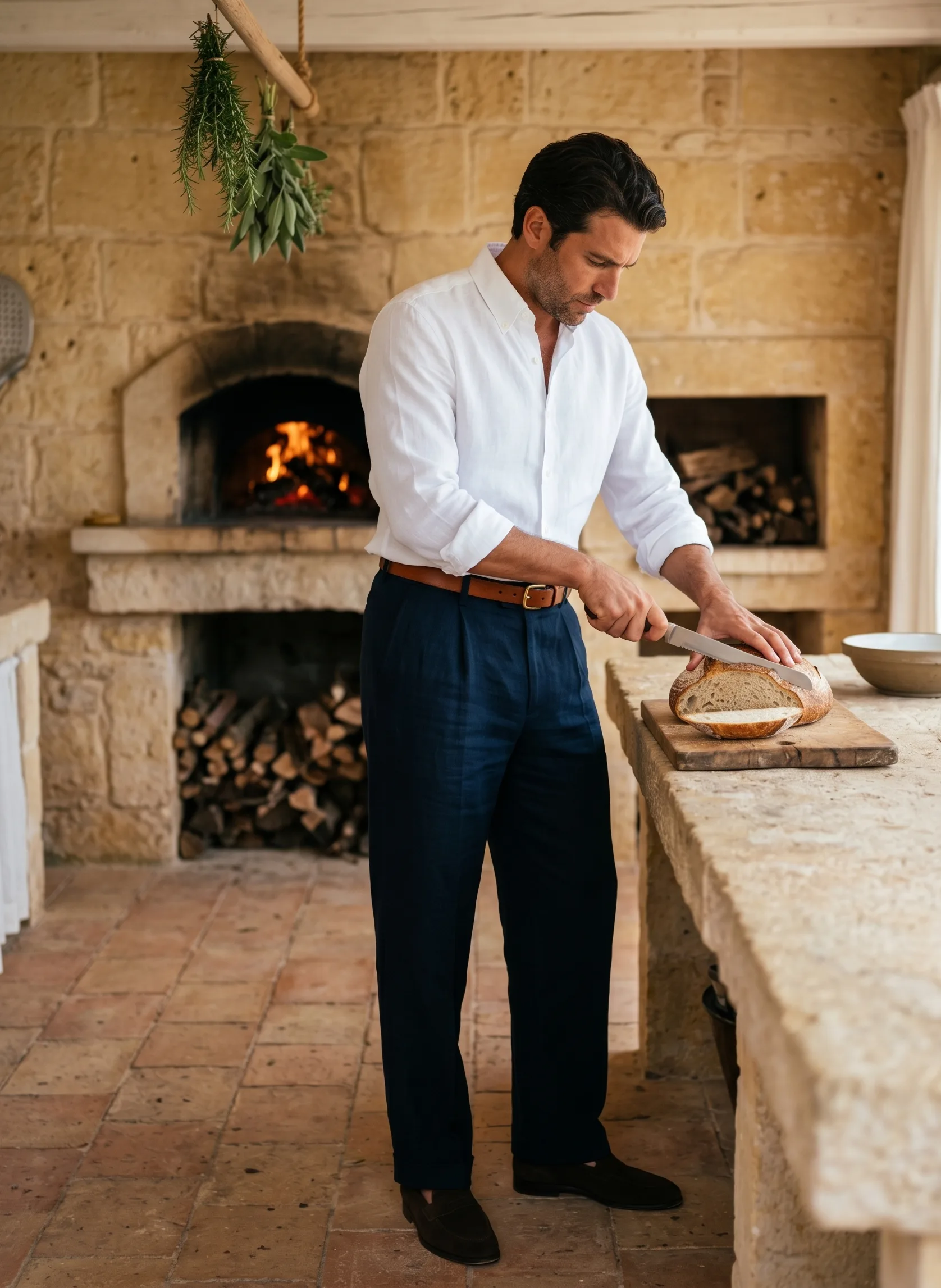
A man in his early fifties slicing bread on a stone counter beside a wood-fired oven in a masseria kitchen. White linen Hollow OCBD shirt with sleeves rolled, deep ink Column trouser, brown leather belt, dark suede loafers; firewood stacked behind, dried herbs hanging from above.
The kitchen counter, midday. The Hollow in white, the Column in ink — slicing bread for the table.
A man in his fifties reading in a leather chair by a tall window. Cream linen shirt, stone trousers, leather slippers.
Reading hour. The Hollow in cream, the Column in stone.
A woman halving a pomegranate on a marble counter, afternoon light. Chambray linen shirt, stone trousers.
A pomegranate, halved. The Hollow in chambray, the Column in stone.
A man and a woman sitting on low stone steps, facing each other mid-conversation, late afternoon. Cream and chambray linen, stone trousers.
Stone steps, late. Nothing to do but talk.
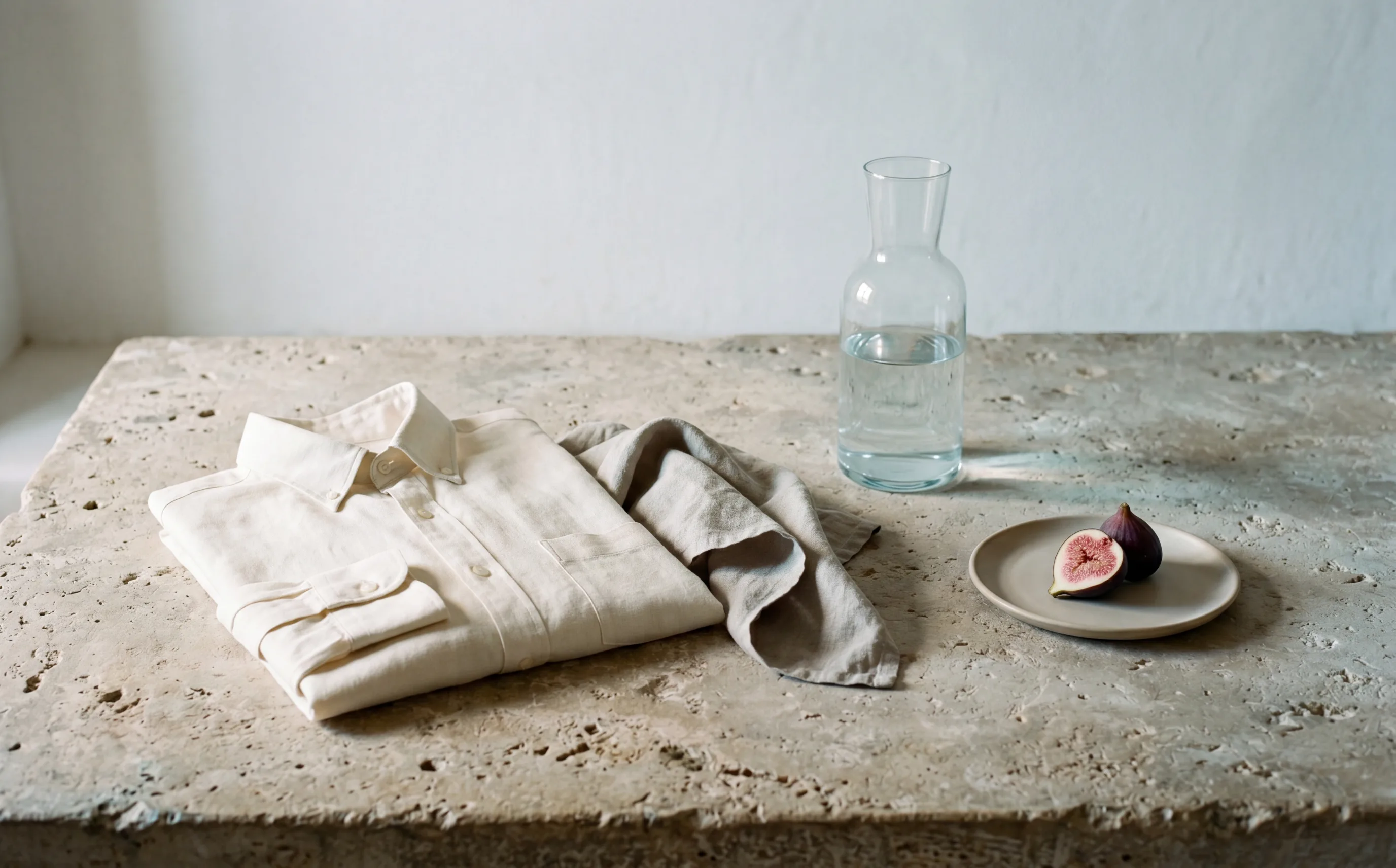
A folded cream linen shirt, a stone-coloured napkin, a glass water carafe, and a halved fig on a stone table.
A table set for nothing in particular. The Hollow folded, the cloth at rest.
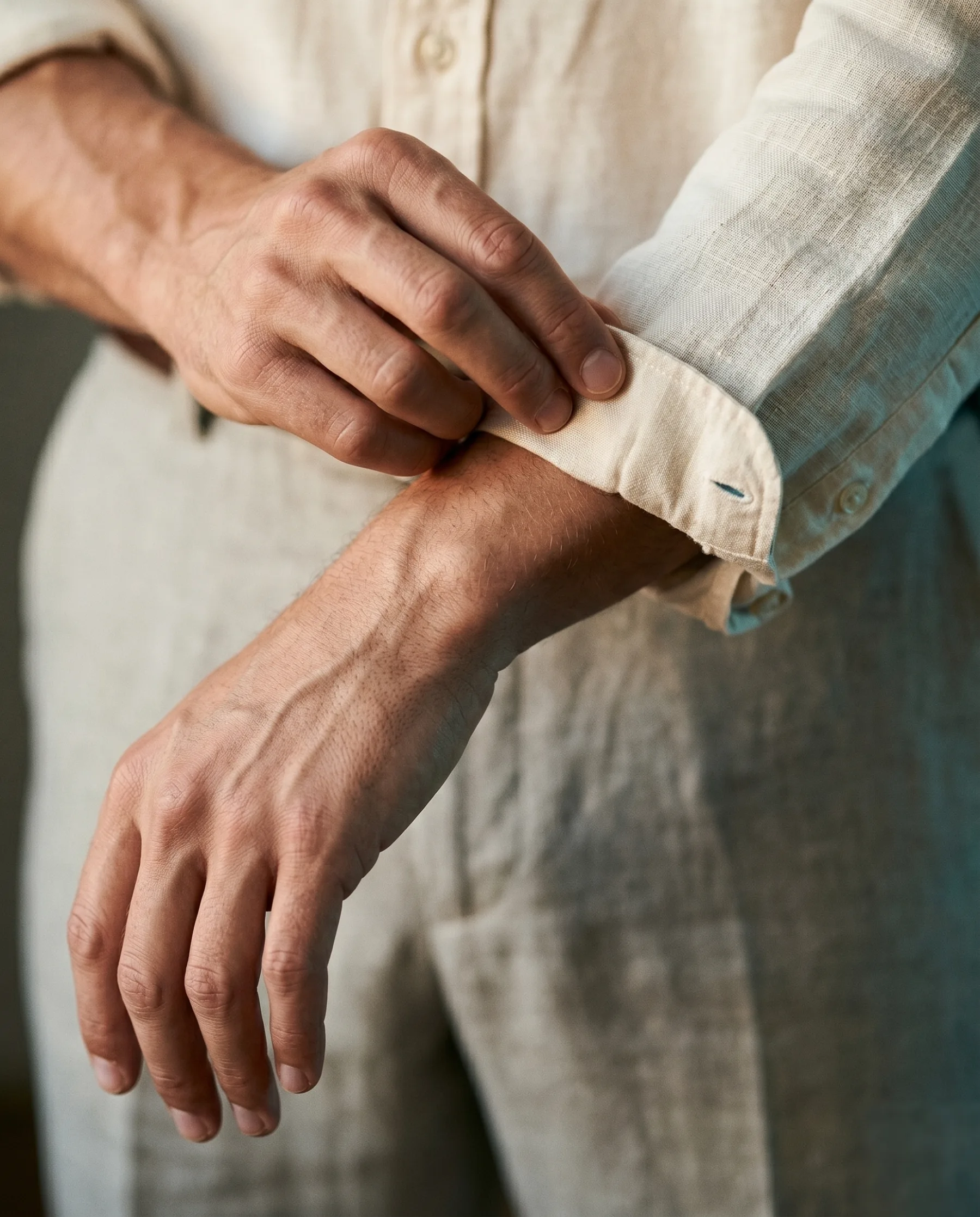
Macro close-up of hands rolling the cuff of a cream linen shirt — visible weave, button half-out.
Rolling the cuff. The cloth catches the hand more than the eye.
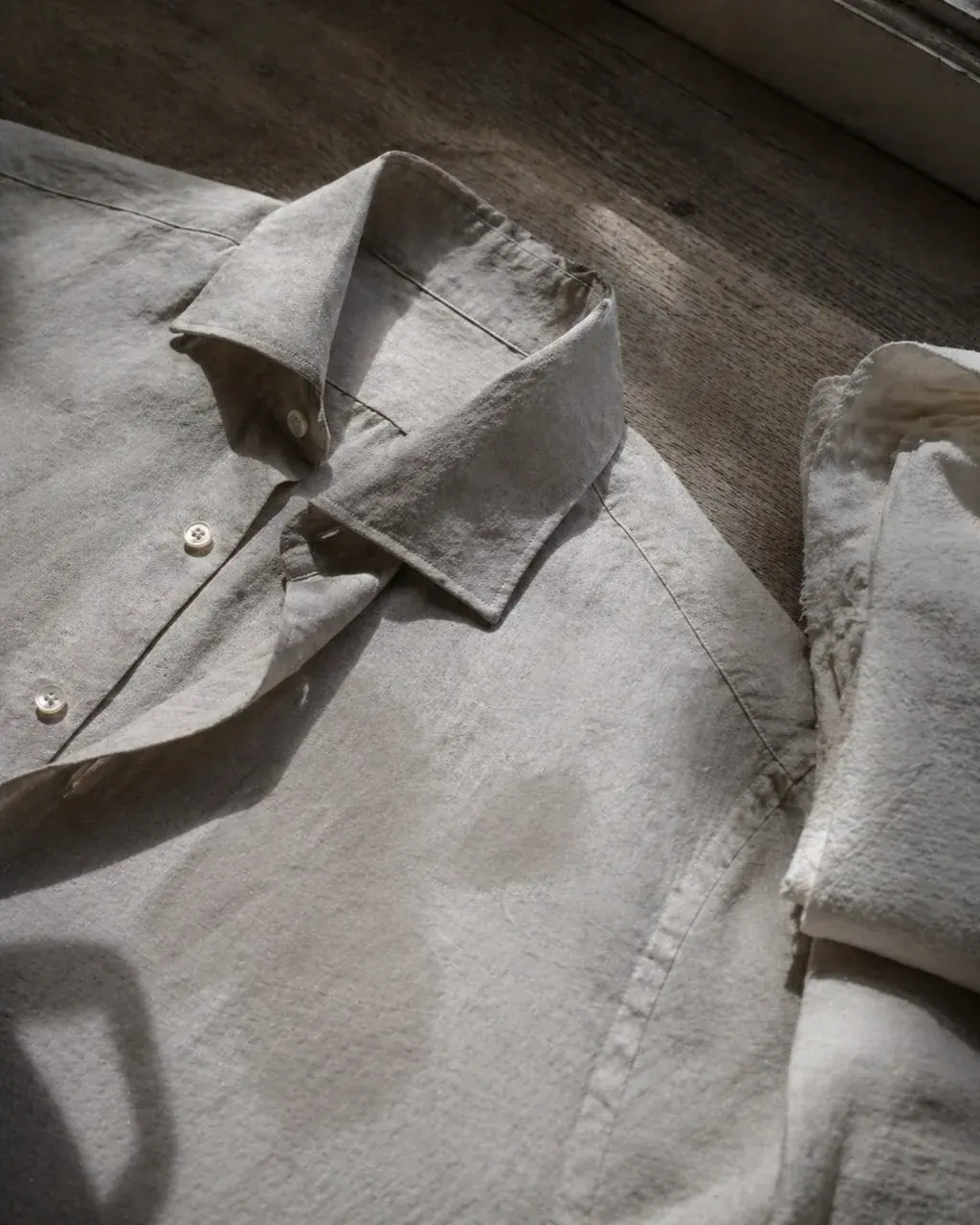
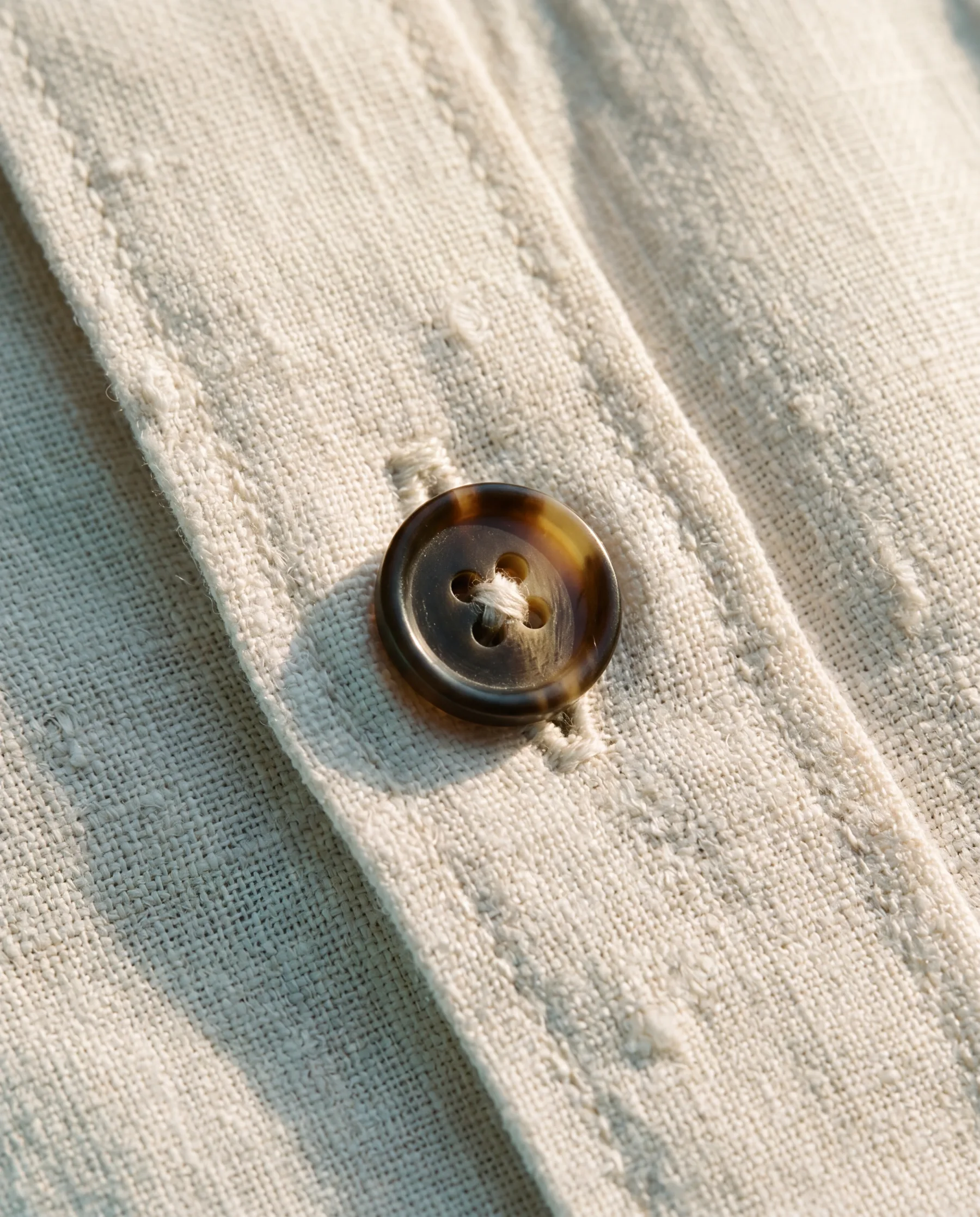
Macro close-up of a horn button on a linen buttonhole, visible weave and irregular slubs in the cloth.
A horn button. The weave does the rest.
A distant view of an Apulian vineyard at golden hour, rows of vines receding toward soft hills, no figures.
The vines, late. Place keeping its own time.
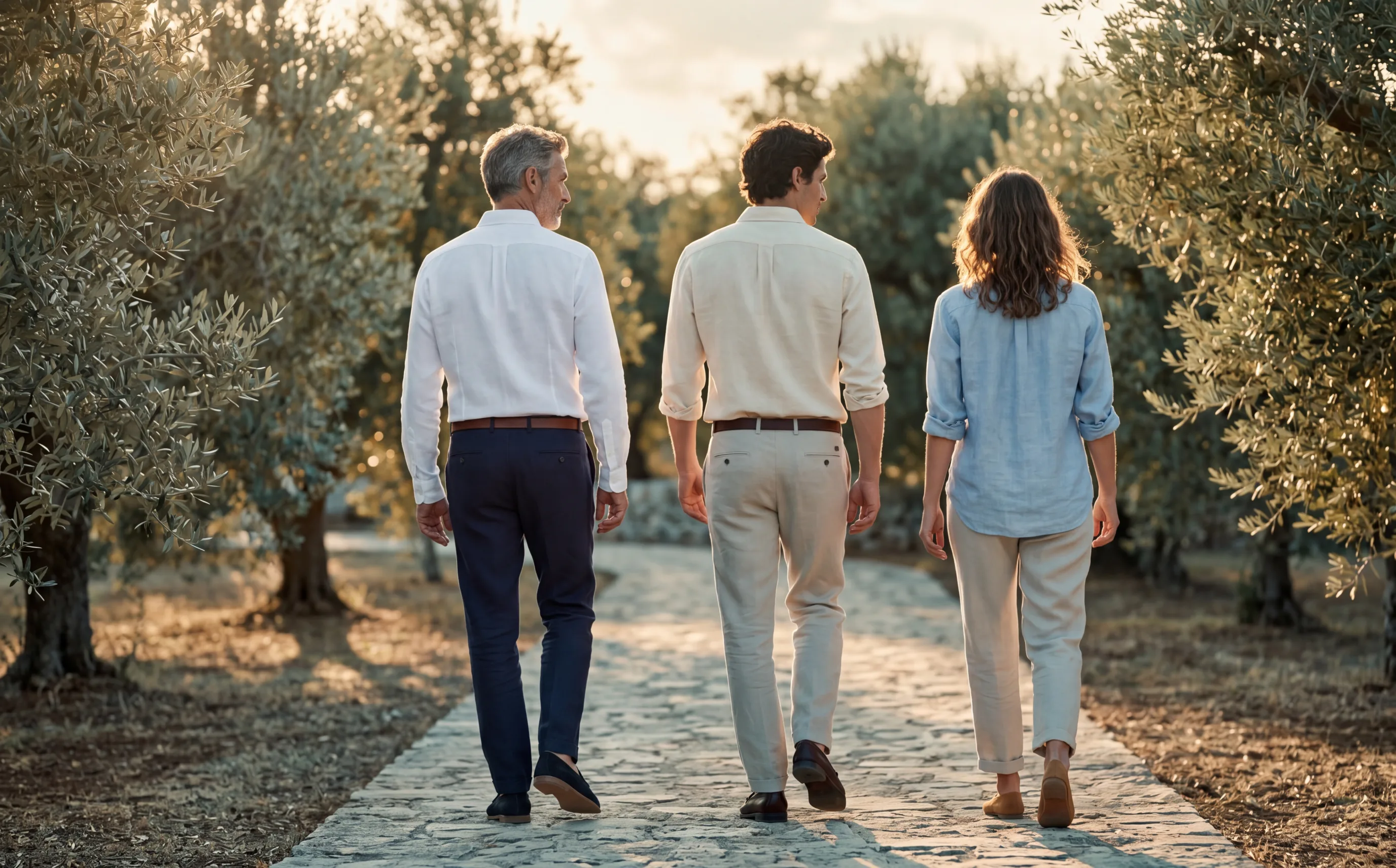
Three figures walking together along a path through an olive grove at golden hour, from behind.
Through the olives, after lunch. Three figures, no hurry.
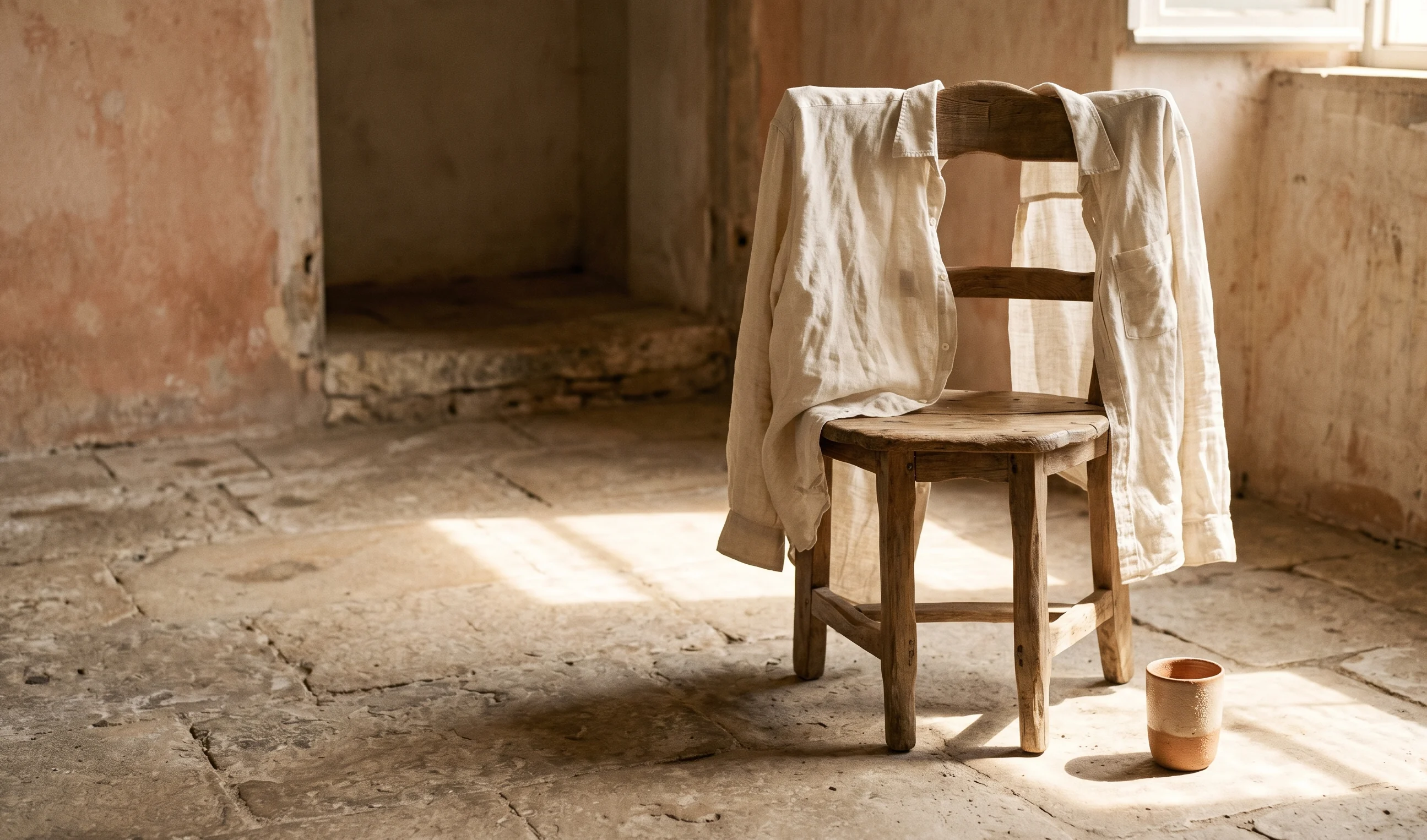
Linen draped over a chair, sunlit.
The cloth at rest. 160 GSM, yarn-dyed.
Three figures around a long stone table at sundown, in cream and ink linen — wine glasses, the remains of a meal, no one performing for the camera.
The table after dinner. The Hollow in cream and ink, the Column in stone. Worn at ease.
Shop the collection  →
Studio Notes

From the desk, occasionally.

Personal observations from the studio. Sent rarely, written by hand first. Not a journal of how to wear things — a journal of what's on the cutting table this week.

11 May 2026 · The studio · New Delhi

On waiting for the cloth to be ready.

The Belgian flax for the spring batch arrived three weeks late. I should have been frustrated — the calendar wanted it on the table by April — but the cloth is right, and the cloth is the only thing that matters. So we waited.

What does it mean for a cloth to be right? Eighteen weeks since the flax was retted. Twelve washes through the loom. A weight in your hand that tells you the warp wasn't rushed. You can feel a rushed weave under the thumb the way you can hear a rushed sentence read aloud. It sits wrong.

I have learned, slowly, that there is no version of this work where you save time and the piece still passes. You save the time, you ship the piece, and a year later it tells on you. The seam migrates. The hand-feel changes. The owner notices first; the owner always notices first. We don't want to be the studio that gets noticed in that direction.

So the spring batch ships when the cloth tells us it's ready. Probably mid-June. The wait is the work.

— Faisal

3 May 2026 · A train, somewhere between Pune and Mumbai

The cutaway collar argument.

Spent the morning arguing with the senior tailor about a half-millimetre of collar break. Half a millimetre. He was right.

The Hollow's collar sits at a specific angle from the neck, which is the angle a buttoned collar wants to sit at when it has the right amount of structure behind it. Too rigid: it stands like a uniform. Too soft: it collapses by lunch. We have spent two years arriving at the interlining weight that lets it do neither. The Cutaway is a different collar shape — wider at the points, no button stand — and so the same interlining was wrong for it. He said the collar was "fighting the shoulder." I didn't see it. He pinned a sample and showed me. He was right.

The half-millimetre adjustment we made today is invisible. The shape difference at hand-level: zero. The way the collar sits when worn: completely changed. The buyer will never know we had this argument. That is, I think, the work — the visible part of the piece is the small fraction; the rest is the arguments you can't see.

— Faisal

Notes arrive when the work asks for them. Subscribe to the studio updates and you'll see them; otherwise this page is always here.

An ARKEN atelier interior — folded olive linen, cream notecard, fountain pen at rest
For Returning Clients

A standing
relationship
with the studio.

A linen house earns its second purchase, not its first. The clients who return to ARKEN do so at a different pace, with different access, and on different terms — deliberately, by name, in their own time.

The Standing Arrangement

What returning clients receive.

There is no signup, no card, no points, no tier. The studio remembers the people who wear its work, and conducts itself accordingly.

I.

Forty-eight-hour priority on restocks

The pieces you have purchased before, when they return, are held for a forty-eight-hour window before public release. A note from the concierge — not a marketing email — informs you that the cloth you wore last summer is back in your size.

II.

Preview access to capsule releases

Each seasonal capsule opens to returning clients ten days before the public lookbook is published. The lookbook arrives by email, attached as a PDF, with an order link reserved to the recipient. You are not asked to share it.

III.

Direct line to the concierge

After your first order, the studio line you used to enquire becomes a standing contact into the atelier. Sizing, alterations, restocks, recommendations — answered within working hours, by the same person, without a ticket queue.

IV.

Reserved pieces, on request

For clients who know what they want and prefer to wait: a piece in your size can be set aside from the next production run, with a deposit and a delivery date. We hold one in twelve of every batch for this purpose.

V.

A private session with the studio

Studio clients can schedule a private session — fit recommendations, fabric notes, a first look at capsule pieces before they reach the website. By video, or in person at the atelier in New Delhi, by appointment. A standing invitation, not a one-time event.

VI.

Founder selections, occasionally

A few times a year, the studio releases a limited piece — a colourway not in the main collection, a fabric experiment, a one-off cut. These reach returning clients first, in numbered batches. They are not advertised.

A handwritten note from the studio — the personal register of a returning relationship
A note from the concierge
A house that knows your size, your tone, and the trousers you packed for Goa is a house worth returning to.
— from a note to clients, 2026
How It Begins

It begins with one piece.

There is no application. The relationship begins with the first order, and the studio extends what it can from there. Some clients return after three months; some return after a year. We notice both.

If you have purchased before and would like to make yourself known to the concierge — for a sizing question, a request to be notified of a specific restock, or simply to introduce yourself — the WhatsApp line is below.

Speak with the concierge  → Browse the collection
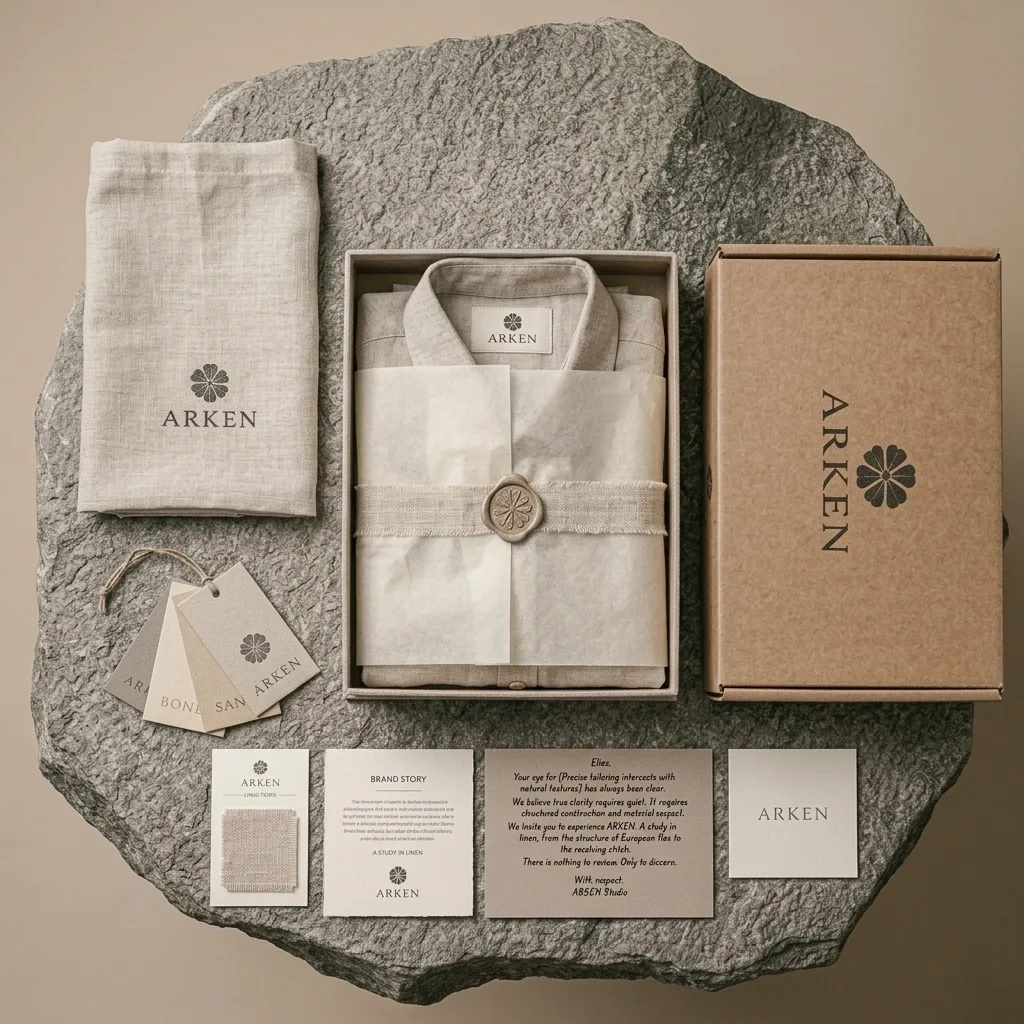
An ARKEN order, photographed top-down on a stone slab — box, garment in cotton wrap, foil hangtag, info cards
The Arrival

A small ritual,
quietly observed.

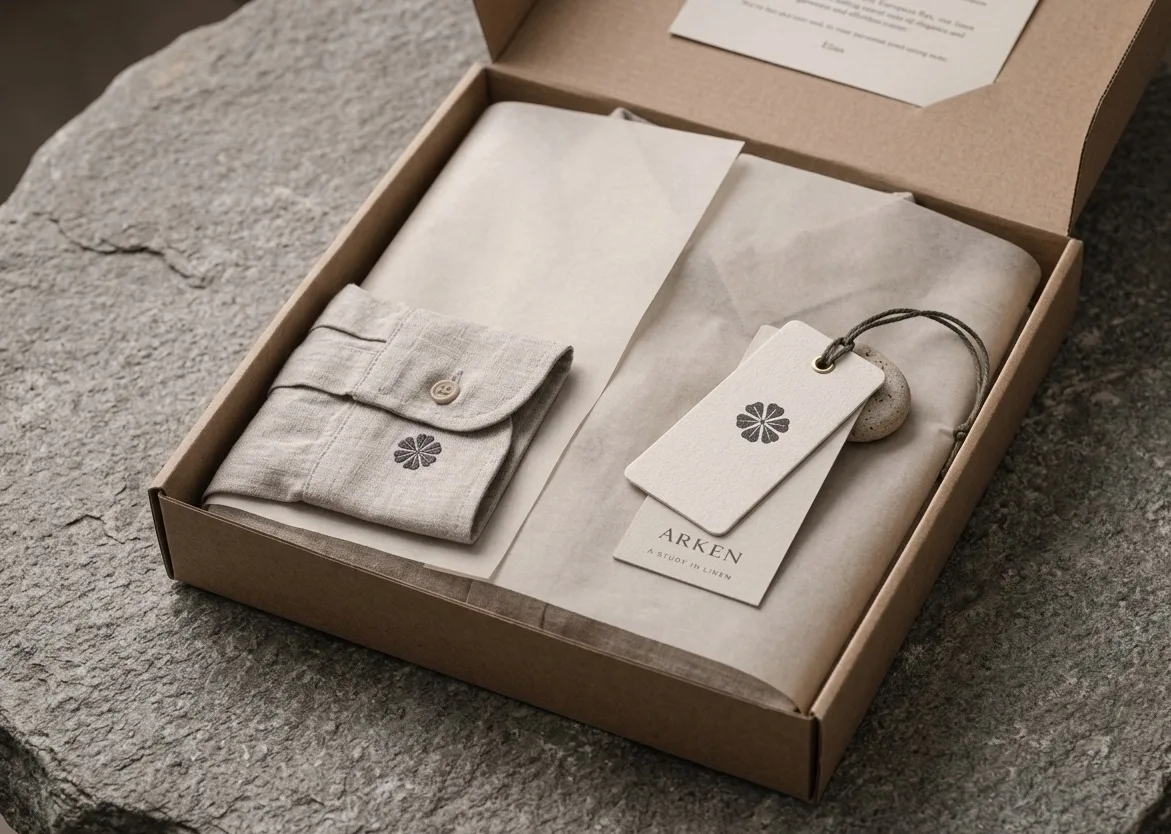
An ARKEN order arrives in five materials: kraft, unbleached cotton, jute, two printed cards. The piece itself, pressed and folded, sits at the bottom.

First, the box

The outer box is unprinted kraft, double-walled, sealed with a single ARKEN-stamped paper seal. There is no plastic on the package, and there is no logo larger than three centimetres anywhere on it. From the courier's perspective, it is an anonymous box. This is intentional.

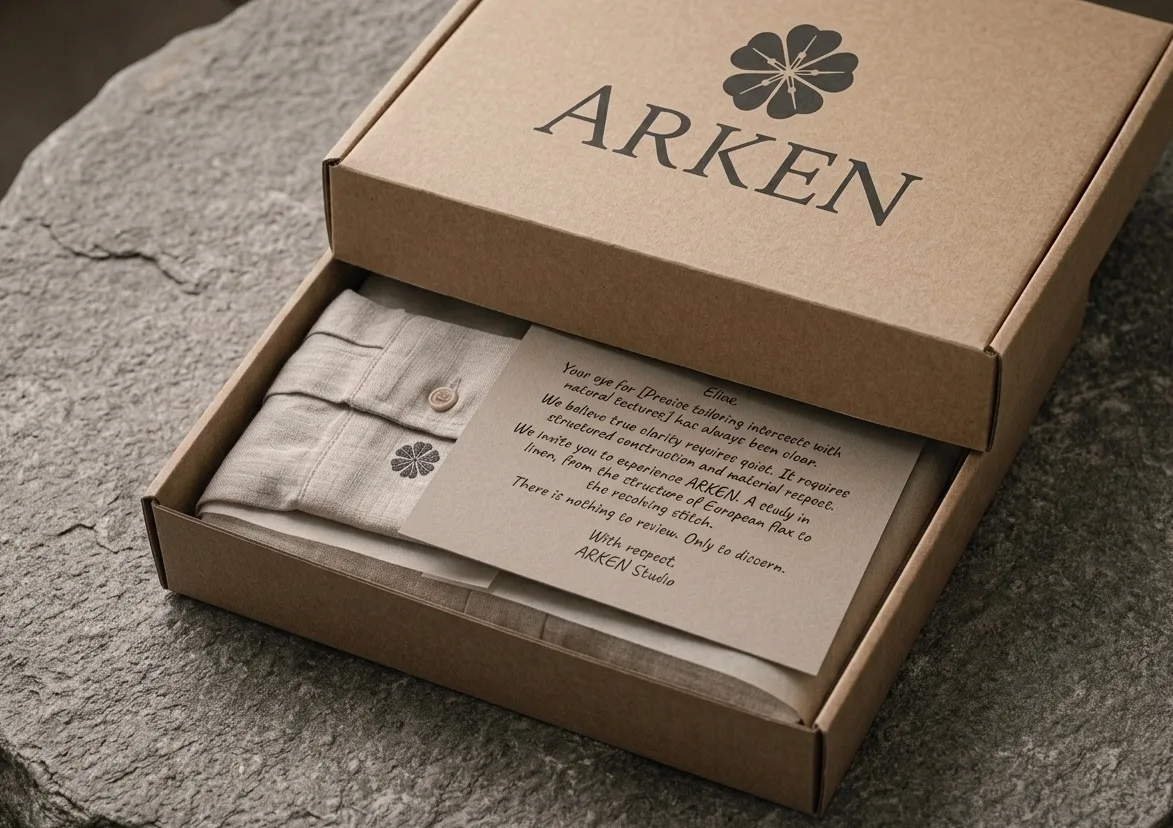
An ARKEN kraft box, opened — folded garment and a handwritten card just visible inside
Sealed · double-wall kraft
Then, the wrap

Inside the box, each garment is folded by hand and wrapped in unbleached cotton — not tissue paper, not glassine. The cotton is washable and reusable — a small kerchief, a pocket square, a wrap for travel. We did not plan that; we like it.

Multiple-piece orders are wrapped together, with a length of jute twine knotted twice. The knot is tied the same way every time. We have considered varying it; we have decided not to.

Garment wrapped in unbleached cotton, jute twine in a precise double knot
Cotton wrap · jute twine · double knot
The card

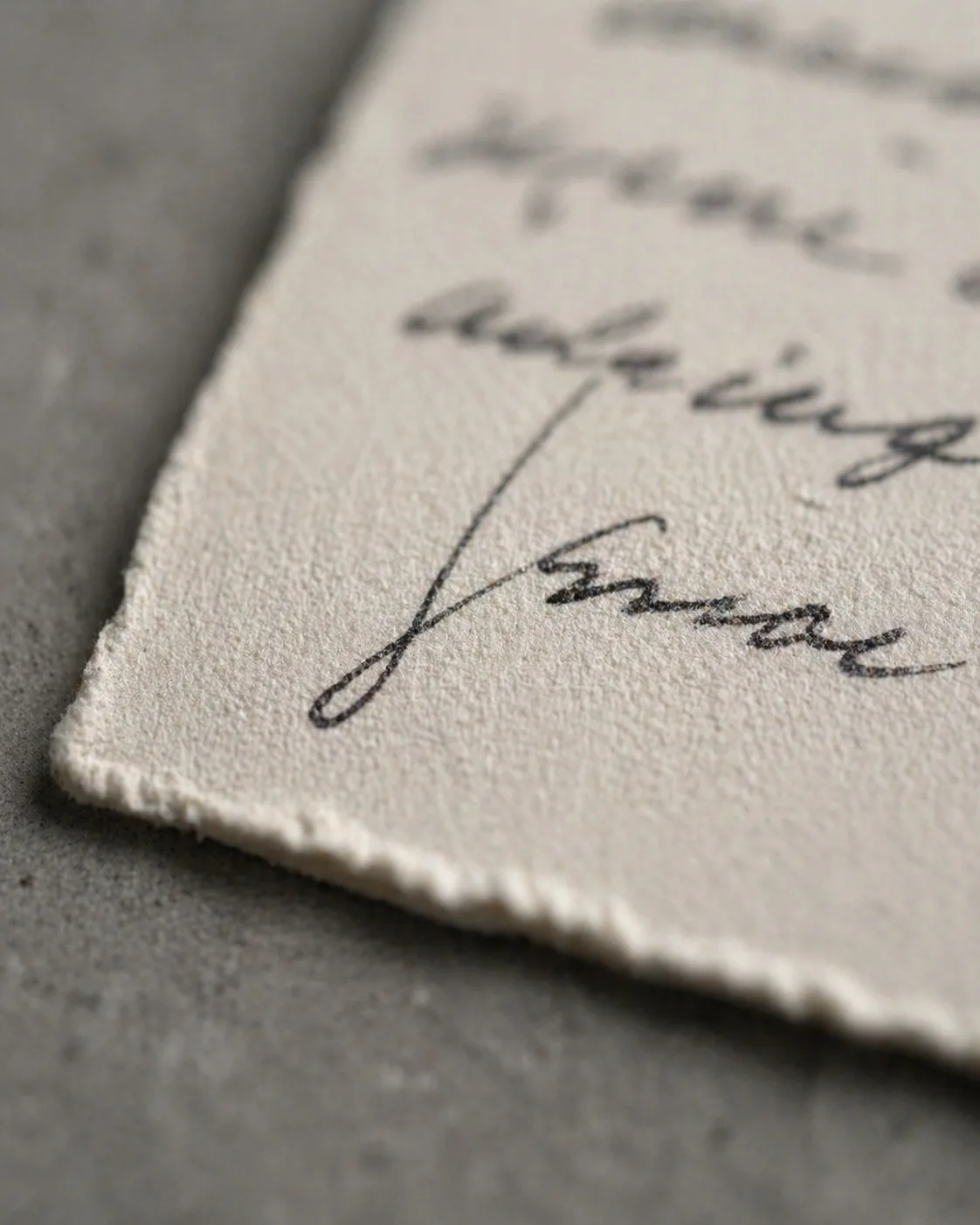
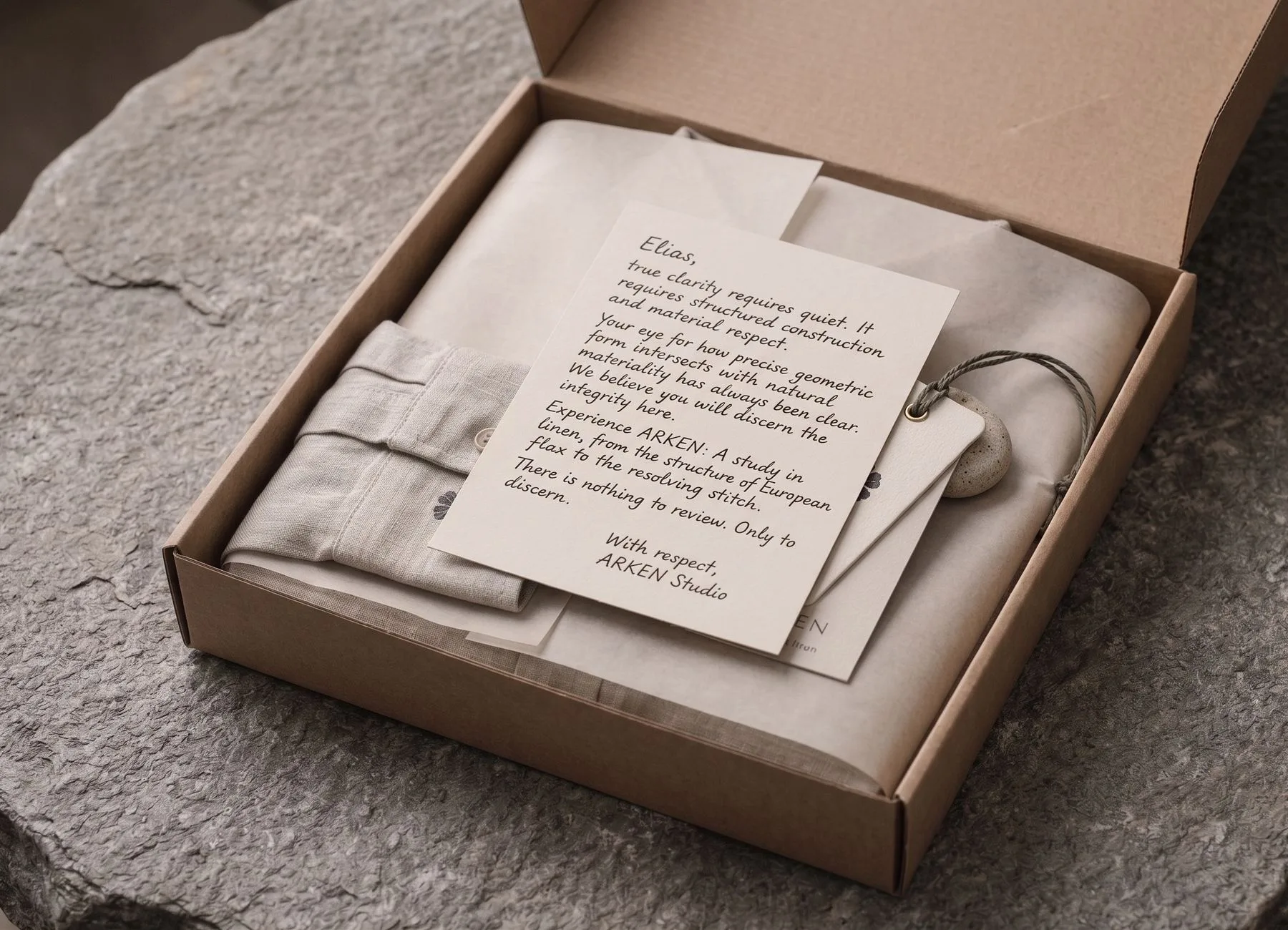
Tucked beneath the wrap is a single printed card, on warm cream paper, slightly heavier than business-card stock. The front carries a short paragraph about the cloth — its mill, its weight, its first-wash behaviour. The back carries the name of the person at the studio who packed the order. On first orders, the back also carries a handwritten note. There is no QR code. There is no review request.

A second card — the authentication

Beside it lies a second card, smaller, cream paper, pressed-foil edge. The front reads, simply: The ARKEN Linen Standard. The back: Your garment passes all five tests. Below, a short list — European flax, garment-washed, declared GSM, natural wrinkle character, designed to soften with time. We include this card because we believe customers deserve to know the difference between real linen and a substitute, and because we think the difference is worth marking on the day the garment arrives.

A footnote at the bottom: For deeper verification, even a single loose thread reveals the truth. The five tests are described on the website. The garment in your hand is the easier place to begin.

A handwritten note inside the ARKEN box — a study in linen, addressed to the buyer by name
The Linen Standard · authentication card
The garment, last

The piece itself, when it arrives at the bottom of the box, has been pressed and folded along the original creases. It does not need to be hung immediately. It does not need to be aired out. It has been finished, washed, and folded so that it can be worn, if you wish, that same evening.

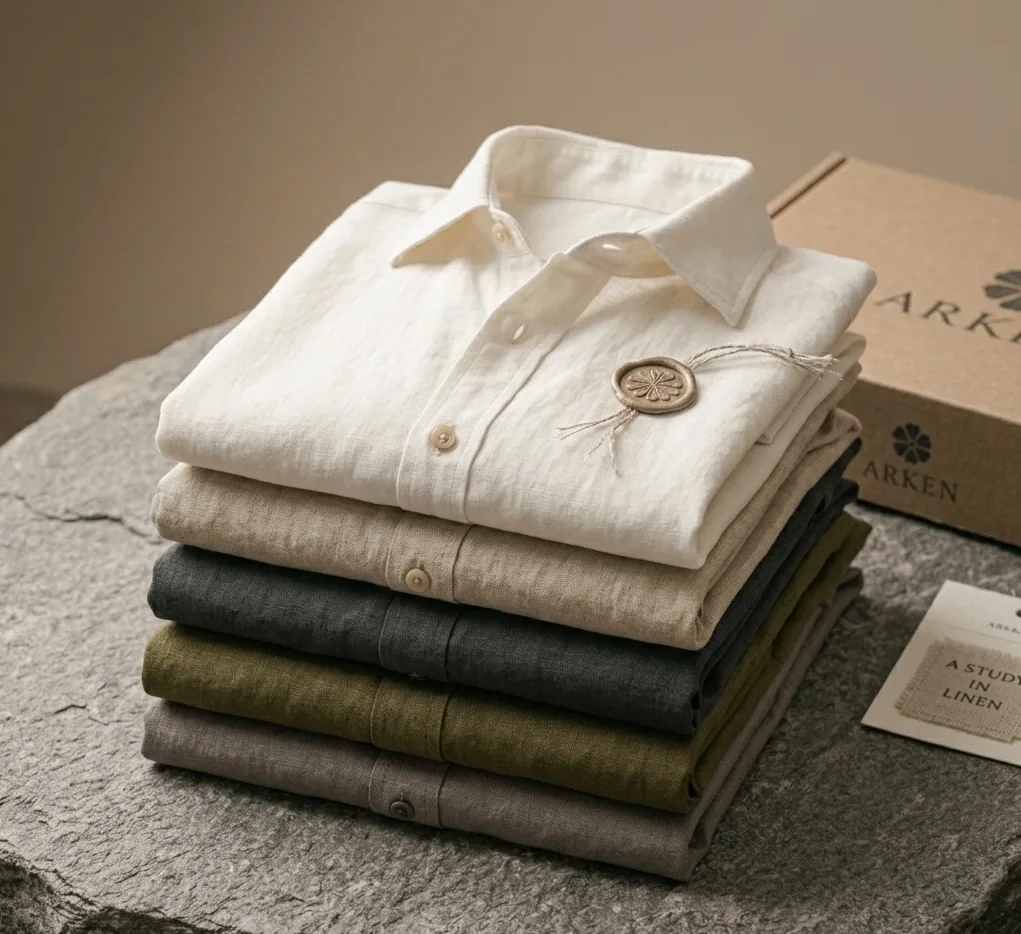
Folded ARKEN garments in stacked cream parchment — pressed along their original creases at the bottom of the box
Folded · pressed along the original creases
The package is part of the garment.
It is the first thing the garment teaches you.

The packaging arrives the same way for every client, regardless of the order's size or the client's history. We have considered making it more elaborate for larger orders. We have decided not to.

◇
A Trust Framework

The ARKEN
Linen Standard™.

Most brands do not publish their testing criteria because the comparison does not favour them. We publish ours. Five material tests, each grounded in the structural properties of long-staple flax — the hollow fibre, the declared GSM, the wrinkle character that distinguishes pure linen from blended substitutes. Apply them to any garment.

The Problem

Why most linen fails.

The linen sold most widely at the volume tier is woven below 130 grams per square metre, blended with polyester or cotton at ratios the label rarely declares, and finished without the enzyme-washing step that makes good linen drape correctly. The garment sold to you as linen is, often, three things working together to look like linen and behave like something cheaper.

This is not a complaint about other brands. It is a description of the category. The buyer who has only ever worn this kind of linen reasonably concludes that linen is scratchy, see-through, short-lived, and the wrong fabric for daily wear. The conclusion is correct about what they have worn. It is wrong about linen.

The five tests below take less than a minute each. They are how the studio evaluates fabric before it accepts a roll, and they are how a buyer can evaluate a garment after it arrives. We believe customers deserve to know the difference.

Real linen improves. Fake linen performs only in marketing.
The Five Tests

Sixty seconds, five small acts.

Each test takes less than a minute. The fabric tells you the answer if you know what to look for. None of them require equipment.

Long-staple flax yarn — natural fibre irregularity
01

The Crush Test

Take a small section of the fabric. Squeeze it tightly in your hand for five to ten seconds. Open your hand and look.
Real linen

Wrinkles immediately. The creases hold their shape and stay visible.

A substitute

Bounces back too quickly. Looks suspiciously smooth a moment later.

Wrinkles are proof. Not flaws.
Linen against skin — hollow flax fibre pulling heat away
02

The Touch Test

Lay your hand flat on the fabric at room temperature. Wait two seconds.
Real linen

Feels distinctly cool and dry. The hollow flax fibre actively pulls heat away from the skin.

A substitute

Feels warmer, slightly slippery, or unnaturally silky. Synthetic fibres trap heat instead of moving it.

Real linen performs in heat. That is the point of it.
The loom — flax woven at declared GSM with characteristic slubs
03

The Weave Test

Hold the fabric to a window in natural light. Look closely at the weave.
Real linen

Slightly irregular surface. Visible slubs — small natural thickenings in the thread. Not perfectly uniform.

A substitute

Too regular. Too smooth. The weave looks machine-perfect, with no character in the surface.

Natural flax has irregularities. They are the signature of the material.

Three down. The cloth keeps its weight.

Garment-washed linen — capillary absorption through hollow fibre
04

The Water Test

Drop a small amount of water onto a flat section of fabric. Watch.
Real linen

Absorbs almost immediately. The fabric darkens in the wet patch and the surface goes flat.

A substitute

The water sits on the surface in a bead, or absorbs slowly. Synthetic fibres resist water.

A fabric that breathes is a fabric that absorbs. Linen does both.
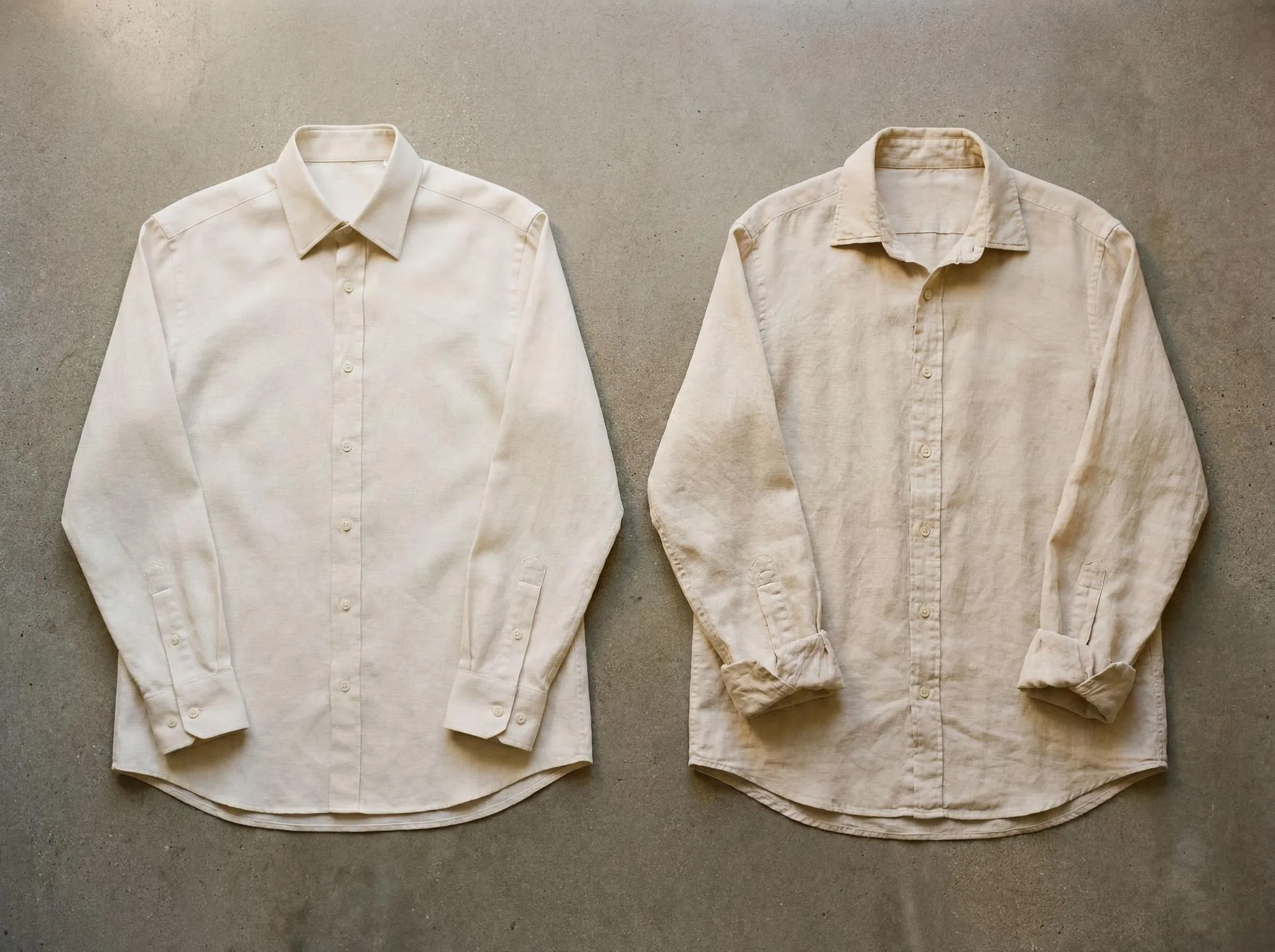
Two parchment linen shirts laid flat side by side — year one (left) and year three (right). Same garment; the right shirt shows softened cuff folds and slightly deeper colour saturation from years of wear and wash.
Year one (left) · year three (right). The wear pattern the cloth is engineered for.
05

The Aging Test

Wear the garment for a season. Observe what happens over the second wash and the tenth.
Real linen

Softens with each wash. The drape becomes more fluid. The colour deepens by a quarter shade. Year three is the best version of the garment.

A substitute

Loses structure. Looks tired by the third month. The fabric pills, thins, or fades into a flat tone.

Real linen becomes yours. Fake linen becomes worn out.
A footnote on laboratory verification

How textile labs verify fibre content.

For complete certainty, textile laboratories use a controlled burn test on a single isolated fibre. Real linen, being a natural plant fibre, burns quickly and cleanly: a paper-like flame, a smell of burning leaves, soft grey ash that crushes between two fingers. Synthetic fibres do not burn — they melt. They produce a chemical odour, curl rather than ignite, and leave behind a hard plastic bead.

This is included for completeness, not as a recommendation. A buyer evaluating a finished garment is far better served by the five tests above; the burn method is for quality-control labs working with raw fibre under controlled conditions.

Real linen burns like nature. Fake linen melts like plastic. A useful sentence to remember; a less useful test to perform at home.

A Note on Value

Why ARKEN feels different.

Good linen is rarely defined by how it looks on day one.

It is defined by how it wears, how it breathes, and how it becomes yours over time.

We use European flax because it produces stronger, longer fibres with better structure and longevity.

We garment-wash every piece because linen should arrive with softness and character — not stiffness that asks to be broken in.

We weave shirts at ~160 GSM, trousers at ~210, and shackets at ~220 because weight gives linen body, drape, and presence — something lighter constructions often imitate, but rarely deliver.

And we publish the GSM openly on every product page because fabric should be understood, not marketed.

None of this is added for appearance. It is built for wear. For warmer days. For longer years. For garments that improve with time instead of fading with trend.

The difference is not in how loudly it announces itself. It is in how naturally it stays with you.

That is the standard we build for.

The senior tailor in his early fifties holds a finished cream linen shirt up to the afternoon window light, inspecting the seam line and the hand of the cloth. Stone wall and dark oak cutting table out of focus behind him.
The Standard is what passes under his light.
Browse the collection  → More on the fabric

I wrote the Standard. I also wear it. If anything here ever drifts away from what I would put on my own body, it gets cut.

Faisal Founder, ARKEN Studio
A longer note  →
ARKEN
◇ Secure checkout
01Details
02Method
03Confirmation
Despatch

Delivery address

Order confirmations and delivery updates only. Never sold.
For courier coordination only. The studio will only contact you for order matters.
Method

Delivery

The package

What arrives

Unprinted double-wall kraft box, sealed with an ARKEN paper seal
I.
The kraft box
Double-walled, unprinted, sealed with a single paper seal. No plastic.
Garment folded by hand and wrapped in unbleached cotton, finished with a jute twine double knot
II.
The cotton wrap
Hand-folded, wrapped in unbleached cotton, jute twine in a double knot.
Two cards inside the box — a cloth card describing the linen and a foil-edged Linen Standard authentication card
III.
Two cards
A cloth card on the linen. A foil-edged Linen Standard card alongside.
The packaging arrives the same way for every order, regardless of size. Read the full ritual →
The order
Subtotal ₹0
The Linen Trio −₹0
Delivery Complimentary
Estimated tax Calculated by region
Total ₹0
All prices in INR. Inclusive of GST where applicable.
Hand-finished and wrapped in unbleached cotton from the studio.
Between sizes? Speak with a stylist before placing the order.
Settlement

Preferred method

This is a pre-order. Payment isn't taken on this page. When production is set, the studio sends a secure payment link via Razorpay matching your preferred method below. You can cancel any time before that link is paid.
Review

Confirm the order

Delivery to
—
Contact
—
Method
Standard delivery · ship date announced once production is set
Reserving these pieces signals intent. No payment is taken now. The studio confirms each pre-order by email within four working hours; you can cancel any time before the payment link is paid. By reserving you agree to ARKEN's terms and acknowledge our privacy notice.
The order
Subtotal ₹0
The Linen Trio −₹0
Delivery Complimentary
Total ₹0
All prices in INR. Inclusive of GST where applicable.
◇
Order received

Thank you. The studio
has your order.

A note from the concierge will arrive at your inbox within four working hours, with confirmation, the order's reference number, and the name of the person at the studio packing your pieces.

Order reference ARKEN-—
What happens next
I.
Within four working hours

An order confirmation arrives in your inbox. The note carries the name of the person at the studio who will pack your order.

II.
When production is set

The studio writes to you by name with the firm ship date. Your pieces are then pressed, folded along original creases, and wrapped in unbleached cotton. The package leaves the atelier with a tracking link.

III.
On arrival

The pieces are ready to be worn the same evening. Care notes accompany every piece. Read the full care guide if you'd like to extend their life.

← Return to ARKEN
From the studio

Word of new pieces. Quietly, occasionally.

Edition 01 ships first to the list. Then ship dates, edits, and the occasional note from the studio. We don't broadcast — and we don't run sales.

Sent occasionally. Never announced. Unsubscribe in any email.

For those who already know.

ARKEN  ·  Linen  ·  Est. 2025
European flax  ·  Spun & woven in India  ·  Single-fibre  ·  Biodegradable
Pre-order — ship dates announced once production is set  ·  30-day returns
ARKEN
A study in linen. Made to soften with wear.

Shop
  • Linen Shirts
  • Overshirts
  • Trousers
  • All Pieces
  • Edits
Studio
  • The Fabric
  • The Standard
  • The Hands
  • Lookbook
  • Editorial
  • Studio Notes
  • About ARKEN
  • Returning Clients
  • The Box
  • Care
Service
  • Sizing
  • Write to the studio
  • Size Consultation
  • Visit the Studio
  • Wishlist
  • Shipping & Returns
  • FAQ
  • Contact
  • Press
© 2026 ARKEN Studio
Instagram Privacy Terms